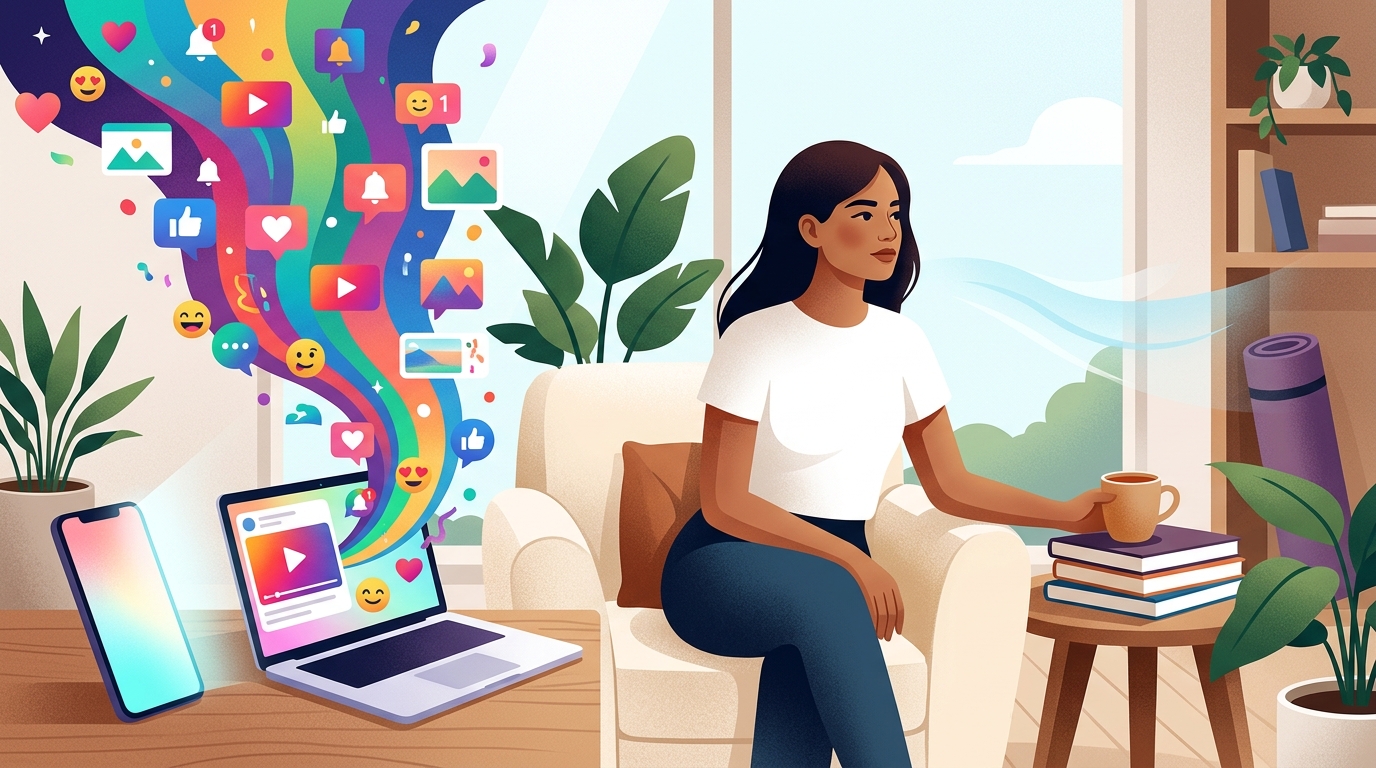
Your phone buzzes. You check it. Three minutes later, you’re watching a stranger’s vacation highlights while your coffee goes cold. Sound familiar? You’re not alone, and the internet has a solution: dopamine detox. But before you throw your phone in a drawer and swear off Netflix, let’s talk about what this trend actually means and whether it lives up to the hype.
Dopamine detox involves temporarily reducing highly stimulating activities to reset your [brain’s reward system](https://www.ncbi.nlm.nih.gov/pmc/articles/PMC3181880/). While the science behind it is more nuanced than social media suggests, taking breaks from constant digital stimulation can improve focus, mood, and productivity. The key is understanding what you’re actually doing and why, not following extreme protocols that promise overnight transformation.
Understanding dopamine and why everyone’s talking about it
Dopamine gets a bad reputation online. It’s not the “pleasure chemical” that TikTok makes it out to be. It’s actually a neurotransmitter that drives motivation, anticipation, and reward-seeking behavior.
Your brain releases dopamine when you anticipate something good. Scrolling social media, eating sugary snacks, getting likes, watching videos. These activities trigger dopamine release, which makes you want more.
The problem isn’t dopamine itself. The problem is that modern life bombards you with constant, easy dopamine hits. Your brain adapts by raising the baseline for what feels rewarding. Suddenly, reading a book or having a conversation feels boring compared to the endless novelty of your phone.
Scientists call this “dopamine dysregulation,” though the term “dopamine detox” is actually a misnomer. You can’t detox from a neurotransmitter your brain naturally produces. What you’re really doing is reducing overstimulation to help your brain recalibrate what feels rewarding.
What a dopamine detox actually involves
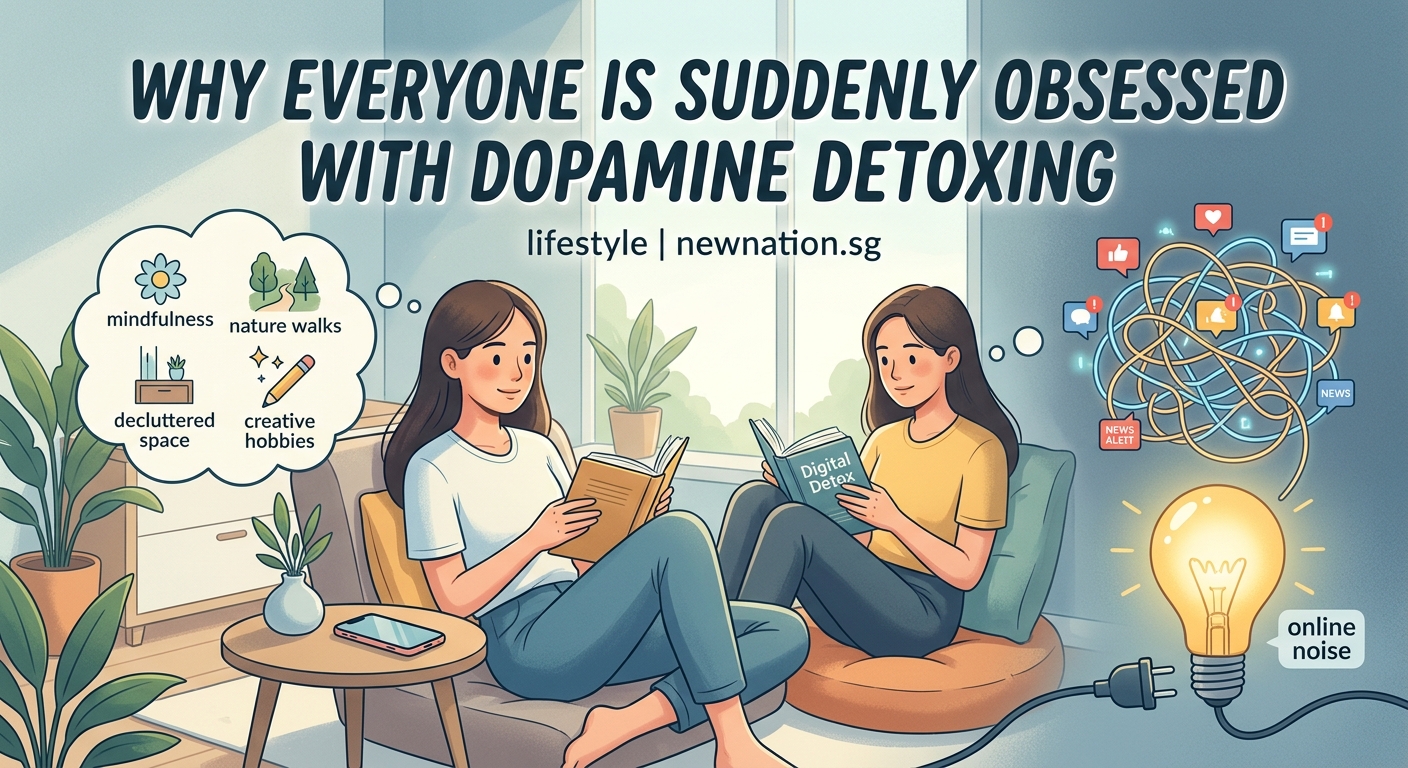
The basic idea is simple: temporarily cut out highly stimulating activities to give your brain a break. Different people define this differently, but here’s what most versions include:
Activities typically avoided:
– Social media scrolling
– Video games
– Streaming services and YouTube
– Junk food and sugary snacks
– Shopping (especially online impulse buying)
– Pornography
– Excessive music listening
– Compulsive internet browsing
Activities usually encouraged:
– Reading physical books
– Walking or light exercise
– Journaling or creative writing
– Face-to-face conversations
– Meditation or quiet reflection
– Cooking simple meals
– Cleaning or organizing
The duration varies wildly. Some people try it for 24 hours. Others commit to a week or even 30 days. There’s no official protocol because dopamine detox isn’t a medical treatment. It’s a self-improvement trend that borrowed neuroscience terminology.
The science behind the trend
Here’s where things get interesting. Neuroscientists don’t use the term “dopamine detox” because it oversimplifies how your brain works. But the underlying principle has some merit.
Dr. Anna Lembke, a psychiatrist at Stanford and author of “Dopamine Nation,” explains that our brains naturally seek balance. When you flood your system with pleasure, your brain compensates by reducing sensitivity. This is why you need more and more stimulation to feel satisfied.
Taking a break from highly rewarding stimuli can help restore your brain’s baseline. It’s not about detoxing dopamine. It’s about giving your reward system time to reset so that normal activities feel rewarding again.
Research on addiction recovery supports this concept. When people abstain from addictive substances or behaviors, their brain chemistry gradually normalizes. The same principle applies to less severe forms of overstimulation.
A 2019 study published in the Journal of Behavioral Addictions found that taking breaks from social media improved well-being and reduced anxiety. Participants reported feeling more present and less compelled to check their phones constantly.
But here’s the catch: there’s no magic timeline. Your brain doesn’t fully reset in 24 hours. Some changes happen within days, while others take weeks or months.
How to try a dopamine detox without going extreme
The all-or-nothing approach that goes viral on social media isn’t realistic for most people. Sitting in a dark room for 24 hours doing absolutely nothing isn’t necessary or particularly helpful.
Instead, try a more sustainable version:
-
Pick your targets carefully. Choose two or three highly stimulating activities that you suspect are causing problems. Maybe it’s Instagram and late-night YouTube. Maybe it’s video games and DoorDash. Don’t try to eliminate everything at once.
-
Set a realistic timeline. Start with 48 hours or a weekend. You can always extend it if it’s going well. A short, successful experiment beats a failed month-long commitment.
-
Replace, don’t just remove. Boredom is uncomfortable. Your brain will push you back toward old habits unless you have alternatives. Stock your space with books, art supplies, or ingredients for cooking. Make the replacement activities easy to access.
-
Prepare your environment. Delete apps temporarily. Put your phone in another room. Tell friends you’re taking a break so they don’t think you’re ignoring them. Remove obstacles to success before you start.
-
Track what you notice. Keep a simple journal. How’s your mood? Your focus? Your sleep? Your cravings? This helps you understand what’s actually changing instead of relying on vague feelings.
Common mistakes people make
| Mistake | Why it backfires | Better approach |
|---|---|---|
| Going completely cold turkey on everything | Creates unnecessary suffering and usually leads to binging afterward | Choose specific high-impact activities to reduce |
| Expecting instant results | Gets discouraged when nothing changes in 24 hours | Understand that meaningful changes take days or weeks |
| Not planning replacement activities | Ends up white-knuckling through boredom | Prepare engaging low-stimulation alternatives |
| Doing it alone without support | Increases likelihood of giving up | Tell someone your plan or find an accountability partner |
| Treating it as punishment | Creates negative associations with the process | Frame it as an experiment to learn about yourself |
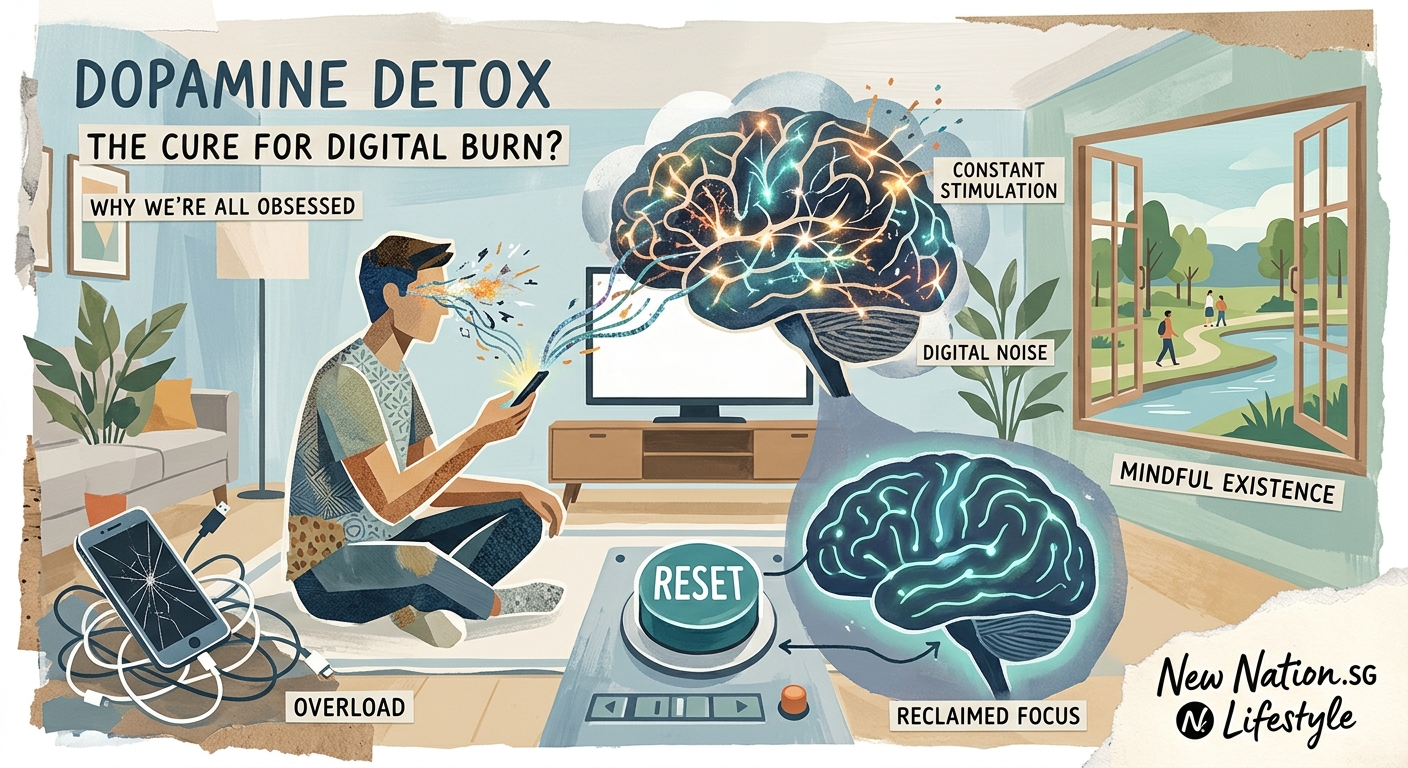
The biggest mistake? Thinking this is a one-time fix. Your brain doesn’t permanently change from a single weekend without Instagram. The real benefit comes from using the detox as a reset button, then building better ongoing habits.
What actually happens when you reduce stimulation
The first day is usually the hardest. You’ll feel bored. Restless. Your hand will reach for your phone automatically. You’ll think of a hundred reasons why you need to check just one thing.
This is normal. Your brain is used to constant input. The discomfort you feel is your reward system protesting the lack of easy dopamine hits.
By day two or three, something shifts. Tasks that felt tedious start feeling more engaging. A conversation holds your attention. A book pulls you in. You notice details you usually miss.
This isn’t magic. It’s your brain adjusting to a lower stimulation baseline. Activities that couldn’t compete with TikTok suddenly become interesting again.
Some people report better sleep. Makes sense, since you’re not flooding your brain with blue light and stimulating content before bed. Others notice improved mood stability. The constant ups and downs of social media validation smooth out.
Productivity often improves, but not always immediately. Initially, you might feel sluggish as your brain adjusts. Give it time.
Is this just another wellness fad?
Fair question. The internet loves repackaging old ideas with neuroscience buzzwords. “Dopamine detox” sounds more scientific than “take a break from your phone,” even though they’re essentially the same thing.
But dismissing it entirely misses the point. The specific terminology might be trendy, but the underlying problem is real. We are more overstimulated than any generation in history. Our brains didn’t evolve to handle this much constant input.
The trend resonates because people genuinely feel overwhelmed. They’re looking for solutions, and “dopamine detox” offers a framework that feels actionable.
The danger comes when people treat it as a cure-all or follow extreme protocols without understanding the principles. Spending 24 hours in sensory deprivation won’t fix deeper issues with anxiety, depression, or ADHD. Those require professional help.
Think of dopamine detox as a tool, not a solution. It’s useful for resetting your relationship with stimulating activities, but it’s not a substitute for therapy, medication, or addressing root causes of unhealthy behaviors.
Building sustainable habits after the detox
The detox itself is just the beginning. The real challenge is maintaining changes after you reintroduce stimulating activities.
Here’s what works:
Set boundaries before you restart. Decide in advance how you’ll use the things you took a break from. Maybe Instagram is only for 20 minutes after dinner. Maybe you only play video games on weekends. Write down your rules.
Use friction to your advantage. Don’t reinstall apps immediately. Keep your phone in another room while working. Make the overstimulating activities slightly harder to access.
Notice when you’re using activities to escape. Reaching for your phone when you’re anxious, bored, or avoiding something? That’s a sign to pause and address what you’re actually feeling.
Regular mini-resets help. Many people find that doing a 24-hour reset every few weeks helps them stay balanced. It’s easier to maintain than waiting until things get bad again.
The goal isn’t to live like a monk. It’s to have a healthier relationship with the stimulating parts of modern life. You can enjoy social media, video games, and streaming without letting them dominate your attention and mood.
Making it work for your actual life
Not everyone can disappear into the woods for a weekend. You have work, responsibilities, relationships. A realistic approach fits into your life instead of requiring you to pause everything.
Try a modified version during your regular routine. Keep your work email but delete social apps. Watch one planned show instead of scrolling through options for an hour. Play music you already know instead of constantly seeking new stimulation.
The point is intentionality. You’re choosing what to engage with instead of mindlessly consuming whatever appears in front of you.
Some people find that certain activities aren’t problems for them. Maybe you can moderate video games easily but struggle with social media. Customize the detox to your actual patterns instead of following someone else’s rules.
When to skip the trend entirely
Dopamine detox isn’t for everyone. If you have ADHD, cutting out all stimulation might make things worse, not better. Your brain already struggles with dopamine regulation, and removing engaging activities can increase executive dysfunction.
Same goes if you’re dealing with depression. Isolating yourself and removing pleasurable activities can deepen the problem. You need professional support, not a social media wellness trend.
People with eating disorders should be cautious about any protocol that involves restricting food or labeling certain foods as “bad.” The language around dopamine detox sometimes overlaps with disordered eating patterns.
If you’re unsure whether this is appropriate for you, talk to a therapist or doctor before trying it.
Finding your own balance
The viral version of dopamine detox promises dramatic transformations. Real life is messier and more gradual. You won’t become a productivity machine overnight. You won’t suddenly love reading dense philosophy books if that’s never been your thing.
What you might find is a little more space in your mind. A little less compulsion to check your phone every few minutes. A little more ability to focus on one thing at a time.
That’s not nothing. In a world designed to fragment your attention and monetize your distraction, reclaiming even small amounts of focus is valuable.
The best approach is treating this as an ongoing practice rather than a one-time event. Your brain’s relationship with stimulation isn’t fixed. It changes based on your habits and environment. Regular check-ins and adjustments help you stay balanced as your life changes.
Start small. Pick one weekend. Choose a couple of activities to reduce. See what you notice. You might be surprised by how much mental space opens up when you’re not constantly chasing the next dopamine hit.