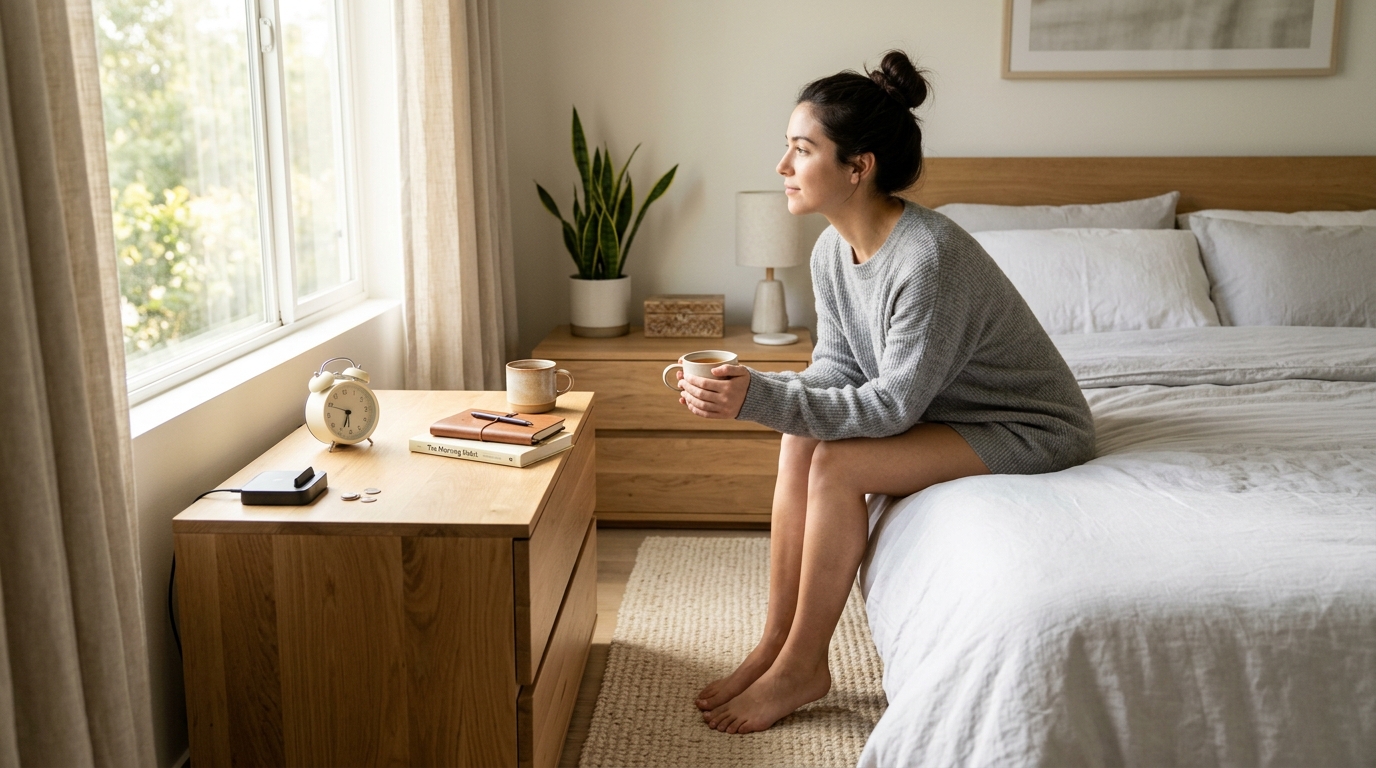
Your alarm goes off. Your hand reaches for your phone before your eyes fully open. The next thing you know, twenty minutes have vanished into a scroll hole of emails, news alerts, and social media feeds. Your morning has already been hijacked.
Breaking free from this pattern doesn’t require superhuman willpower. It needs a system that removes the friction from better choices and makes reaching for your phone the harder option.
A successful phone free morning routine starts the night before by removing your device from the bedroom entirely. Replace digital habits with physical alternatives like analog alarms, paper planners, and intentional movement. The first hour sets your cognitive tone for the entire day, and reclaiming it from notifications gives you back control over your attention and energy.
Why your morning phone habit sabotages your entire day
That innocent morning scroll triggers a cascade of mental effects that follow you for hours. Your brain shifts into reactive mode, responding to other people’s priorities instead of setting your own. Cortisol levels spike as you process work stress, world news, and social comparisons before you’ve even had coffee.
Research shows that checking your phone within the first hour of waking correlates with higher anxiety levels throughout the day. Your prefrontal cortex, responsible for executive function and decision making, gets flooded with information before it’s fully online.
The dopamine hit from notifications trains your brain to crave that stimulation. Each morning you repeat the pattern, you strengthen the neural pathway that makes the habit harder to break.
Setting up your bedroom for success
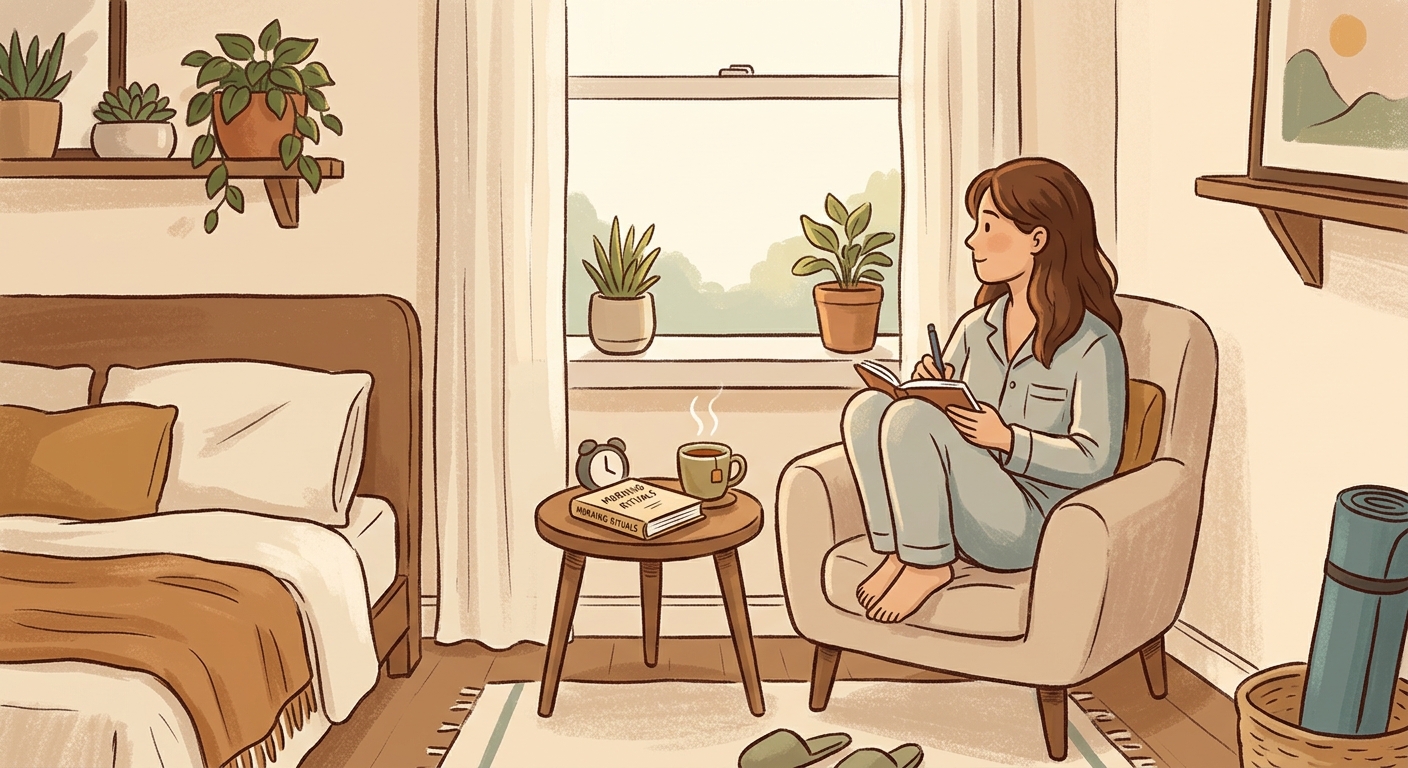
The most effective strategy is also the simplest: your phone sleeps in a different room. Period.
This single change eliminates the decision fatigue of resisting temptation. You can’t check what isn’t within arm’s reach.
Here’s what you need to make this work:
- Buy a dedicated alarm clock that doesn’t connect to the internet
- Set up a charging station in your kitchen, bathroom, or hallway
- Plug your phone in before you start your bedtime routine
- Set your alarm clock for the same time every day, including weekends
That analog alarm clock is non-negotiable. The “but I need my phone for the alarm” excuse is the trapdoor that keeps you trapped in the cycle.
Building your first phone free hour
The goal isn’t to fill every minute with productivity theater. It’s to claim space for intention before the world’s demands flood in.
Your first phone free morning routine should include activities that engage your body and mind without requiring a screen. Start small and build from there.
Movement comes first
Physical activity shifts your nervous system out of sleep mode faster than anything else. You don’t need a full workout. Ten minutes of stretching, a walk around the block, or a few yoga poses signals to your body that the day has begun.
Movement also creates a natural transition point. Instead of bed to phone, you go from bed to body awareness to whatever comes next.
Hydration before caffeine
Your body loses water overnight through breathing and metabolism. Drinking 16 ounces of water before coffee or tea helps with mental clarity and energy levels.
Keep a water bottle on your nightstand. Make it the first thing you reach for instead of your phone.
Analog planning
Writing your top three priorities for the day on paper activates different cognitive processes than typing them into an app. The physical act of writing improves memory retention and helps clarify thinking.
Use a notebook that lives on your nightstand or kitchen table. Spend five minutes mapping out your day before you open your laptop or check messages.
The replacement strategy
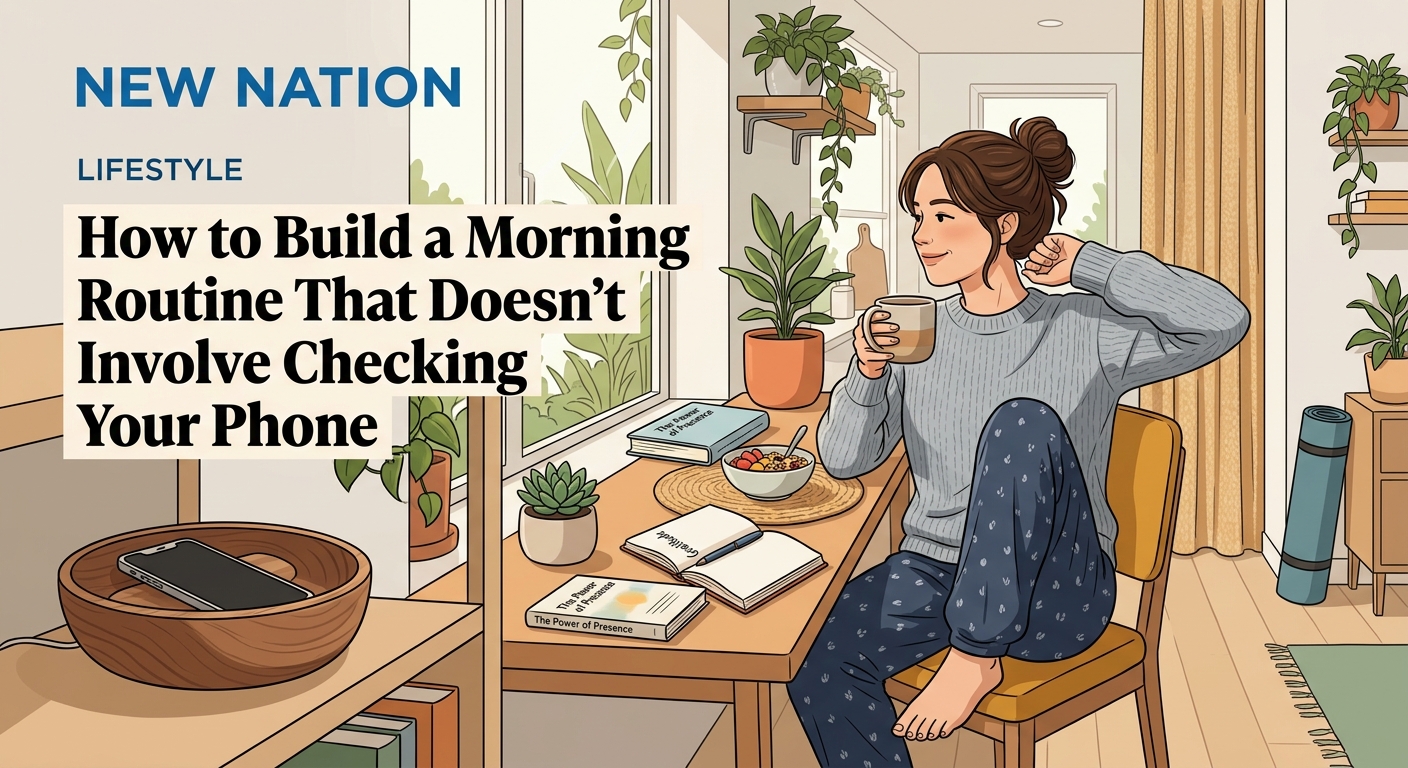
Breaking a habit works better when you replace it with something else rather than just trying to stop. Your brain needs a new pattern to follow.
| Old Phone Habit | Physical Replacement | Why It Works |
|---|---|---|
| Checking news | Reading a physical newspaper or book | Controlled information input without algorithmic feeds |
| Social media scroll | Journal writing or sketching | Creative output instead of passive consumption |
| Email triage | Morning pages (stream of consciousness writing) | Clears mental clutter without adding new tasks |
| Weather app | Looking out the window and checking a wall thermometer | Sensory engagement with actual environment |
| Calendar checking | Paper planner review | Tactile interaction improves memory |
The replacement needs to satisfy the same itch the phone was scratching. If you checked your phone for a sense of connection, call a friend while making breakfast. If it was about feeling productive, tackle a small household task.
Handling the anxiety spike
The first few mornings without your phone will feel uncomfortable. That discomfort is withdrawal from a dopamine pattern, not evidence that you need your device.
You might experience:
- A nagging feeling that you’re missing something important
- Phantom vibration sensations
- Restlessness or mild anxiety
- Boredom that feels intolerable
- The urge to check “just for a second”
These sensations typically peak around day three and start diminishing by day seven. Your nervous system is recalibrating to a lower stimulation baseline.
“The discomfort you feel in a phone free morning isn’t a problem to solve. It’s the actual process of breaking the dependency. Sitting with that feeling instead of immediately relieving it is how the change happens.” – Dr. Anna Lembke, psychiatrist and author
Breathe through the urge. Notice it, name it, and let it pass without acting on it. The sensation will fade in 60 to 90 seconds if you don’t feed it.
Creating friction for phone access
Even with your phone in another room, you’ll eventually need to use it. The goal is to add intentional friction between waking up and first screen contact.
Set a minimum time threshold. Maybe you don’t touch your phone until you’ve been awake for 60 minutes. Or until after breakfast. Or until you’ve completed your morning routine checklist.
Some people use a physical timer or a kitchen safe with a time lock. Others rely on accountability partners who text to check in.
The specific method matters less than the commitment to a clear boundary. “I’ll try not to check my phone” doesn’t work. “I don’t use my phone until after 8am” does.
Troubleshooting common obstacles
What if I have kids who need me?
Your partner, older children, or anyone else in your home can reach you without your phone. If you live alone with young kids, keep the phone in your bathroom or another nearby room with the volume on for emergencies, but don’t bring it back to your bedroom.
What about work emergencies?
Genuine emergencies that require your immediate attention before 7am are rare. If you’re in a role with legitimate on-call responsibilities, set up a separate device for those alerts only. Most “urgent” work issues can wait 60 minutes.
I use my phone for meditation apps.
Meditation apps are better than no meditation, but they’re still screen time. Try unguided meditation, breathing exercises you’ve memorized, or audio-only meditation using a speaker with a pre-downloaded file.
What if I need to check something important first thing?
Write down what you think you need to check. Chances are, by the time you finish your phone free routine, either the urgency has faded or you’ve thought of a non-phone solution.
Extending the practice
Once your first hour is solid, consider expanding. Some people build up to phone free mornings until 9am or even noon.
The sweet spot for most people is 90 minutes to two hours. This gives you enough time for a substantial morning routine without feeling disconnected from necessary communication.
You might also designate one full day per week as a phone free morning day, where you don’t touch your device until afternoon. Sundays work well for this since many people have fewer urgent obligations.
Measuring what matters
Track your progress based on how you feel, not just whether you “succeeded” each day.
Notice changes in:
- Your energy levels throughout the day
- How present you feel during morning activities
- Your ability to focus on deep work later
- Your overall anxiety or stress levels
- The quality of your sleep
Some people find that phone free mornings improve their sleep because they’re not priming their brain for stimulation first thing. The habit creates a positive feedback loop.
When you slip up
You will check your phone during your protected time at some point. Everyone does.
Don’t let one morning derail the entire practice. Acknowledge what happened, identify the trigger, and adjust your system to prevent the same slip next time.
Maybe you need to move your charging station farther away. Maybe you need a louder alarm clock. Maybe you need to go to bed earlier so you’re not hitting snooze and reaching for your phone out of grogginess.
Each slip contains information about where your system needs reinforcement.
Your morning sets the template
The way you spend your first waking hour programs your brain for how you’ll spend the rest of your day. Start in reactive mode, and you’ll stay there. Start with intention, and that intention carries forward.
A phone free morning routine isn’t about being a productivity robot. It’s about reclaiming agency over your attention before the world’s demands start competing for it. That first hour is yours. Protect it accordingly.