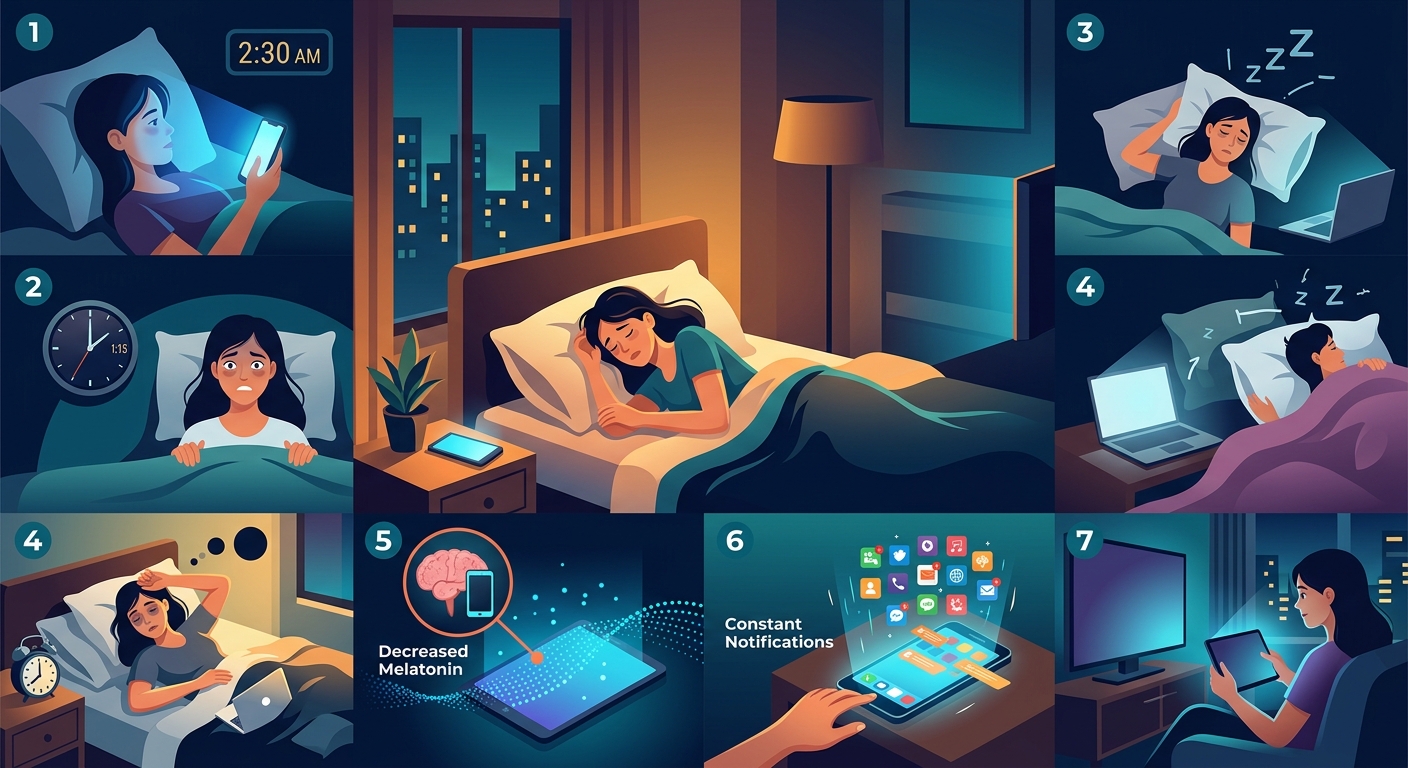
You scroll through Instagram at 11 PM, thinking it will help you wind down. Instead, you lie awake for another hour, mind racing. Sound familiar?
The blue glow from our phones, tablets, and laptops does more than just light up our faces. It sends powerful signals to our brains that interfere with natural sleep patterns. For many adults, evening screen habits have become the invisible culprit behind restless nights and groggy mornings.
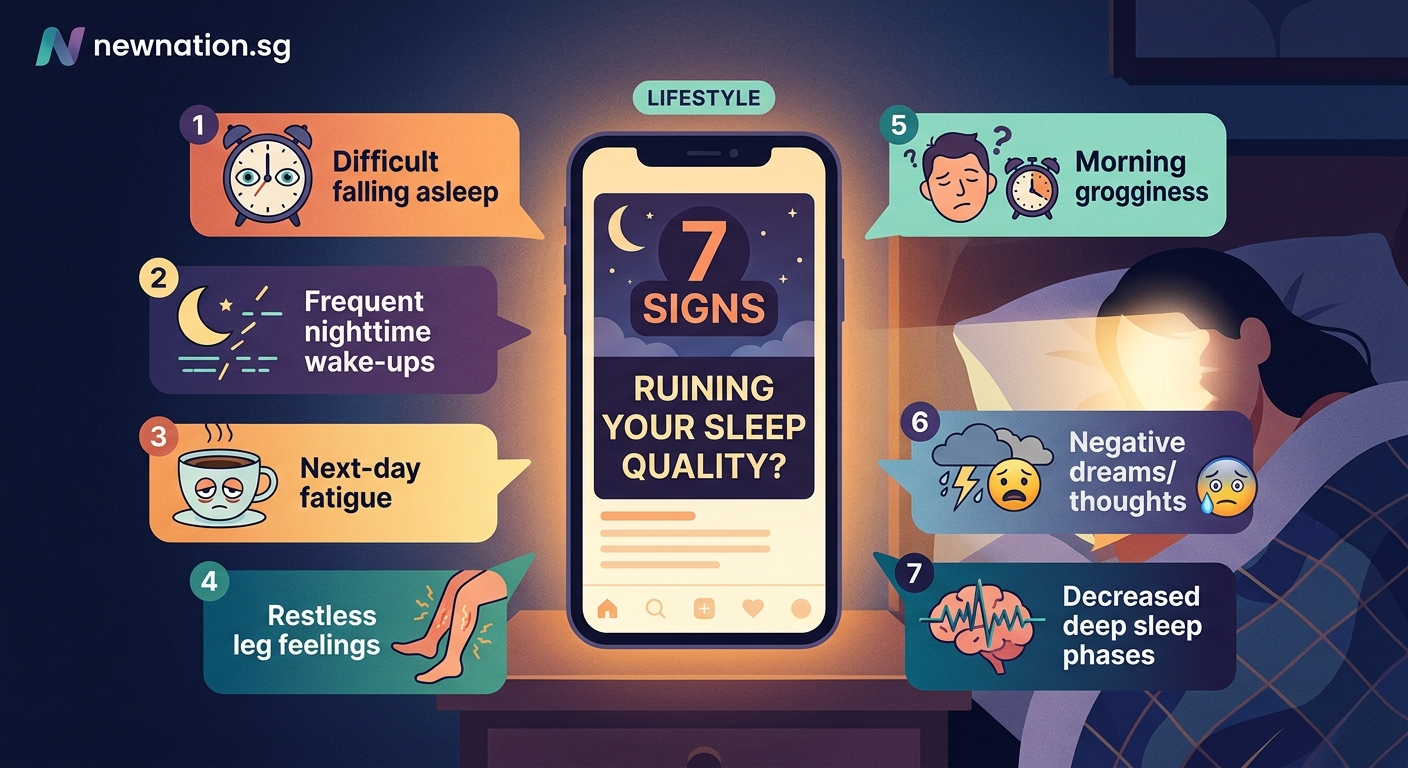
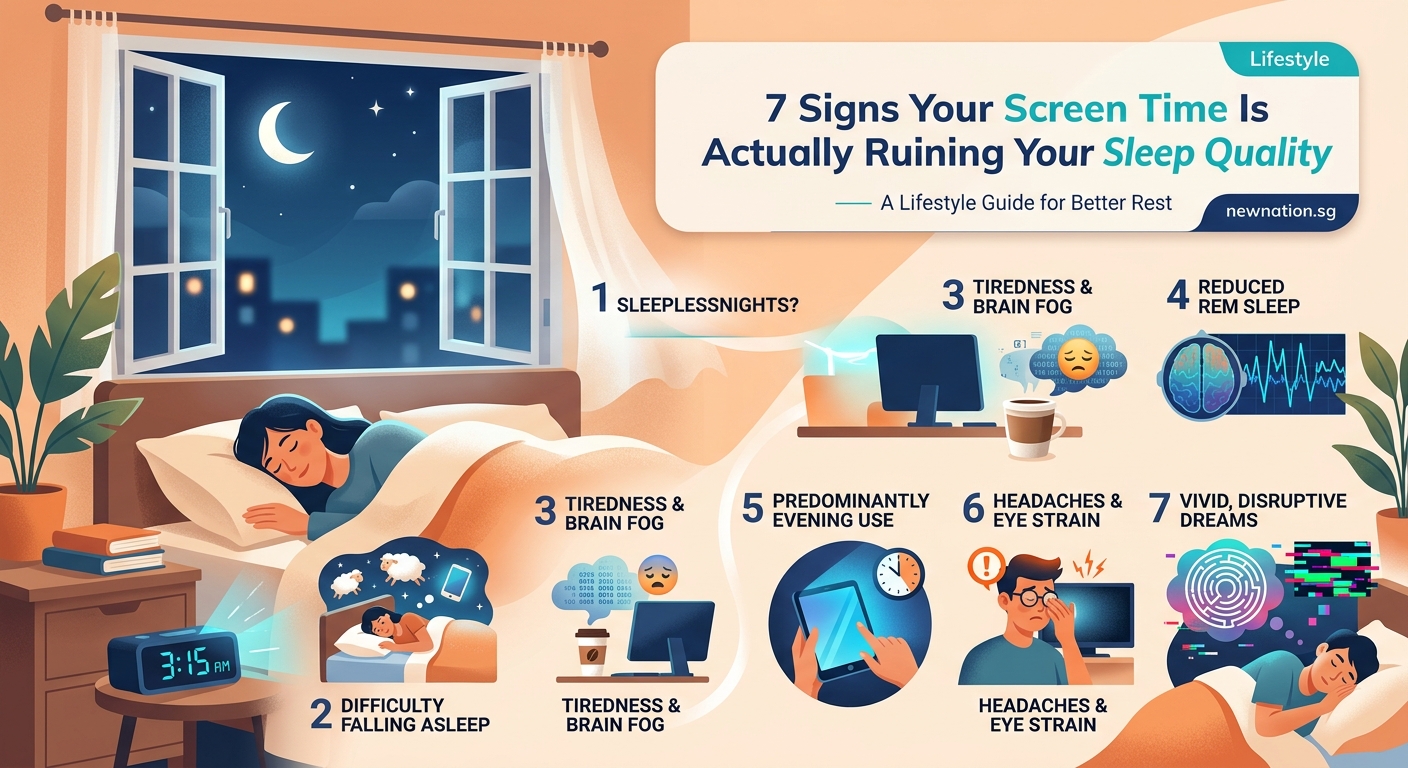
Screen time affects sleep quality through blue light exposure, mental stimulation, and disrupted [circadian rhythm](https://www.nigms.nih.gov/education/fact-sheets/Pages/circadian-rhythms.aspx)s. Warning signs include difficulty falling asleep after device use, waking frequently at night, morning fatigue despite adequate sleep hours, and increased anxiety before bed. Recognizing these patterns helps you make targeted changes to protect your rest and restore natural sleep cycles for better overall health.
Understanding How Devices Disrupt Your Natural Sleep Cycle
Your body runs on an internal clock called the circadian rhythm. This biological system regulates when you feel alert and when you feel sleepy.
Light plays the starring role in this process. When your eyes detect light, especially the blue wavelengths emitted by screens, your brain interprets this as daytime. The pineal gland then suppresses melatonin production, the hormone that makes you feel drowsy.
The problem? Most of us use devices right up until bedtime. We check work emails at 10 PM. We watch Netflix episodes until midnight. Each minute of screen exposure delays the natural melatonin surge your body needs to fall asleep.
Research shows that just two hours of evening screen time can suppress melatonin by about 22%. That might not sound dramatic, but it can push your sleep onset back by 30 to 60 minutes.
Your brain also interprets the content you consume. A tense work email triggers stress hormones. A suspenseful show activates your fight-or-flight response. Social media feeds stimulate reward centers. All of this keeps your nervous system in an aroused state when it should be winding down.
Sign 1: You Take More Than 30 Minutes to Fall Asleep
Healthy sleep onset happens within 10 to 20 minutes of lying down. If you consistently stare at the ceiling for 30 minutes or longer, your evening screen habits might be the reason.
The technical term for this is sleep onset latency. Extended latency often indicates that your brain hasn’t received the proper shutdown signals.
Think about your typical evening routine. Do you scroll through your phone in bed? Watch TV right before turning off the lights? Check your tablet one last time?
Each of these activities keeps your brain in an active state. The stimulation doesn’t stop the moment you set the device down. Your mind continues processing information, replaying conversations, or worrying about what you saw.
Many people notice a pattern: nights without screens lead to faster sleep onset. Nights with heavy device use lead to extended wakefulness. This correlation is your first clue that screen time is affecting your sleep quality.
Sign 2: You Wake Up Multiple Times During the Night
Screen exposure before bed doesn’t just affect how fast you fall asleep. It also impacts sleep architecture, the natural progression through different sleep stages.
People with high evening screen time often experience fragmented sleep. You might fall asleep eventually, but you wake at 2 AM, 4 AM, and 6 AM. Each awakening pulls you out of deeper, more restorative sleep stages.
Why does this happen? Evening screen use can create a state of hyperarousal. Your cortisol levels remain elevated. Your heart rate stays higher than normal. Your brain activity doesn’t settle into the slower wave patterns needed for consolidated sleep.
Social media deserves special mention here. Scrolling through feeds before bed often triggers emotional responses. You see upsetting news. You compare yourself to others. You feel FOMO about events you missed. These emotional states activate your stress response system, which remains partially active throughout the night.
The result? Your sleep becomes lighter and more easily disrupted. Environmental sounds that wouldn’t normally wake you suddenly pull you to consciousness. Your bladder signals that would typically wait until morning now wake you at 3 AM.
Sign 3: You Feel Exhausted Despite Sleeping Enough Hours
Seven to eight hours in bed should leave you feeling refreshed. But what if you consistently wake up tired?
Sleep quantity matters, but sleep quality matters more. You can spend nine hours in bed and still feel drained if those hours lack depth.
Screen time affects sleep quality by reducing time spent in REM and deep sleep stages. REM sleep handles memory consolidation and emotional processing. Deep sleep manages physical restoration and immune function.
When blue light exposure and mental stimulation disrupt these stages, you get what sleep researchers call “junk sleep.” You’re unconscious, but your brain and body aren’t completing their essential maintenance tasks.
Many adults in their 30s and 40s notice this pattern. They maintain consistent bedtimes and wake times. They get the recommended hours. Yet they still rely on multiple cups of coffee to function. The missing piece? Their evening screen habits are stealing the restorative value from those sleep hours.
Sign 4: Your Eyes Feel Strained and Dry in the Morning
Waking up with gritty, uncomfortable eyes isn’t normal. This symptom often connects to excessive screen exposure in the hours before sleep.
Staring at screens reduces your blink rate by about 60%. Fewer blinks mean less moisture distribution across your eye surface. This creates dry spots that can feel uncomfortable or even painful.
Evening screen use compounds this problem. Your eyes are already tired from a full day of work. Adding several more hours of screen time before bed pushes them past their comfort threshold.
The discomfort doesn’t magically resolve when you close your eyes to sleep. Dry, strained eyes can interfere with sleep quality. You might wake during the night with eye discomfort. You might sleep with your eyes partially open, a condition called nocturnal lagophthalmos that screen strain can worsen.
Morning eye symptoms serve as a direct feedback signal. Your body is telling you that your screen habits exceeded healthy limits.
Sign 5: You Experience Increased Anxiety or Racing Thoughts at Bedtime
Mental health and sleep quality form a bidirectional relationship. Poor sleep worsens anxiety. Anxiety disrupts sleep. Screen time often sits right in the middle of this cycle.
Evening device use frequently involves activities that stimulate worry:
- Checking work emails that reveal new problems
- Reading news about concerning events
- Scrolling through social media and comparing your life to others
- Watching shows with intense or violent content
- Engaging in online debates or conflicts
Your brain doesn’t have an off switch. Content consumed at 10 PM continues processing at 11 PM when you’re trying to sleep. Worries amplify. Problems feel more overwhelming in the dark.
The blue light exposure adds another layer. By suppressing melatonin, it keeps your brain in a more alert state. This alert state makes it harder to dismiss intrusive thoughts. Your mind latches onto concerns and spirals into rumination.
If you notice your bedtime anxiety levels correlating with your screen use, you’ve identified a clear connection. The devices meant to help you relax are actually keeping your nervous system activated.
Sign 6: You Reach for Your Phone Immediately Upon Waking
Your morning habits reveal a lot about how screen time is affecting your sleep patterns. Do you check your phone before your feet hit the floor?
This behavior indicates two problems. First, you’re starting your day with a cortisol spike. Morning light from screens signals your brain to produce stress hormones. This creates a jittery, anxious start rather than a gradual, natural awakening.
Second, this habit suggests your phone has become a psychological dependency. You’re using it to avoid uncomfortable feelings or to seek external validation before you’ve even processed your own thoughts.
Many people keep phones on their nightstands for alarm purposes. But that proximity creates temptation. You wake at 3 AM to use the bathroom and check notifications. That screen exposure at 3 AM can make it nearly impossible to fall back asleep.
The immediate morning phone check also cuts into time you could spend with healthier wake-up routines. Natural light exposure, gentle stretching, or a few minutes of calm reflection all support better sleep-wake cycles. Scrolling through emails or social media does the opposite.
Sign 7: Your Sleep Schedule Has Become Irregular
Consistent sleep timing helps regulate your circadian rhythm. Going to bed and waking at similar times each day strengthens your body’s natural patterns.
Screen time often destroys this consistency. One episode turns into three. A few minutes of scrolling becomes an hour. Before you know it, your bedtime has shifted by two hours.
Weekend patterns often show the clearest evidence. Without work obligations, many people stay up much later, binge-watching shows or scrolling endlessly. They sleep in to compensate. This creates social jet lag, a misalignment between your body clock and your actual schedule.
The variability itself becomes a problem. Your body never knows when to release melatonin. Your liver doesn’t know when to optimize detoxification processes. Your digestive system can’t establish predictable rhythms.
Tracking your bedtime for two weeks often reveals patterns you didn’t consciously recognize. You might notice that nights with heavy screen use correlate with later bedtimes. Nights when you put devices away early correlate with more consistent timing.
What the Science Says About Blue Light and Melatonin
Understanding the mechanism helps you take the problem seriously. Blue light wavelengths between 450 and 480 nanometers have the strongest impact on circadian rhythms.
Your eyes contain specialized cells called intrinsically photosensitive retinal ganglion cells. These cells detect light and send signals directly to the suprachiasmatic nucleus, your brain’s master clock.
When these cells detect blue light, they interpret it as daytime. The suprachiasmatic nucleus then sends signals to suppress melatonin production. This system evolved to keep us alert during daylight hours.
Modern screens emit significant blue light. LED technology, which powers most smartphones, tablets, and computers, produces particularly strong blue wavelengths. Even devices with “night mode” or warm color settings still emit enough blue light to affect melatonin.
The effects of screen-emitted light on sleep are not just about brightness. The specific wavelengths matter enormously. Even dim blue light can suppress melatonin, while brighter red or amber light has minimal impact.
The timing matters too. Your sensitivity to light changes throughout the day. Evening exposure to blue light has a much stronger circadian impact than morning exposure. Just 30 minutes of screen time between 10 PM and midnight can shift your circadian phase by up to 90 minutes.
How Different Devices and Activities Vary in Impact
Not all screen time affects sleep equally. Understanding these differences helps you make smarter choices about evening device use.
| Device Type | Impact Level | Primary Concern |
|---|---|---|
| Smartphone | High | Close proximity increases blue light exposure; addictive scrolling extends use |
| Tablet | High | Similar to smartphone but larger screen means more light exposure |
| Laptop | Moderate to High | Depends on distance and brightness; work-related stress adds mental stimulation |
| Television | Moderate | Greater viewing distance reduces blue light impact; passive watching less mentally stimulating |
| E-reader (e-ink) | Low | Minimal light emission; less engaging content supports wind-down |
Content type also matters:
- Work emails and documents create stress and problem-solving activation
- Social media triggers emotional responses and comparison
- News content often presents threatening or concerning information
- Video games require active engagement and competitive arousal
- Streaming shows vary by genre; intense content disrupts more than calm content
- Reading apps with white backgrounds are more disruptive than those with dark modes
The combination of device, content, duration, and timing determines total impact. Checking your phone for two minutes at 9 PM to set an alarm creates minimal disruption. Scrolling through social media for an hour at 11 PM creates significant interference with sleep onset.
Practical Steps to Reduce Screen Impact on Your Sleep
Recognizing the problem is step one. Making changes is step two. Here are concrete strategies that work:
-
Establish a digital sunset. Pick a time, ideally two to three hours before bed, when you stop using stimulating screens. This gives your brain time to naturally wind down.
-
Create a charging station outside your bedroom. Keep phones, tablets, and laptops in another room overnight. Use a traditional alarm clock if needed.
-
Use blue light filters strategically. While not a complete solution, enabling night mode or using blue light blocking glasses after 8 PM can reduce some impact.
The key is consistency. Your circadian system responds to patterns. Sporadic changes produce minimal results. Sustained new habits create meaningful improvements.
Consider these additional modifications:
- Replace evening screen time with alternative activities like reading physical books, listening to podcasts or music, gentle stretching, journaling, or conversation
- If you must use devices in the evening, reduce brightness to the lowest comfortable level and increase viewing distance
- Set app timers that remind you when you’ve exceeded healthy limits
- Disable notifications after a certain hour so you’re not tempted to check devices
- Create a wind-down routine that signals to your brain that sleep is approaching
Many people resist these changes because devices have become deeply integrated into evening relaxation routines. The adjustment period might feel uncomfortable at first. Give yourself two to three weeks to adapt. Most people report significant sleep improvements once new habits become established.
Testing Whether Screen Time Is Your Sleep Problem
You don’t have to guess about whether screens are affecting your sleep. You can test the connection directly.
Try this two-week experiment:
Week 1: Baseline tracking
– Continue your normal screen habits
– Track your bedtime, sleep onset time, number of night wakings, and morning energy level
– Note total evening screen time each day
Week 2: Screen restriction
– Stop all screen use two hours before bed
– Maintain the same bedtime as week one
– Track the same sleep metrics
Compare your results. Most people notice measurable differences:
- Faster sleep onset (falling asleep 15 to 30 minutes sooner)
- Fewer night wakings
- Better morning energy despite the same sleep duration
- Reduced bedtime anxiety
This experiment provides personalized data. Your body’s response tells you whether screen time is affecting your sleep quality. The evidence becomes impossible to ignore when you see the direct correlation.
Some people discover they’re more sensitive to screens than others. Genetic variations affect how strongly blue light impacts your circadian system. Your age also matters. People over 40 tend to be more vulnerable to evening light exposure because their eyes’ lenses allow more blue light to reach the retina.
When Screen Time Isn’t the Only Factor
Screen habits often contribute to sleep problems, but they’re rarely the only cause. Other factors can compound the issue or create similar symptoms.
Consider these additional sleep disruptors:
- Caffeine consumption, especially after 2 PM
- Alcohol use, which fragments sleep architecture
- Irregular sleep schedules including weekend variations
- Bedroom environment issues like temperature, noise, or light
- Stress and anxiety from work or relationships
- Medical conditions like sleep apnea or restless leg syndrome
- Medications that interfere with sleep
If you eliminate evening screen time but still experience significant sleep difficulties, consult a healthcare provider. You might benefit from a sleep study or evaluation for underlying conditions.
That said, screen time often interacts with these other factors. Reducing device use before bed might not fix everything, but it typically improves your overall sleep quality enough to make other interventions more effective.
Building Better Evening Habits That Support Sleep
The goal isn’t to eliminate all technology from your life. It’s to use devices in ways that support rather than sabotage your sleep.
Think about evening activities that genuinely help you relax:
- Taking a warm bath or shower
- Practicing gentle yoga or stretching
- Reading fiction that transports you to another world
- Listening to calming music or nature sounds
- Having meaningful conversations with family or friends
- Doing simple hobbies like knitting, drawing, or puzzles
- Writing in a gratitude journal
- Preparing for the next day to reduce morning stress
These activities provide genuine relaxation without the stimulating effects of screens. They allow your nervous system to shift into parasympathetic mode, the “rest and digest” state that prepares you for sleep.
Creating a consistent evening routine signals to your brain that sleep is approaching. Your body begins the natural wind-down process. Melatonin production starts on schedule. Your core body temperature drops slightly. Your heart rate slows.
This biological preparation makes falling asleep easier and improves sleep quality throughout the night. You spend more time in restorative sleep stages. You wake less frequently. You feel more refreshed in the morning.
Making Peace With Missing Out
One major barrier to reducing evening screen time is FOMO. What if something important happens and you miss it? What if someone needs to reach you?
Here’s the reality: very few things are true emergencies that require immediate evening response. Most notifications can wait until morning. Most social media updates have no real impact on your life. Most work emails don’t require 11 PM attention.
Setting boundaries around evening device use actually improves your daytime productivity and relationships. Better sleep means better focus, mood, and energy. You’re more present in conversations. You make better decisions. You handle stress more effectively.
People in your life will adjust to your new boundaries. Let them know you don’t check messages after 9 PM. Provide alternative contact methods for genuine emergencies. Most will respect your commitment to better sleep.
The short-term discomfort of missing some online activity pays long-term dividends in health and wellbeing. Sleep is not a luxury. It’s a biological necessity that affects every system in your body.
Your Sleep Is Worth Protecting
Screen time affecting sleep isn’t a minor inconvenience. It’s a significant health issue with ripple effects throughout your life.
Poor sleep increases your risk for obesity, diabetes, heart disease, depression, and cognitive decline. It weakens your immune system. It accelerates aging. It impairs your ability to learn and remember.
The devices that connect us to the world shouldn’t disconnect us from the rest our bodies desperately need. Recognizing the warning signs gives you the power to make different choices.
Start tonight. Put your phone in another room. Pick up a book instead. Notice how your body responds. Give yourself permission to prioritize sleep over screens. Your future self will thank you for the investment.