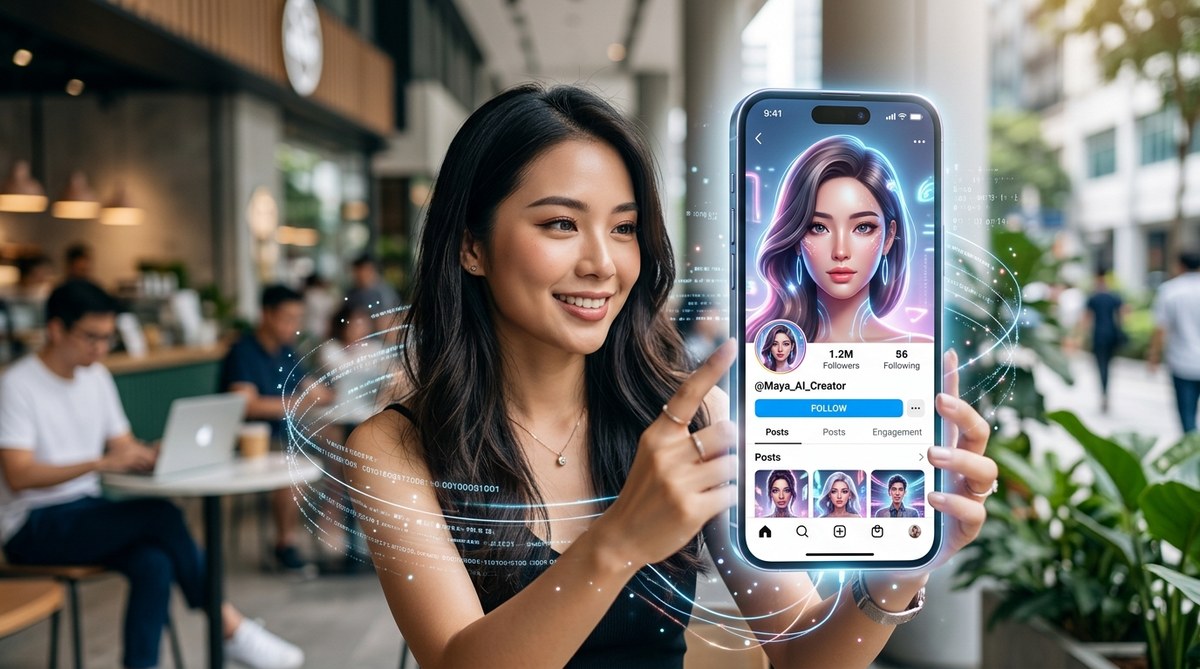
Influencers have long been the face of social media. They shape trends, promote brands, and influence millions of followers. But lately, a new type of influencer is emerging — one created entirely by artificial intelligence. These AI-generated influencers are changing the landscape of online culture and raising questions about authenticity, trust, and the future of digital engagement.
AI influencers are digital creations that mimic human personalities, blurring lines between real and fake. They impact marketing, challenge authenticity norms, and reflect changing online dynamics. Understanding their rise helps navigate future social media trends and maintain trust in digital spaces.
Understanding how AI influencers are reshaping social media
AI-generated influencers are virtual personalities designed using sophisticated algorithms and deep learning. Unlike traditional influencers, who are humans sharing their lives, AI influencers are entirely computer-created characters. They can be programmed with unique personalities, styles, and even backstories. These digital characters often appear more polished, consistent, and adaptable than real humans.
Their appearance is crafted through advanced image generation tools like They can be tailored to fit brand aesthetics perfectly and are available to work around the clock without fatigue or scandal. Their rise signifies a shift in how brands and audiences perceive authenticity and influence.
Why AI influencers appeal to brands and creators
AI influencers offer several advantages. They are cost-effective, scalable, and controllable. Brands can customize their messaging without worrying about personal missteps or reputation risks. For digital marketers, AI influencers open new avenues for innovative campaigns that blend entertainment and branding seamlessly.
Some of the key reasons behind their growing popularity include:
- Consistent personality and appearance
- No need for physical space or travel
- Ability to engage with trending topics instantly
- Avoidance of scandals or controversies associated with humans
- Flexibility to target niche audiences
For creators, AI influencers serve as a canvas for experimenting with new content styles and reaching global markets without geographic constraints.
The expanding market for AI-powered virtual influencers
The market for AI influencers is booming. Companies are investing heavily to develop and deploy these digital personas. Platforms like https://newnation.sg/7-emerging-social-media-platforms-that-could-dethrone-the-giants-in-2026/ are exploring AI-driven content creators to stay competitive.
Major brands already collaborate with AI influencers for product launches, fashion campaigns, and even mental health awareness. For example, virtual models like Lil Miquela have amassed millions of followers and worked with top fashion labels. This trend indicates a future where AI influencers could become commonplace in marketing strategies.
The authenticity debate: Are AI influencers real?
One of the biggest questions surrounding AI influencers is whether they can truly be authentic. Many followers believe they connect with real personalities. When an AI influencer declares they are digital creations, some fans feel a disconnect or even distrust.
“Authenticity is no longer just about being genuine but also about transparency,” says digital culture expert Dr. Maya Lin. She emphasizes that audiences are becoming more aware of artificiality and are demanding honesty about who or what they follow.
While some see AI influencers as innovative tools, others worry they can deceive or manipulate audiences. The challenge lies in balancing technological creativity with ethical transparency to maintain public trust.
Risks and challenges tied to AI influencers
Using AI influencers isn’t without pitfalls. They pose unique risks that brands and audiences should consider:
- Misrepresentation and deception: Followers might not realize they are engaging with digital characters.
- Loss of genuine connection: AI personalities lack real emotions, which can hinder authentic engagement.
- Data privacy concerns: AI influencers often rely on large datasets, raising questions about user privacy and security.
- Copyright issues: Creating realistic characters or voices could infringe on existing intellectual property rights.
Balancing innovation with responsibility is vital as AI influencers become more prevalent.
How to navigate the rise of AI influencers responsibly
For brands and creators aiming to leverage AI influencers ethically, consider these steps:
- Clearly disclose that the influencer is AI-generated to maintain transparency.
- Use AI influencers to complement human creators, not replace genuine interactions.
- Protect user data and adhere to privacy regulations when deploying AI characters.
- Regularly review content to ensure it aligns with brand values and avoids misleading audiences.
- Stay informed about legal developments concerning AI and digital impersonation.
Implementing these practices can help build trust and foster a positive relationship between audiences and AI-driven content.
Techniques and mistakes in creating AI influencers
| Techniques | Mistakes |
|---|---|
| Using high-quality image and voice synthesis | Overpromising authenticity |
| Incorporating unique personality traits | Misleading followers about AI status |
| Regular content updates with trending topics | Ignoring ethical transparency |
| Ensuring clear disclosure of AI nature | Neglecting privacy and security |
| Engaging with audiences genuinely | Creating overly perfect characters |
Practical steps to develop your own AI influencer
If you’re curious about exploring AI-generated influencers, here’s a straightforward process:
- Define the personality and purpose of your AI influencer.
- Use AI tools like https://newnation.sg/how-ai-image-generators-are-quietly-reshaping-creative-industries/ to craft visual content.
- Develop a voice profile using text-to-speech technology.
- Establish transparency by clearly communicating the AI’s nature.
- Monitor audience reactions and adapt content accordingly.
- Collaborate with legal experts to navigate intellectual property and privacy issues.
By following this approach, you can create engaging AI personalities that resonate with your target audience.
The future of authenticity in an AI-influenced world
As AI influencers grow more sophisticated, the concept of authenticity will continue to evolve. Audiences might value transparency more than the actual human origin of content. They could prioritize honest disclosures and ethical practices over the mere presence of a human behind the account.
The rise of AI influencers reflects a broader shift in online culture — one that questions what it means to be genuine. For digital marketers and social media users, understanding this landscape will be key to forging authentic connections in a world increasingly filled with virtual personalities.
Making sense of a hybrid social media future
AI-generated influencers are not replacing human creators entirely. Instead, they are adding a new layer to the social media ecosystem. Combining human authenticity with technological innovation can produce richer, more diverse content landscapes.
By embracing transparency and ethical practices, brands and creators can harness AI influencers’ potential without sacrificing trust. Whether for marketing, entertainment, or education, AI influencers will likely play a significant role in shaping online interactions.
Final thoughts: adapting to a digital evolution
The rise of AI-generated influencers signals a shift toward more digital artistry and complex online identities. As you navigate this transformation, prioritize honesty and audience engagement. Use AI tools to enhance your content, but always remain open about their artificial nature.
Taking these steps helps foster genuine connections while exploring new creative horizons. The future belongs to those who balance innovation with integrity. So, consider how AI influencers might fit into your digital strategy and stay proactive in building trust in this evolving space.