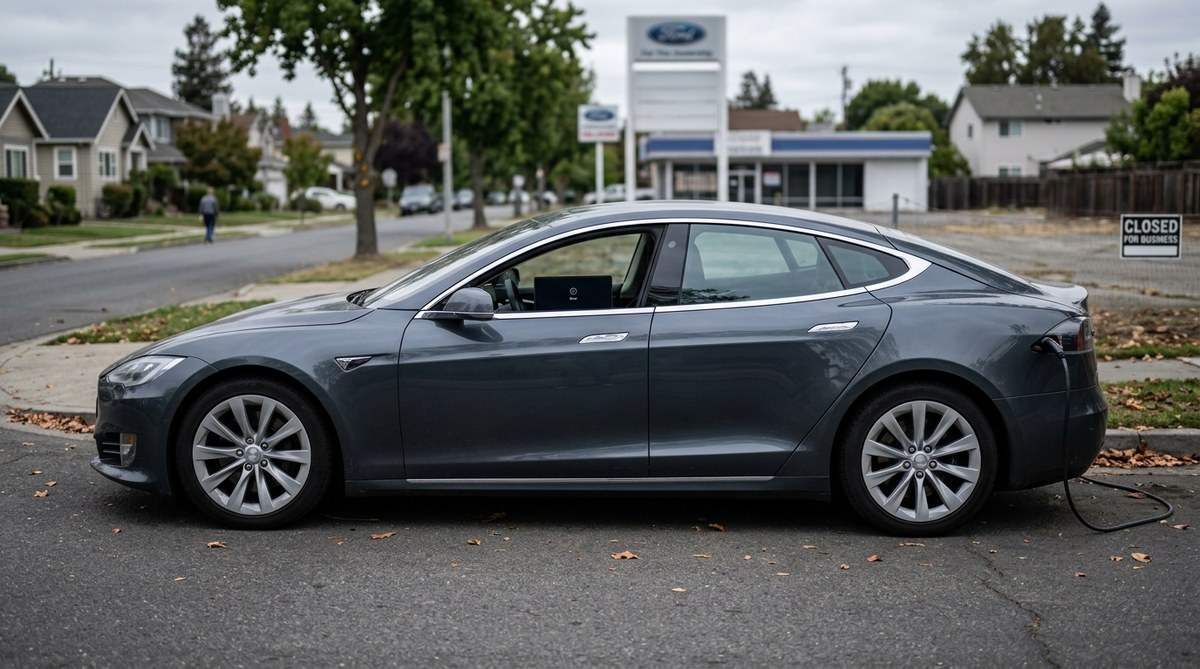
You bought a sleek electric vehicle from a promising new brand. The tech was cutting-edge, the price competitive, and the future looked bright. Then the company announced bankruptcy. Your car still runs, but what about those over-the-air updates? Your warranty? The resale value you were counting on?
This isn’t a hypothetical scenario anymore. Several electric vehicle startups have already collapsed, leaving thousands of owners in limbo. Understanding what happens when car manufacturer goes out of business can help you prepare, protect your investment, and make smarter purchasing decisions.
When a car manufacturer shuts down, your vehicle becomes an orphaned asset. Warranties typically become worthless, software updates cease, parts become scarce, and resale values plummet. However, third-party service providers often fill the gap, and [bankruptcy courts](https://www.uscourts.gov/services-forms/bankruptcy) sometimes mandate limited support periods. Your best protection is thorough research before purchase and extended warranties from independent insurers.
Your warranty becomes worthless paper
The factory warranty that came with your vehicle depends entirely on the manufacturer’s existence. When the company dissolves, those promises evaporate.
Bankruptcy courts don’t force defunct companies to honor warranties. You might receive pennies on the dollar as an unsecured creditor, but that’s years away and unlikely to cover a failed battery pack or motor.
Some manufacturers arrange warranty transfers during bankruptcy proceedings. Fisker, for example, attempted to have American Lease take over some warranty obligations when it collapsed in 2013. These arrangements rarely cover everything and often come with strict limitations.
Third-party extended warranties purchased from independent insurance companies remain valid. If you bought coverage from a company separate from the manufacturer, they’re still obligated to pay claims. This is why independent extended warranties matter more for newer brands than established ones.
Software updates stop arriving
Modern vehicles are computers on wheels. They need regular software updates for:
- Security patches that prevent hacking
- Bug fixes that address safety issues
- Feature improvements that enhance functionality
- Compatibility updates for smartphone integration
- Battery management optimization
When the company disappears, so does the development team. Your car won’t receive another update. Ever.
This creates genuine safety risks. A software vulnerability discovered after the shutdown stays unpatched. Your vehicle becomes increasingly incompatible with newer phones and apps. Battery management systems can’t adapt to degradation patterns, potentially shortening your battery’s lifespan.
Some companies release final “legacy” updates during wind-down periods. Others simply shut off the servers with no warning. Tesla owners take software updates for granted, but owners of defunct brands learn how valuable that ongoing support really is.
The parts supply chain collapses
Finding replacement parts becomes a scavenger hunt.
Manufacturers maintain parts inventory for years after production ends. When a company goes bankrupt, that inventory gets liquidated to pay creditors. Third-party suppliers buy some stock, but rare components disappear entirely.
Generic parts work for common items like brake pads and filters. Proprietary components like battery modules, custom sensors, or unique body panels become nearly impossible to source.
You might find parts through:
- Salvage yards that specialize in the defunct brand
- Online marketplaces where owners sell parts from totaled vehicles
- International suppliers who still have old stock
- 3D printing services for non-critical plastic components
Expect to pay premium prices. A part that cost $200 from the factory might sell for $800 on the secondary market. Simple repairs can become economically unfeasible.
Service and repair networks vanish
Authorized dealerships close or switch to other brands. Technicians trained on your specific vehicle move to different jobs. Diagnostic tools and proprietary software become unavailable.
Independent mechanics can handle basic maintenance, but complex repairs require specialized knowledge. Electric vehicle systems differ significantly from traditional cars. Not every shop has the training or equipment to work safely with high-voltage battery systems.
Some third-party service providers specialize in orphaned brands. After Saab collapsed, independent shops emerged to serve stranded owners. The same pattern occurred with defunct EV startups. These specialists charge more than dealerships did, but they’re often your only option.
Mobile service networks sometimes fill the gap. Technicians who worked for the original company start independent businesses serving former customers. They know the vehicles intimately but lack official parts access and software tools.
Resale value craters immediately
Your vehicle’s market value drops the moment bankruptcy news breaks.
Potential buyers understand the risks. No warranty. No updates. Difficult repairs. They discount accordingly. A car worth $35,000 before the announcement might fetch $18,000 afterward.
Trade-in values suffer even more. Dealerships don’t want inventory they can’t easily resell. They’ll lowball offers or refuse the trade entirely. Private sales become your only realistic option, and the buyer pool shrinks to bargain hunters and enthusiasts.
| Scenario | Typical Value Loss | Time Frame |
|---|---|---|
| Bankruptcy announcement | 20-30% | Immediate |
| Company dissolution | 40-50% | Within 3 months |
| Parts scarcity emerges | 50-65% | 6-12 months |
| Software issues appear | 60-75% | 12-24 months |
These numbers vary by brand recognition and vehicle desirability. A cult-favorite model holds value better than a forgettable sedan. Limited production vehicles sometimes appreciate as collectibles, but that’s rare for failed EV startups.
Charging network access might disappear
Some manufacturers operate proprietary charging networks. When they shut down, those chargers might stop working.
Tesla’s Supercharger network remains operational because Tesla survives. Smaller companies without Tesla’s resources can’t maintain charging infrastructure during bankruptcy. Chargers fall into disrepair or get sold to other operators who may restrict access.
If your vehicle relies on a specific charging standard or authentication system, you could lose convenient charging options. Adapters help, but they’re not always available for every combination of vehicle and charger.
Home charging continues working since it uses standard electrical connections. Public charging through third-party networks remains accessible. You just lose any special access or pricing your manufacturer provided.
What bankruptcy courts actually do
Understanding the legal process helps set realistic expectations.
When a car manufacturer files for bankruptcy, courts prioritize creditors in a specific order. Secured lenders get paid first. Employees owed wages come next. Unsecured creditors, including warranty holders, rank near the bottom.
Courts sometimes mandate limited customer support periods. A judge might order the company to maintain basic services for 90 days while assets are liquidated. This gives owners time to find alternatives but doesn’t provide long-term solutions.
Asset sales can create unexpected outcomes. If another manufacturer buys the intellectual property and tooling, they might offer limited parts and service. When Chinese company Wanxiang bought Fisker’s assets, they eventually produced parts for stranded Fisker Karma owners. But this took years and didn’t restore full support.
“Bankruptcy protection shields companies from obligations, including warranties. As a consumer, you have a claim, but you’re competing with banks and suppliers who lent millions. Your $50,000 warranty claim gets pennies while secured creditors recover their loans.” – Automotive bankruptcy attorney
How to protect yourself before buying
Smart shoppers can minimize risk with advance planning.
Research the manufacturer’s financial health. Look for:
- Recent funding rounds and investor confidence
- Production numbers versus targets
- Cash burn rate and runway
- Executive departures or restructuring
- Delayed model launches
- Supplier payment disputes
Established brands like Ford, GM, and Toyota have survived for decades. They’ve weathered recessions and industry disruptions. Startups face much higher failure rates, regardless of how innovative their technology seems.
Buy independent extended warranties from reputable insurers. These contracts survive manufacturer bankruptcy. Read the fine print carefully. Confirm the insurer has strong financial ratings and a history of paying claims.
Consider leasing instead of buying if you’re interested in a newer brand. The leasing company assumes residual value risk. When the lease ends, you walk away regardless of the manufacturer’s fate. You lose equity, but you also avoid being stuck with an unsellable vehicle.
Join owner communities early. Online forums and social media groups become critical information sources when manufacturers collapse. Members share parts sources, repair techniques, and software workarounds. These communities often organize group buys for parts or fund independent service development.
The rise of third-party support ecosystems
Orphaned vehicles create business opportunities.
Entrepreneurs recognize that stranded owners need help. They develop aftermarket solutions:
- Open-source software replacements for failed manufacturer systems
- Reverse-engineered diagnostic tools
- Remanufactured battery modules
- Custom parts fabrication
- Specialized repair training programs
The your smart home devices are listening more than you think phenomenon extends to vehicles. When official support ends, owners sometimes gain more control over their cars through community-developed alternatives.
These solutions take time to develop. Early owners suffer the most. By the time robust third-party support emerges, you’ve already dealt with months or years of frustration and expense.
Quality varies dramatically. Some aftermarket providers deliver excellent service. Others sell inferior parts or make promises they can’t keep. Vetting providers becomes your responsibility since no official certification exists.
Insurance complications you didn’t expect
Your auto insurance policy might not cover everything you assume.
Comprehensive coverage pays for vehicle damage, but it uses market value to calculate payouts. When your car’s value plummets due to manufacturer bankruptcy, your insurance payout drops proportionally. The $40,000 you paid becomes $20,000 in coverage.
Gap insurance protects against this scenario if you’re still making loan payments. It covers the difference between insurance payout and loan balance. Without gap coverage, you could owe thousands on a totaled vehicle.
Some insurers increase rates for orphaned vehicles. They view them as higher risk due to parts scarcity and repair difficulties. Others refuse to renew policies entirely. Shop around before your renewal date to avoid sudden coverage loss.
Liability coverage continues normally. The manufacturer’s status doesn’t affect your responsibility for accidents. But collision and comprehensive rates reflect the vehicle’s diminished value and increased repair costs.
When keeping the car makes sense
Abandoning your vehicle isn’t always the right choice.
If you love the car and plan to keep it long-term, manufacturer bankruptcy matters less. You’re not selling anyway. You can budget for higher maintenance costs and parts scarcity.
Low-mileage drivers face fewer repair needs. If you only drive 5,000 miles annually, your vehicle might last years without major service. The software never updates, but if current functionality meets your needs, that’s acceptable.
Enthusiast communities sometimes keep orphaned brands alive for decades. Saab owners still maintain their vehicles with dedication. DeLorean owners formed such a strong community that parts reproduction became a viable business. Your defunct EV might develop similar support if enough owners commit.
Calculate the math carefully. If selling means taking a $20,000 loss, but keeping the car costs $3,000 annually in extra maintenance, you’re ahead for nearly seven years. Factor in the cost of replacing the vehicle and the calculation might favor keeping it even longer.
The bigger picture for the EV industry
Manufacturer failures teach the entire automotive industry valuable lessons.
Traditional automakers point to startup collapses as evidence that car manufacturing requires massive scale and decades of experience. They’re not entirely wrong. Building vehicles profitably is extraordinarily difficult.
But failures also reveal what customers actually value. Flashy technology matters less than reliable service. Innovative features lose appeal without ongoing support. Brand trust comes from proven longevity, not marketing promises.
The industry is consolidating. Smaller manufacturers partner with larger ones for parts sharing and service networks. This reduces orphaned vehicle risk. When Rivian and Volkswagen formed a partnership, both companies gained stability.
Regulations might eventually address the problem. Some lawmakers propose mandatory service periods after bankruptcy or required parts availability for minimum timeframes. These rules don’t exist yet, but manufacturer failures create political pressure for consumer protection.
Making peace with an orphaned vehicle
You can’t change the past, but you can manage the present.
Document everything about your vehicle now. Take photos of every component. Download all manuals and technical documents. Save software version information. This documentation helps future repair attempts.
Connect with other owners immediately. Online communities become your lifeline. Share information freely and others will reciprocate. Collective knowledge replaces official support.
Budget for higher costs. Set aside a repair fund assuming parts will cost double or triple normal prices. This prevents financial surprises when something breaks.
Consider the vehicle a depreciating tool rather than an investment. Enjoy it while it works. Maintain it carefully. But accept that its value will continue declining. This mindset reduces stress about resale value.
Learn basic maintenance yourself. YouTube videos and owner forums teach skills that reduce dependence on professional mechanics. You won’t become a master technician, but you can handle simple tasks that keep costs manageable.
What this means for your next vehicle purchase
The experience of owning an orphaned vehicle should inform future decisions.
Brand longevity matters more than you realized. That boring Toyota suddenly looks appealing when you consider 30 years of parts availability and service support. Innovation is exciting, but reliability is practical.
Financial stability deserves research. Before buying from any manufacturer, especially newer ones, check their balance sheet. Companies burning through cash without clear paths to profitability pose risks. Let early adopters take those chances if you’re risk-averse.
Service networks matter as much as the vehicle itself. A great car from a company with weak service infrastructure creates problems. Evaluate not just the product but the entire ownership ecosystem.
Independent warranties become mandatory for newer brands. The extra cost pays for itself if the manufacturer struggles. Think of it as bankruptcy insurance for your vehicle investment.
The used market offers safer options for trying new brands. Let someone else absorb the initial depreciation and prove the manufacturer’s stability. A three-year-old vehicle from a surviving company poses less risk than a brand-new one from an uncertain startup.
Similar patterns appear across technology products. Just as why your smartphone feels slower after every update affects older devices, orphaned vehicles lose functionality over time without continued support.
Finding stability in an uncertain market
The automotive landscape keeps shifting, but some principles remain constant.
Companies with diversified product lines survive downturns better than single-model startups. Manufacturers selling multiple vehicle types across different price points have more revenue stability. They can absorb losses on one model while other products generate profit.
Global presence indicates strength. Companies selling vehicles worldwide have larger customer bases and more resources. Regional manufacturers face higher risks during economic downturns affecting their primary market.
Partnerships and alliances provide backup plans. When manufacturers share platforms, parts, and technology with partners, they create mutual dependencies that improve survival odds. Standalone companies face higher failure risks.
Production volume matters. Manufacturers building hundreds of thousands of vehicles annually achieve economies of scale that improve profitability. Low-volume producers struggle with per-unit costs that make sustainable business models nearly impossible.
These factors don’t guarantee survival, but they indicate relative risk levels. Assess them honestly before committing to any vehicle purchase.
Your vehicle, your choice, your responsibility
No one forces you to buy from unproven manufacturers. The decision is yours, and so are the consequences.
Excitement about new technology shouldn’t override practical considerations. That innovative feature set looks less appealing when you can’t get it repaired. The cutting-edge design loses charm when resale value disappears.
Do the research. Ask hard questions. Demand honest answers. If a salesperson can’t explain the manufacturer’s financial stability or service network plans, walk away. Your money deserves better than hope and promises.
Some people thrive on being early adopters. They accept risks for the thrill of owning something new and different. If that’s you, go ahead. Just do it with eyes open and budget prepared.
Most people prefer reliable transportation that holds value and costs less to maintain. For them, established brands make more sense. There’s no shame in choosing the boring option that works.
Whatever you decide, make it an informed choice rather than an impulsive one. Your future self will thank you.