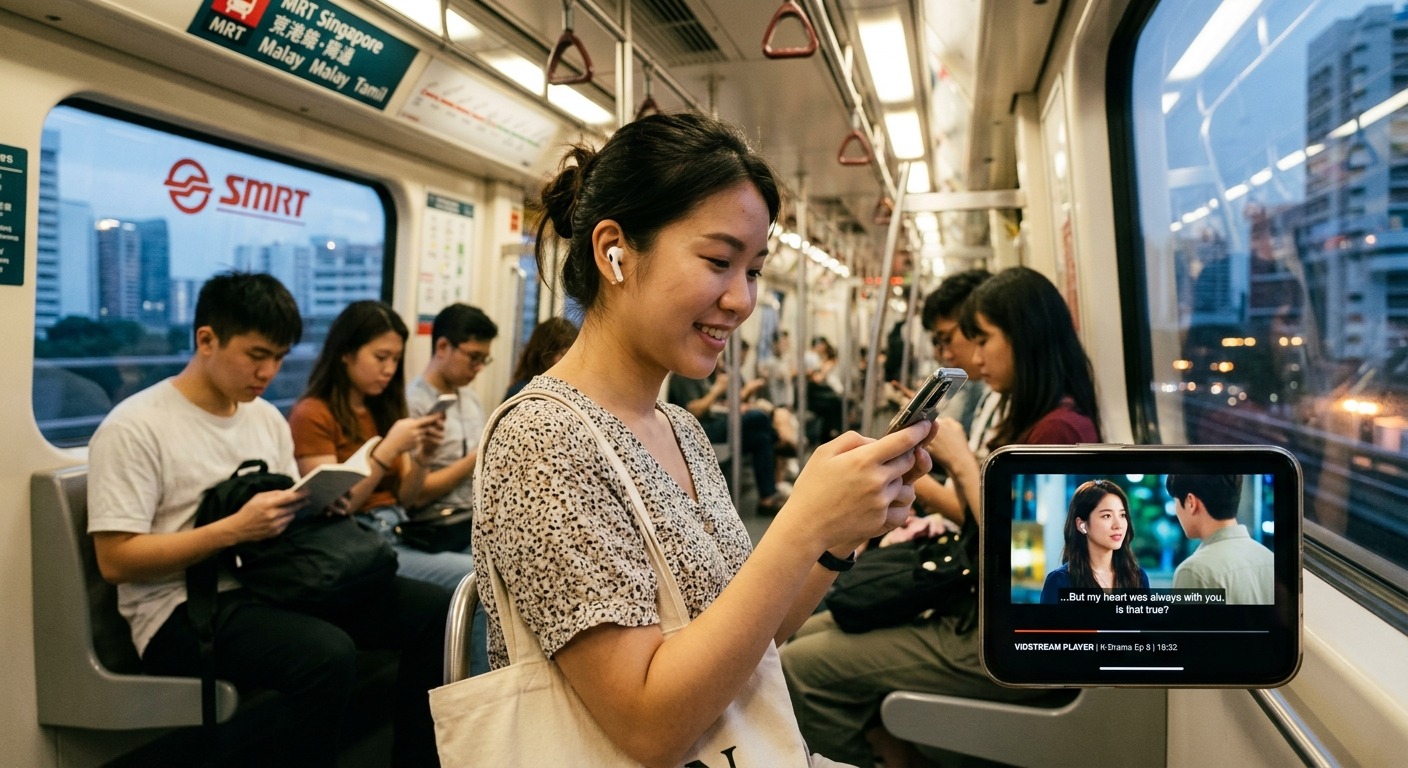
Your train pulls into a station just as someone in a video delivers the line that explains everything. You catch the platform announcement. You catch the beat underneath the clip. The actual words? Lost. Your eyes drop to the subtitles, and the story carries on. For young adults watching videos across Singapore, that little strip of text can feel less like an optional setting and more like part of the screen.
The Everyday Subtitle Habit: Captions fit the way videos slip into daily life in Singapore. A quiet MRT carriage calls for muted audio. A multilingual feed brings unfamiliar expressions. Background music can bury the sentence you actually need. Reading along gives you another way to follow the clip, whether you have headphones on or your phone stays silent. The appeal is simple: fewer missed words, less replaying, and more control over how you watch.
The MRT Makes Silent Viewing Feel Natural
A commute creates an awkward little viewing window. You have enough time for a few clips, but your surroundings are shared. Playing a video aloud means inviting strangers into your feed. Perhaps nobody else needs to hear a creator explain their breakup at 8:15 in the morning.
Subtitles let the phone stay quiet while the video keeps its meaning. You can follow a cooking demonstration, a campus confession, or a workplace rant without turning the carriage into your personal living room. That suits the small pockets of time between boarding, changing lines, and checking whether your stop is next.
Headphones do not remove every obstacle. Train noise competes with speech. Station announcements interrupt at inconvenient moments. You might keep the volume low because you want to hear what is happening around you. Text offers a second route into the conversation when sound becomes patchy.
There is also the deeply ordinary problem of leaving your earbuds at home. Without subtitles, a talking-head clip becomes a person moving their mouth at you. With them, your usual scroll can continue. A useful backup starts feeling like the default.
Your Feed Does Not Stay in One Language
A single scrolling session can cross several language boundaries. An English commentary video might lead into a Mandarin interview, a Malay comedy sketch, or a Korean drama scene. Within one clip, a speaker may switch languages or drop in an expression that carries a meaning the surrounding English does not quite capture.
For a viewer in Singapore, that mix can feel familiar without being entirely effortless. Recognizing a language does not mean catching every sentence at full speed. You might understand casual conversation but stumble over a technical explanation. You might know an expression by sound without knowing how to spell it.
Subtitles provide something to hold onto. An unfamiliar phrase stays visible long enough to inspect. A name becomes easier to search later. A sentence that sounded like one continuous blur separates into words you can recognize.
Familiar Speech Can Still Need a Second Look
This is not only about foreign-language entertainment. Fast English, local slang, regional accents, and speech recorded in a noisy café can all demand extra attention. Even a familiar way of speaking becomes harder to follow when the microphone is far from the person talking.
Reading along takes some pressure off your ears. You can enjoy the joke without spending the next few seconds reconstructing its setup. For clips built around timing, that matters. Missing one small word can leave the punchline stranded.
Translations still deserve a little skepticism. A neat English sentence may flatten a joke or miss the affection behind a teasing remark. Subtitles help you enter the conversation, but they cannot carry every cultural detail on their own.
Background Music Can Swallow the Actual Point
Some videos seem determined to make speech compete for attention. There is music beneath the narration, a sound effect at each edit, and perhaps a dramatic swell just as the speaker reaches the useful part. The clip feels busy. The explanation becomes harder to hear.
Turning up the volume raises everything at once. The music gets louder alongside the voice. If the original speech is muffled or poorly recorded, more volume may leave you with a louder version of the same unclear sentence.
Subtitles give the words their own space. You can read the instruction while the soundtrack does whatever the soundtrack wants. That is particularly helpful when the clip contains an address, an unfamiliar ingredient, or a distinction that depends on a single word.
For dense material, the need can continue after the video ends. Viewers can download subtitles from videos they own or have permission to reuse, helping them revisit a packed explanation or unfamiliar phrase without replaying the entire clip. A saved subtitle file can make it easier to find the passage they wanted, then return to the video for context.
The text still needs checking. Automatic captions can mishear names, merge separate phrases, or turn an unfamiliar local expression into something wildly unrelated. If a sentence seems strange, listening again is a better move than assuming the caption has settled it.
Reading Along Suits the Gaps in Your Day
Phone viewing rarely comes with the ceremony of sitting down for a film. You watch while waiting for takeaway. A friend sends a clip during lunch. A video fills the few minutes before a meeting starts. Your attention has other places to be.
Subtitles suit those interrupted conditions. If your attention briefly shifts toward a queue number or a message notification, the words still on screen may help you catch the thread. You have a small chance to recover before reaching for the replay button.
That does not mean captions let anyone absorb unlimited information. A fast clip with dense text can become tiring in its own right. You still need time to understand the idea, especially if the visuals contain instructions or details that deserve a closer look.
The attraction is more modest. Subtitles reduce a bit of friction. You spend less effort guessing what somebody said and more effort deciding whether their point makes sense.
Onscreen Text Has Become Part of the Performance
In some short videos, captions do more than reproduce speech. A creator changes the size of a word for emphasis. A tiny aside appears beneath an exaggerated reaction. A sentence arrives in pieces to build suspense before the punchline.
Reading becomes part of watching because part of the joke lives in the text. Muting the video may remove the delivery, but ignoring the captions can also mean missing something the creator deliberately added.
This helps explain why the subtitle habit can persist when audio is clear. Your eyes have learned to expect another layer of information. You listen to the speaker while checking whether the words on screen add emphasis, clarification, or a quiet little contradiction.
There is a limit to how much text a screen can comfortably carry. Huge animated words can cover facial expressions or hide the object being demonstrated. Captions work better when they give you room to read and leave the relevant action visible.
The Setting Serves Different Viewers for Different Reasons
For deaf and hard-of-hearing viewers, captions can provide access to spoken information and meaningful sounds. That role deserves attention even when the wider conversation focuses on young people watching muted videos on trains.
A subtitle track that captures dialogue may still leave out a door slamming, a phone ringing, or laughter from someone outside the frame. Those details can change how a scene makes sense. Useful captions account for what the viewer needs to understand, beyond the words alone.
Other viewers turn subtitles on because they are tired, watching in a second language, or sitting beside someone who is asleep. The same setting can serve several needs. Nobody has to justify using it before pressing play.
The Little Setting That Fits the Ride Home
Singapore’s subtitle habit makes sense when you look at the conditions around the screen. The carriage is shared. The feed crosses languages. The music sometimes overwhelms the voice. Your attention moves between the clip and the rest of your day.
Text gives you another way to keep up. You might turn it off when it covers a beautiful scene, then switch it back on for a fast conversation. You might read every line or glance down only when a word escapes you.
On the ride home, with your phone held in one hand and your station approaching, that flexibility is useful. The video can stay quiet. You can still catch what someone meant to say.