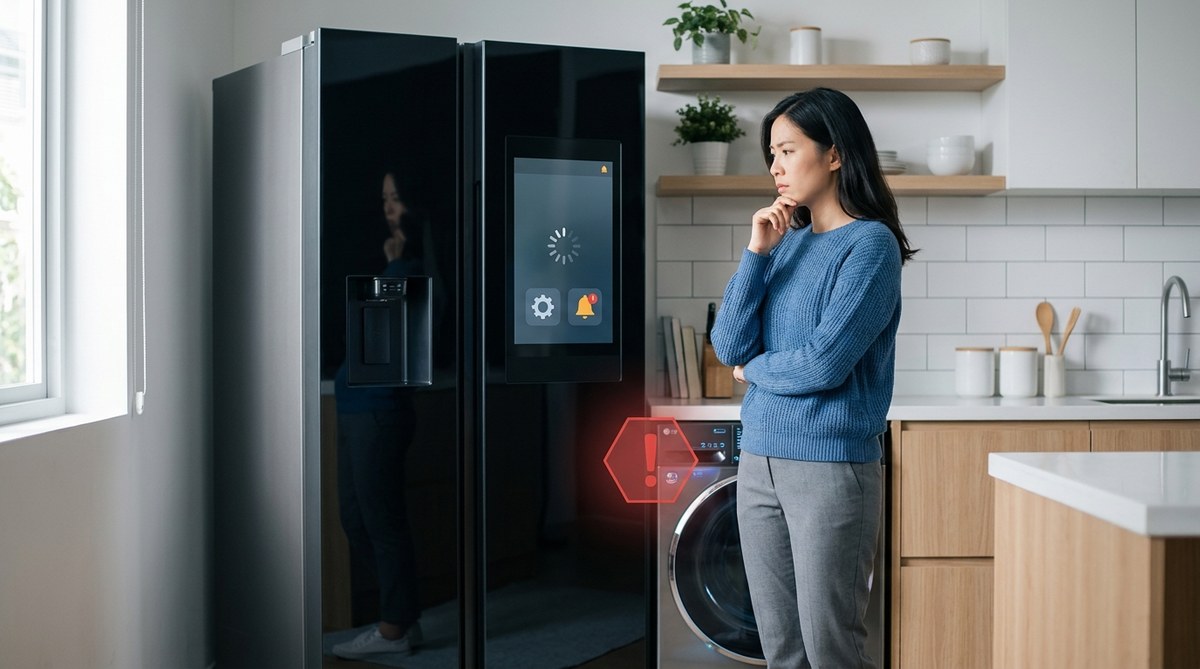
You walk into any big box store these days and it feels like everything has a screen, an app, or an internet connection. Refrigerators that show you the weather. Ovens you can preheat from your phone. Washing machines that order their own detergent. It sounds convenient, right? In 2026, the smart home has never been more tempting. But behind the shiny touchscreens and voice commands, a set of serious problems is quietly growing. Before you swap out your trusty dumb appliance for a connected one, there are a few things you need to understand about privacy, longevity, and the real cost of “smart.”
Smart appliances in 2026 come with hidden downsides that many buyers overlook. Privacy risks from cameras and microphones, forced subscriptions for basic features, and software updates that turn devices into bricks after a few years. Repairs are expensive and often require proprietary parts. Sticking with high quality “dumb” appliances may save you money, stress, and data.
The Privacy Price Tag: Who’s Listening to Your Refrigerator?
Smart appliances need data to work. That data often includes your daily routines, your voice commands, even video feeds from a built in camera. A smart fridge with a screen can track what you eat. A smart oven can log cooking patterns. A smart washer knows when you do laundry. All that information goes to the manufacturer’s cloud servers. And in many cases, it gets sold to advertisers or data brokers.
Think about it. Do you really want a corporation to know exactly what time you get home every night, or that you always order pizza on Fridays? In 2026, the market for consumer behavior data is bigger than ever. Companies like Samsung, LG, and Whirlpool have all faced scrutiny over how they handle data from smart appliances. A 2025 investigation by Consumer Reports found that several smart refrigerators were sending unencrypted data to third party analytics firms. The manufacturers claimed it was for “product improvement,” but users never gave explicit consent.
Your smart home devices are listening more than you think, and not just the speakers. The microphone in your smart oven can pick up conversations across the room. The camera inside your smart fridge can see your kitchen layout, your meal prep, even your kids. If that makes you uneasy, you are not alone. Privacy experts recommend disabling cameras and microphones whenever possible, but many appliances force you to enable them for core features.
Software Updates: The Silent Killers of Value
Remember when a washing machine lasted 15 years without a single issue? Those days are fading fast. Smart appliances depend on software to run. When the manufacturer stops updating that software, your expensive machine becomes a paperweight.
In 2026, this is a huge problem. Many brands promise “five years of software support,” but they rarely deliver. A smart refrigerator from 2020 might still work physically, but its touchscreen interface now lags terribly. The recipe app it relies on no longer loads. The weather widget stopped connecting to the server two years ago. You are left with a giant, expensive, barely functional screen that you never wanted in the first place.
Worse, some manufacturers push updates that actually break functionality. In 2024, a well known brand pushed a firmware update to its smart ovens that introduced a login requirement. Suddenly, you needed an account just to preheat the oven. When users complained, the company said it was a “security improvement.” Similar stories have emerged with smart washers and dryers where a software glitch locked the door mid cycle, forcing owners to wait hours for a technician.
This pattern of planned obsolescence is not accidental. It is a business model. Why build a refrigerator that lasts 20 years when you can build one that needs replacement after seven? If you are frustrated by how your smartphone feels slower after every update, imagine the same thing happening to your dishwasher.
The Subscription Economy Comes to Your Kitchen
You paid $2,500 for a smart refrigerator. Now the manufacturer wants $10 a month for the “premium” features you thought were included. Sound familiar? Welcome to the subscription appliance era.
In 2026, more and more brands are charging monthly fees for basic functionality. LG’s ThinQ subscription gives you remote diagnostics, energy usage reports, and automatic filter ordering. Whirlpool offers a similar plan for its smart washers and dryers. Forgot to pay? Your appliance still runs, but you lose access to the app and smart features. That remote start you use every morning? Gone.
Then there are the water filters. Many smart refrigerators use proprietary filters that require a subscription to reorder. If you cancel, you have to manually hunt down a replacement or risk damaging the ice maker. Some smart ovens lock their self cleaning cycle behind a paywall after the first year.
The total cost adds up. A $3,000 smart appliance with a $15 monthly subscription costs you $3,900 over five years. And if the company goes bankrupt or discontinues the service, you are stuck with a device that is “smart” only in name. Before buying, always check the fine print. Is there a subscription? What happens if you stop paying? Can you still use the appliance without the account?
Repairs Are a Nightmare (And Not Covered by Warranty)
Smart appliances break. When they do, fixing them is far more expensive than fixing a standard machine. The reason is simple: specialized parts and software.
Take a smart refrigerator with a faulty touchscreen. A repair technician cannot simply swap in a generic LCD. They need a proprietary display module that may cost $400 or more. The main control board on a smart oven is a sealed unit with custom firmware; replacing it can run $600, plus labor. And because the appliance is connected to the internet, the technician often needs to re sync it with your home network and update the software.
Warranties rarely cover obsolescence. If your smart washer stops working because the manufacturer shut down the backend server, good luck getting it fixed. Some brands do offer extended coverage, but it adds hundreds of dollars to the purchase price.
“I’ve seen smart refrigerators where the owner paid $200 just for a diagnostic, then another $400 for a circuit board, only to find out the real problem was a $5 sensor that the company no longer sells. The appliance was three years old. That’s when people realize they bought a disposable luxury, not a durable machine.” — Mark Tran, appliance repair technician with 12 years of experience.
Compare that to a dumb refrigerator. A technician can diagnose and fix a dead compressor or a faulty thermostat in under an hour. Parts are widely available and inexpensive. The appliance can run for decades. Smart appliances, by contrast, have an average lifespan of five to eight years before they become too costly or annoying to keep.
Dumb vs. Smart: A Reality Check
To help you decide, here is a side by side comparison of a typical smart refrigerator and a comparable dumb model from 2026.
| Category | Dumb Appliance | Smart Appliance |
|---|---|---|
| Upfront price | $1,200 – $1,800 | $2,500 – $4,000 |
| Expected lifespan | 12 – 18 years | 5 – 8 years |
| Annual subscription costs | $0 | $120 – $360 |
| Privacy risk | None (no microphones, no cameras) | High (data collection, voice recordings) |
| Repair cost average | $150 – $300 | $400 – $800 |
| Resale value | Retains 40% after 5 years | Retains 10% after 5 years |
| Internet required? | No | Yes (for most features) |
| Brick risk | None | High if server shuts down |
The numbers do not lie. Dumb appliances are cheaper to buy, cheaper to maintain, and last longer. The only thing you lose is the ability to check your fridge contents from the grocery store or start a wash cycle while at work. For most people, that is a trade worth making.
Three Steps to Decide if a Smart Appliance Is Right for You
If you still want the convenience, here is a practical process to minimize the risks.
-
Check the manufacturer’s software support policy. Look for a written commitment of at least seven years of updates. Research forums and Reddit to see if the brand actually delivers on promises. Avoid companies that have a history of abandoning older models.
-
Look for local control or open source options. Some smart appliances allow you to operate them over your local WiFi without a cloud account. Products that support platforms like Home Assistant or Matter with no mandatory cloud connection are far safer from bricking.
-
Calculate the total cost of ownership over five years. Add the purchase price, any required subscriptions, estimated repair costs, and the loss in resale value. Compare that to a dumb appliance. If the smart option is more than 30% higher, it is likely not worth it.
Hidden Costs Most Buyers Overlook
Beyond the obvious price tag, there are several sneaky expenses that come with smart appliances.
- Higher upfront price. Expect to pay 30 to 50 percent more for the same capacity and features versus a non connected model.
- Annual subscription fees. As noted, these can run $10 to $30 per month per appliance.
- Increased energy consumption. Smart appliances use standby power for WiFi, sensors, and screens. It is small, but it adds up over years.
- Data usage. If you have a capped internet plan, streaming video to your fridge screen or uploading usage logs can eat into your allowance.
- Decreased resale value. Future buyers may not want an outdated smart appliance with limited support. Some will refuse to take them for free because of the hassle.
- Potential for bricking if the company goes bankrupt. This happened in 2024 when a popular smart oven startup shut down. Owners lost access to all app controls. Your appliance may still function manually, but the “smart” features disappear forever. The question of what happens when your smart car manufacturer goes out of business applies just as much to your washing machine.
Making the Smarter Choice in 2026
None of this means you should never buy a smart appliance. There are good reasons: remote monitoring for second homes, accessibility features for people with disabilities, or simply the joy of geeking out with tech. But the problems outlined here are real and growing. The industry is still figuring out how to balance connectivity with durability and privacy.
If you are a tech conscious homeowner or renter, your best bet is to buy a high quality dumb appliance and pair it with a simple smart plug. That gives you remote on/off control and energy monitoring without the privacy nightmare or forced subscriptions. You get 90 percent of the convenience at 50 percent of the cost. And when your smart plug dies, you replace it for $15. No technician. No drama.
Next time you walk past the appliance aisle, pause before picking the one with the glowing screen. Your wallet and your peace of mind will thank you.