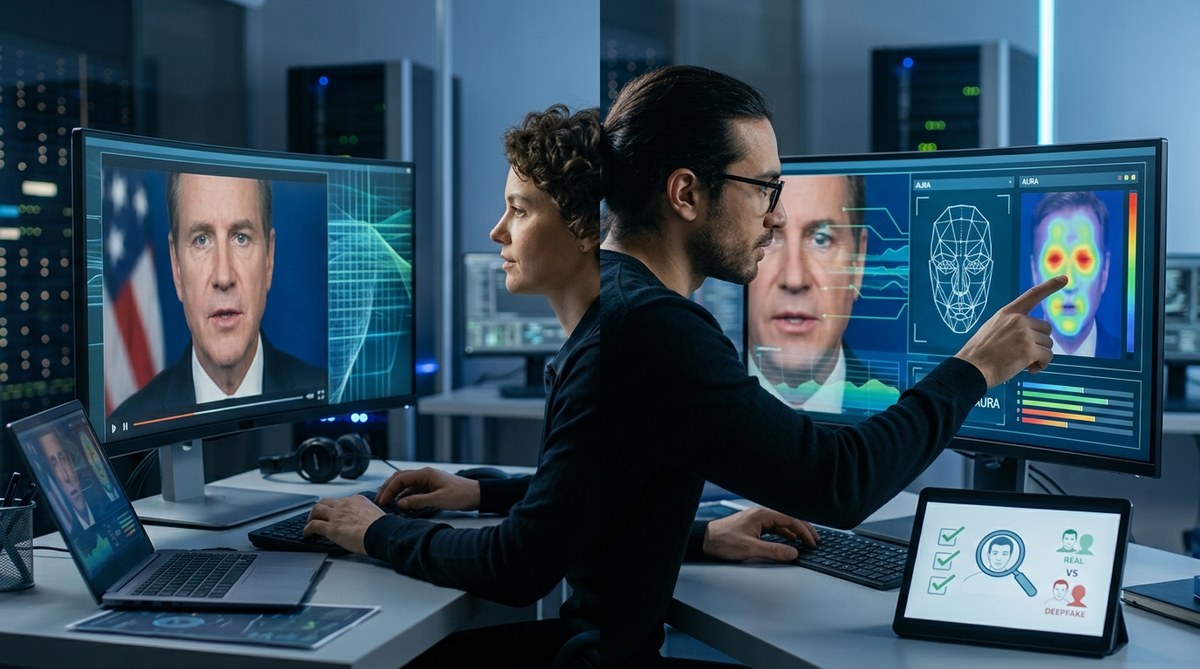
Deepfake videos have become so realistic that even tech experts pause before calling a video fake. In 2026, AI-generated faces move naturally, voices match perfectly, and lighting looks flawless. The old tricks — weird blinking, mismatched skin tones, robotic speech — are mostly gone. So how do you protect yourself from being fooled by something that looks completely real? The answer is simpler than you think, and it does not require a computer science degree.
Deepfakes in 2026 are nearly impossible to catch by looking at visual flaws alone. Instead, focus on behavioral inconsistencies, weird body language, and unnatural responses. Use source verification and metadata checks. Trust your gut when a video feels off, and always cross‑check with reliable sources before sharing or acting on suspicious clips.
Why the Old Deepfake Detection Tricks No Longer Work
A few years ago, you could spot a fake by watching for glitchy hair, awkward eye movements, or audio that did not sync with lip movements. Those tells have vanished. Modern AI models, like the ones powering tools in 2026, generate video at resolutions that match real camera footage. They understand how light falls on a face and how shadows move when someone turns their head.
The problem is that our brains are wired to trust what we see. When a video looks clean and smooth, we lower our guard. That is exactly what deepfake creators count on. The best defense now is not pixel-peeping. It is understanding human behavior and using digital verification tools.
The New Telltale Signs: What to Watch For
Instead of hunting for visual glitches, look for actions that feel wrong. AI-generated people often struggle with subtle movements that real humans do without thinking. Here are the main cues to pay attention to:
Body language that looks scripted. Real people fidget, shift their weight, and make microexpressions. Deepfake subjects often hold their posture too still or repeat the same small gestures in a loop. Watch for hands that stay frozen or eyes that do not track a moving object naturally.
Unnatural blinking patterns. In 2026, most deepfake models can blink. But the timing may be off. A person might blink too often or not enough, or the blink might look like a forced eyelid drop rather than a reflex.
Voice tone that does not match the situation. If someone is telling a shocking story but their voice stays flat, that is a red flag. AI voices still struggle with genuine emotional variation. Listen for pauses that feel robotic or breaths that sound the same every time.
Reactions that are slightly delayed. When a person is asked a question, they usually respond within a fraction of a second. Deepfake videos can have a tiny delay between the question ending and the answer starting, because the AI needs time to generate the next frame. Look for sync issues that last less than half a second.
A Step-by-Step Process for Checking a Suspicious Video
Follow these steps the next time a video makes you wonder if it is real. This numbered method works for news clips, social media posts, and even video calls with strangers.
-
Pause and do not share. Before you react, stop. Do not forward the video or post a comment. Spreading a deepfake only makes the problem worse. Take a breath and start checking.
-
Look up the source. Ask yourself: Who posted this? Is it a verified account? Do they have a history of sharing accurate content? If the source is a random profile with no track record, treat the video with skepticism. For news clips, check if legitimate outlets like the Associated Press or Reuters are also reporting the same event.
-
Watch without sound first. Mute the video and focus on the visuals. Does the person's mouth shape match the words they are supposed to be saying? Even advanced deepfakes sometimes show lip shapes that do not fit certain sounds, especially in side profiles or when the person talks fast.
-
Listen closely with your eyes closed. Play the audio only. Pay attention to breathing, background noise, and tone. A real voice recording has subtle environmental sounds — a rustle of clothing, a distant car horn. AI-generated audio often sounds too clean, like it was recorded in a vacuum.
-
Reverse search a key frame. Take a screenshot of the person's face and run it through a reverse image search. If the same face appears on different bodies or in unrelated contexts, that is a strong sign the video was generated.
-
Use a free deepfake detector. Several universities and nonprofits released open-source detection tools in 2026. Services like Intel's FakeCatcher or the University of Buffalo's DeepFake Detector can analyze a video file and give a confidence score. No tool is perfect, but multiple checks increase accuracy. Upload the video (if you trust the service's privacy policy) or paste a link.
-
Trust your intuition, but verify. If something feels off but you cannot pinpoint it, ask a friend to watch with fresh eyes. Sometimes a second opinion catches what you missed.
Scanning for Red Flags: A Bulleted Checklist
Use this list when you do not have time for a full investigation but need a quick scan:
- The person's head moves stiffly, as if on a swivel.
- Hair or clothing pixels blur around edges during motion.
- Background objects distort when the person waves a hand.
- The video starts with a sudden cut or a logo that covers the face.
- The person never looks directly at the camera (deepfakes often avoid direct gaze to hide eye artifacts).
- The audio has an echo or metallic ring, even in quiet rooms.
- The person's smile does not reach their eyes — crow's feet and cheek raises are missing.
Common Deepfake Detection Mistakes (And What to Do Instead)
| Mental Mistake | What Actually Works |
|---|---|
| Trusting a video because it is high resolution | Resolution means nothing; AI generates 4K easily. Focus on behavior instead. |
| Looking only at the face | Check hands, neck, and shoulders. AI often messes up hand shapes and shadows. |
| Believing a video because friends shared it | Social shares are not proof. Friends can be fooled too. Always verify independently. |
| Ignoring the context of when the video was made | A video claiming to show someone saying something years ago might be a re‑creation. Check timestamps. |
| Relying solely on automatic detection apps | No tool is 100% accurate. Human judgment plus tool results gives the best signal. |
Expert advice from Dr. Riana Patel, AI forensics researcher at MIT: "In 2026, the most reliable detection method is still a human who understands that deepfakes are designed to look perfect. If a video seems too clean, too polished, or too convenient, dig deeper. The imperfections are not in the pixels anymore — they are in the story."
How Deepfakes Trick Even Smart People
One reason deepfakes spread so fast is that they trigger our emotional brain. A video of a celebrity saying something outrageous makes us angry or amused before we think to question it. The same goes for political figures. In early 2026, a deepfake of a senator appearing to admit corruption went viral before fact-checkers could flag it. Thousands of people shared it because it confirmed what they already believed.
The solution is to build a habit. Make verification a reflex, not a chore. When you see a video that feels designed to make you react, stop and run it through a few of the steps above. If it still seems real, then share it. That delay of a few minutes can stop a lie from spreading.
Staying Sharp in an Age of Synthetic Media
Deepfakes are not going away. In 2026, the technology is already part of everyday life — some companies use it for training videos, and creators use it for entertainment. The danger is not the tool itself, but how it is used to deceive.
The best way to stay safe is to become a skeptic without becoming cynical. Not every video is fake, but every video deserves a second look if it affects your decisions, your beliefs, or your wallet. Verify sources, trust your gut, and use the free tools available. That combination will keep you ahead of the fakers.
Start practicing today. The next video that makes you pause could be the one that tests your skills. By running through the steps in this guide, you will not only protect yourself — you will help slow the spread of misinformation in your own circle. That is a win for everyone.