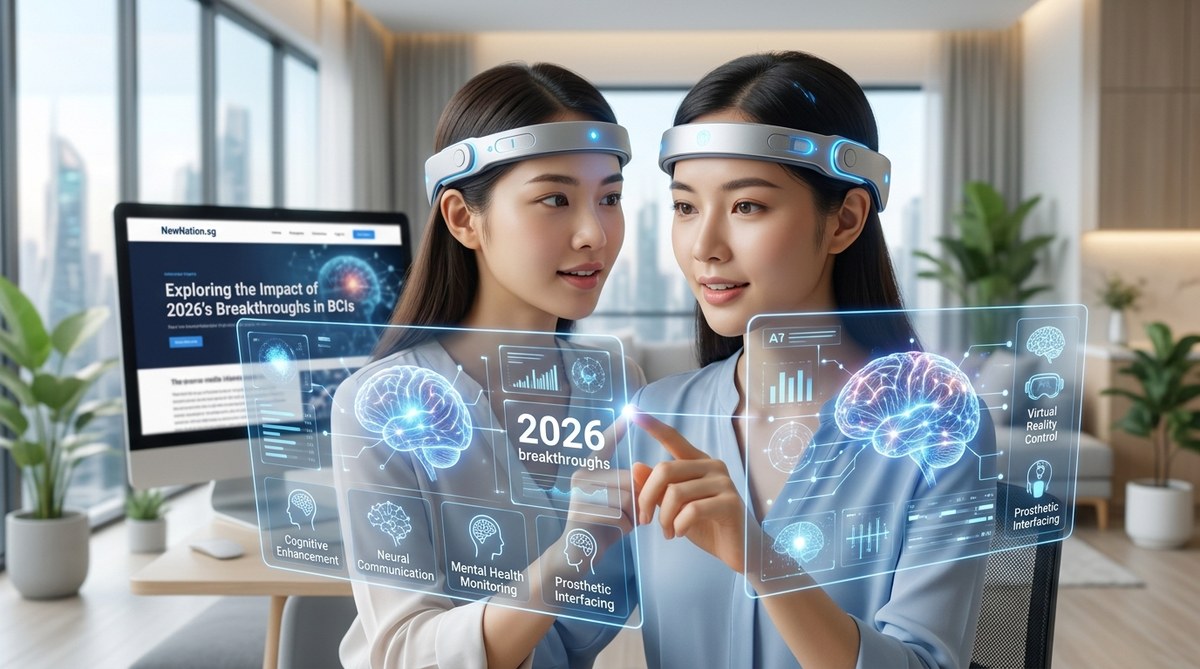
Brain-computer interfaces are taking center stage in 2026. This year marks a turning point in how humans and machines communicate. From medical breakthroughs to consumer innovations, the latest advancements are reshaping what we thought was possible. Whether you’re a researcher, student, or tech enthusiast, understanding these breakthroughs reveals a future where minds and machines work together seamlessly.
2026 breakthroughs in brain-computer interfaces are accelerating a new era of medical treatment, human enhancement, and consumer tech, making mind-machine integration more accessible and powerful than ever before.
Major innovations in brain-computer technology this year
2026 has seen remarkable strides in brain-computer interface technology. These breakthroughs are not just incremental improvements but game-changers. They enable more precise, faster, and safer interactions between the human brain and external devices. Researchers have developed novel methods that push the boundaries of what’s possible in neural communication.
One notable development involves non-invasive neural interfaces that provide high-fidelity signals. These devices can now read brain activity with unprecedented accuracy, opening new avenues for medical treatments and consumer applications. Additionally, the integration of artificial intelligence enhances the system’s ability to interpret complex neural data, making interactions more intuitive.
Furthermore, breakthroughs in miniaturization and material science have led to lightweight, durable implants that last longer and are less invasive. These advancements are making brain-computer interfaces more practical for everyday use and long-term health management.
How 2026 breakthroughs are transforming healthcare
Medical applications are among the most impacted by these breakthroughs. Brain-computer interfaces are now helping restore functions lost due to injury or disease. For example, new neural interfaces are enabling paralyzed patients to control robotic limbs with their thoughts. This technology is also improving communication for individuals with severe speech impairments.
Restoring mobility and communication
New neural decoding algorithms allow for more natural movement control. Researchers have developed systems that translate brain signals into commands for prosthetic limbs or wheelchairs more accurately. This progress significantly enhances mobility for users.
In speech impairment, advanced BCIs now decode neural signals associated with speech production. Patients with conditions like ALS or stroke can communicate more freely through these systems.
Monitoring and managing neurological conditions
The ability to monitor brain activity continuously has advanced dramatically. Wearable neural sensors detect early signs of neurological issues like seizures or migraines. This real-time data enables prompt intervention, improving patient outcomes.
Practical steps for healthcare providers
- Adopt new neural monitoring devices to provide ongoing patient surveillance.
- Integrate AI-powered decoding systems to improve control of prosthetics.
- Train medical staff to implement these innovative tools effectively.
Consumer tech and daily life: what’s new in 2026?
The consumer market is flooded with brain-computer interfaces that are more accessible and user-friendly. These devices are now part of daily routines, helping with focus, relaxation, and even entertainment.
Mind-controlled devices
Smartphones, gaming consoles, and virtual reality headsets can now be operated with thought. Companies have launched non-invasive headsets that help users control media playback, navigate menus, or play games through neural commands. These interfaces are improving in responsiveness and accuracy, making digital interactions effortless.
Enhancing focus and mental health
New neurofeedback devices use real-time brain data to boost concentration or reduce stress. For example, wearable headbands analyze brainwaves during meditation or work sessions, providing personalized feedback to optimize mental states.
Personal health and wellness
Some neural interfaces track cognitive health, alerting users to early signs of fatigue or mental decline. This data can be used to adjust daily routines or seek medical advice proactively.
Practical tips for consumers
- Try mind-controlled entertainment to make gaming more immersive.
- Use neurofeedback tools during work or study to improve focus.
- Monitor your cognitive health with wearable neural sensors for early detection.
The science behind the breakthroughs
The advances in 2026 are rooted in several key scientific innovations. Researchers have developed new methods to record, interpret, and stimulate neural activity with minimal invasiveness.
Techniques and common pitfalls
| Technique | Description | Common Mistake |
|---|---|---|
| High-density EEG | Non-invasive, detailed brain activity mapping | Misinterpreting signals due to noise |
| Optical neural stimulation | Using light to activate neurons | Overstimulation causing tissue damage |
| AI-powered decoding | Machine learning to interpret signals | Overfitting models leading to errors |
| Implantable microelectrodes | Long-term neural recording | Biocompatibility issues causing rejection |
“The integration of AI with neural interfaces is unlocking unprecedented precision. However, avoiding signal noise and ensuring safety remain top priorities,” says Dr. Emily Harper, a leading neuroscientist at the Neural Innovation Institute.
Challenges remaining
Despite progress, challenges like long-term stability of implants, data privacy, and ethical concerns persist. Researchers are working on solutions that balance innovation with safety and user rights.
Future implications and ethical considerations
The rapid development of brain-computer interfaces raises important questions. As technology becomes more embedded in daily life, issues around mental privacy and identity emerge.
Ethical debates
In 2026, discussions focus on safeguarding mental data from misuse. There are concerns about cognitive liberty, or the right to control one’s own thoughts. Policymakers and scientists are collaborating to develop regulations that protect users.
Societal impacts
Enhanced cognitive abilities could widen existing social gaps. Access to neural enhancements might become a privilege, emphasizing the need for equitable distribution and ethical guidelines.
How to stay ahead in neural tech
For enthusiasts and professionals, staying informed is crucial. Here are practical steps:
- Follow reputable neuroscience journals and conferences.
- Join online communities dedicated to neural interface discussions.
- Experiment with consumer-grade neural devices to understand their capabilities.
What lies beyond the horizon
The breakthroughs of 2026 are just the beginning. Future research aims to develop fully autonomous neural systems, enabling direct brain-to-brain communication and seamless human augmentation.
Practical applications to watch
- Brain-to-brain communication for collaborative work.
- Cognitive enhancements for learning and creativity.
- Brain-machine symbiosis for extended human capabilities.
Nurturing a connected future with neural tech
As these innovations become more widespread, integrating brain-computer interfaces into daily routines will require thoughtful adaptation. Users should prioritize safety and ethical considerations while embracing the benefits of this technology.
Small steps like experimenting with neurofeedback tools or staying informed about new developments can help you navigate this exciting landscape. The future of human and machine collaboration in 2026 is bright, promising a world where our minds can connect with technology in ways once limited to science fiction.
Harnessing the power of neural breakthroughs in everyday life
Embracing these advancements means understanding their potential and limitations. Whether improving health, boosting productivity, or enhancing leisure, neural interfaces are poised to redefine how humans interact with the digital world. By staying curious and cautious, you can make the most of what 2026 has to offer and help shape a future where technology amplifies human potential responsibly.