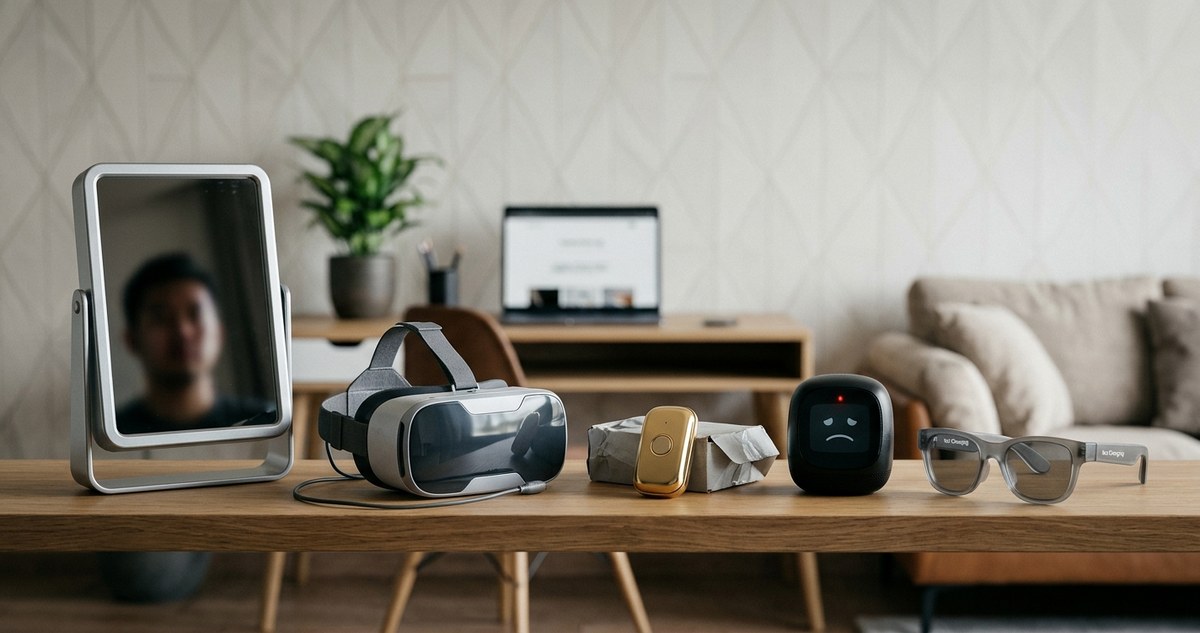
It is a familiar feeling. You see a sleek ad for a new gadget, read a glowing review from a sponsored creator, and click “buy” before really thinking it through. A few weeks later, that expensive piece of tech is gathering dust in a drawer. You are not alone. The market is flooded with products that promise to simplify your life but only end up draining your wallet. We have tested the hype, sorted through the noise, and identified the five biggest tech gadgets that are a waste of money in 2026. Let us save you some cash.
The most expensive tech gadgets in 2026 often fail to deliver real value. Smart refrigerators, foldable phones, dedicated AI assistants, high-end smart water bottles, and cheap drone gimbals are five categories where you will likely regret spending your money. Focus on practical, proven devices instead of chasing the latest trend.
The Smart Fridge That Is Dumber Than You Think
A refrigerator that tells you when you are out of milk sounds futuristic. In reality, it is a $2,000 to $5,000 appliance that struggles with basic tasks. The touchscreen on the door is slow and often lags. The internal cameras are grainy, making it hard to actually see what is inside. And the inventory tracking? It requires you to manually scan barcodes or input items. Most owners give up after the first week.
The real problem is that a smart fridge does not solve a common problem. You already know when you are low on eggs. You can see the ketchup bottle from the front seat of your car. Spending thousands of dollars for a feature you will stop using is a textbook example of a tech gadget that is a waste of money in 2026.
What should you buy instead? A high quality, energy efficient standard fridge with good insulation and reliable cooling. Spend the extra cash on a good meal prep service or a standalone thermometer for your existing fridge. Your food will stay fresh, and your bank account will thank you.
Expert advice from a home appliance technician we spoke with: “I see smart fridges come in for repair all the time. The compressor is usually fine, but the motherboard or the touchscreen fails. A standard fridge can last 20 years. A smart fridge is lucky to make it to five. Do not pay for complexity.”
Foldable Phones: Still a Compromise in 2026
Foldable phones were supposed to be the future. A device that folds in half, giving you a tablet sized screen that fits in your pocket. After several generations, the reality is disappointing.
Here is what you are actually getting with a foldable phone in 2026:
- A screen that creases right down the middle. You will see that line every single time you use it.
- Battery life that struggles to last a full day, because powering that large screen drains energy fast.
- A fragile design. Many users report dust and debris getting under the flexible display within months.
- A price tag over $1,500. For that money, you could buy a top tier traditional smartphone and a dedicated tablet.
The crease alone is a deal breaker. It is impossible to ignore when watching videos or scrolling through feeds. The technology is not ready for daily use. If you want a big screen for media consumption, get a tablet. If you need a phone, get a regular flagship model. Foldable phones remain one of the most obvious tech gadgets that are a waste of money in 2026.
Dedicated AI Assistants: The Device Nobody Needs
Remember when every tech company tried to sell you a smart speaker with a screen? The Amazon Echo Show, the Google Nest Hub, the Facebook Portal. In 2026, the trend is shifting again, but this time toward dedicated AI assistant devices that sit on your desk and promise to manage your schedule, answer questions, and control your smart home.
Here is the issue. Your smartphone already does all of that. Your laptop does it too. These dedicated devices add a third screen to your life that you have to charge, update, and find space for. They often have worse microphones than your phone and slower processors. The AI voice assistants on them are the same ones you already have access to for free.
Consider this table comparing a dedicated AI assistant to your existing phone:
| Feature | Dedicated AI Assistant | Your Smartphone |
|---|---|---|
| Voice assistant quality | Limited to one ecosystem | Access to all major assistants |
| App support | Very limited | Full app store |
| Portability | Stays on your desk | Goes everywhere with you |
| Regular updates | Often lags behind | Gets updates directly from OS maker |
| Cost | $150 to $300 | Already paid for |
The math does not work. Buying a dedicated AI assistant in 2026 is paying extra for a worse experience. Put that money toward a good pair of wireless earbuds or a portable power bank instead.
The High Tech Smart Water Bottle
Hydration is important. Nobody is arguing against that. But the market has decided that you need a $100 water bottle that tracks your sips, glows with LED lights, and syncs with an app to tell you when to drink.
These bottles are a classic example of a solution in search of a problem. Your body already tells you when you are thirsty. That is a free built in system that has worked for millions of years. The smart bottle adds a sensor that needs charging, a Bluetooth connection that drops out, and an app that clogs your phone with notifications.
Most of these bottles are not dishwasher safe. They are heavy. The battery eventually dies, and then you are left with an expensive, non functional container. A regular insulated stainless steel bottle costs $20 and keeps your water cold for 12 hours without needing a firmware update.
If you want to track your water intake, set a recurring alarm on your phone. It costs nothing and works better. The smart water bottle is one of those tech gadgets that are a waste of money in 2026, no matter how many influencers promote it.
Cheap Drone Gimbals for Smartphone Video
You see them everywhere on TikTok and Instagram reels. A small, affordable gimbal that holds your phone and promises smooth, cinematic footage. The price is tempting, often under $50. The reality is frustrating.
Here are the common problems with budget gimbals:
- The motors are weak. They cannot compensate for fast movements or wind, so your footage still looks shaky.
- The balancing is finicky. You have to perfectly center your phone, and even then, the gimbal may drift.
- The battery life is terrible. Expect around 45 minutes of use before you need to recharge.
- The companion apps are clunky and full of ads.
- Many models break within weeks. The plastic joints snap, or the motor starts making grinding noises.
A cheap gimbal will not make your videos look professional. It will just add an extra layer of frustration. You are better off using your phone’s built in stabilization, which has improved dramatically in recent years. Or, save up for a proper handheld stabilizer from a reputable brand like DJI or Zhiyun. The budget options are a clear example of tech gadgets that are a waste of money in 2026.
How to Avoid Buying Gadgets You Will Regret
You can protect your wallet from overhyped tech. Follow this simple process before any purchase.
- Wait two weeks. Do not buy on impulse. Add the item to a wishlist and come back after fourteen days. Most urges fade.
- Read negative reviews first. Sort Amazon or Best Buy reviews by lowest rating. See what real users complain about. If the problems are common, skip the product.
- Check for subscription costs. Some gadgets require a monthly fee for full functionality. That $100 device can become a $300 device over two years.
- Ask what problem it solves. If the answer is “it makes my life more convenient,” that is a red flag. Look for gadgets that solve a specific, painful problem.
- Watch a disassembly video. If the creator shows the inside and it is mostly cheap plastic and a tiny battery, you know it is a waste.
This method has saved me hundreds of dollars. Apply it to every gadget you consider, and you will stop accumulating expensive dust collectors.
The Gadget That Actually Deserves Your Money in 2026
If you want to spend on something that will improve your daily life, put your budget toward a device that solves a real, recurring annoyance. A good example is a high quality mechanical keyboard for your desk setup. It lasts for decades, improves your typing comfort, and does not need software updates.
Another smart investment is a reliable portable power station for camping or emergency backup. Unlike the gadgets on this list, a power station provides genuine peace of mind. It works when you need it, without a subscription or a companion app.
For more insights on what is truly worth your attention, read our piece on why your smartphone feels slower after every update. Understanding how planned obsolescence works helps you make better buying decisions.
Spending Smarter Means Ignoring the Noise
The tech industry relies on your fear of missing out. Every year, new categories emerge, promising to change your life. Most of them are designed to separate you from your money, not to solve real problems.
The smart fridge, the foldable phone, the dedicated AI assistant, the fancy water bottle, and the cheap gimbal all share one thing. They look good in a commercial but fail in daily use. Skip them. Hold onto your cash. Buy tools that do one thing well and last a long time.
Your future self, staring at a clutter free desk with a full wallet, will be grateful you did.