
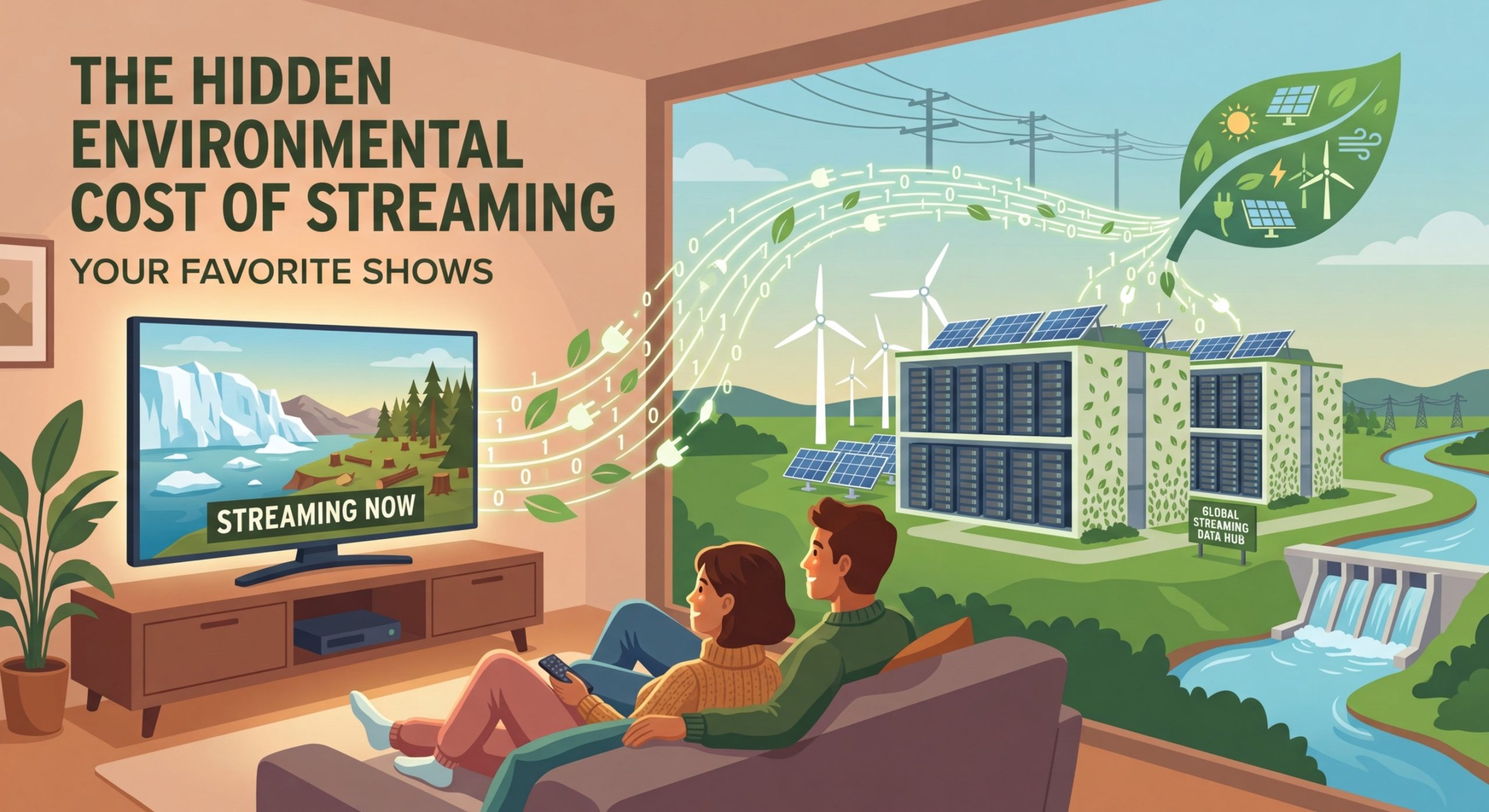
You press play on your favorite show, settle into the couch, and think nothing of it. But behind that seamless stream lies a vast network of data centers, servers, and transmission systems burning through electricity. Every episode you watch leaves a carbon footprint, and the numbers are staggering when you add up billions of viewers worldwide.
Streaming video accounts for approximately 300 million tons of CO2 emissions annually, driven by data centers, network infrastructure, and device energy use. A single hour of HD streaming can produce 36 to 55 grams of carbon dioxide. Reducing video quality, downloading content for offline viewing, and choosing efficient devices can significantly lower your digital carbon footprint without sacrificing entertainment.
What makes streaming so energy intensive
Streaming video requires a complex chain of infrastructure that consumes power at every step. When you click play, your request travels through internet cables to a data center that stores the content. That data center runs thousands of servers, all needing electricity and cooling systems to prevent overheating.
The content then travels back through network equipment, routers, and cell towers before reaching your device. Each component along this path draws power. The bigger the file, the more energy needed to transmit it.
High definition and 4K video require exponentially more data than standard definition. A 4K stream uses about 7 GB per hour compared to 1 GB for standard definition. That sevenfold increase in data means seven times the energy consumption across the entire delivery chain.
Your viewing device also matters. Smart TVs consume more power than laptops, which use more than tablets or phones. Streaming on a 50-inch television for three hours can use as much electricity as running your refrigerator for a day.
The carbon footprint by the numbers
Research from The Shift Project, a French think tank, estimated that online video streaming generated roughly 300 million tons of CO2 in 2018. That equals about 1% of global emissions, comparable to the annual output of Spain.
Breaking down the numbers further reveals some surprising patterns:
- Streaming one hour of video produces between 36 and 55 grams of CO2
- Watching 30 minutes of Netflix daily for a year creates emissions equal to driving 4 miles
- Global internet video traffic reached 82% of all consumer internet traffic by 2022
- Data centers worldwide consume about 200 terawatt hours annually, more than some countries
Different platforms have different impacts based on their infrastructure efficiency. Companies investing in renewable energy and optimized data centers produce lower emissions per stream than those relying on fossil fuel powered facilities.
The type of content also affects the footprint. Live streaming events require real time processing and can’t benefit from caching strategies that reduce energy use. Gaming streams with chat overlays and interactive elements consume more resources than pre recorded shows.
How data centers contribute to the problem
Data centers form the backbone of streaming services. These facilities house the servers that store and deliver content to millions of users simultaneously. They operate 24/7, consuming massive amounts of electricity.
Cooling systems represent a major energy drain. Servers generate intense heat, and maintaining optimal temperatures requires constant air conditioning. Some data centers use as much energy for cooling as they do for computing.
Location matters significantly. A data center in Iceland powered by geothermal energy has a dramatically smaller carbon footprint than one in coal dependent regions. Tech companies are increasingly building facilities in areas with abundant renewable energy, but the transition takes time.
Redundancy adds to energy consumption. Streaming services maintain multiple copies of popular content across different geographic locations to ensure fast loading times. This redundancy improves user experience but multiplies the storage energy required.
Network infrastructure and transmission costs
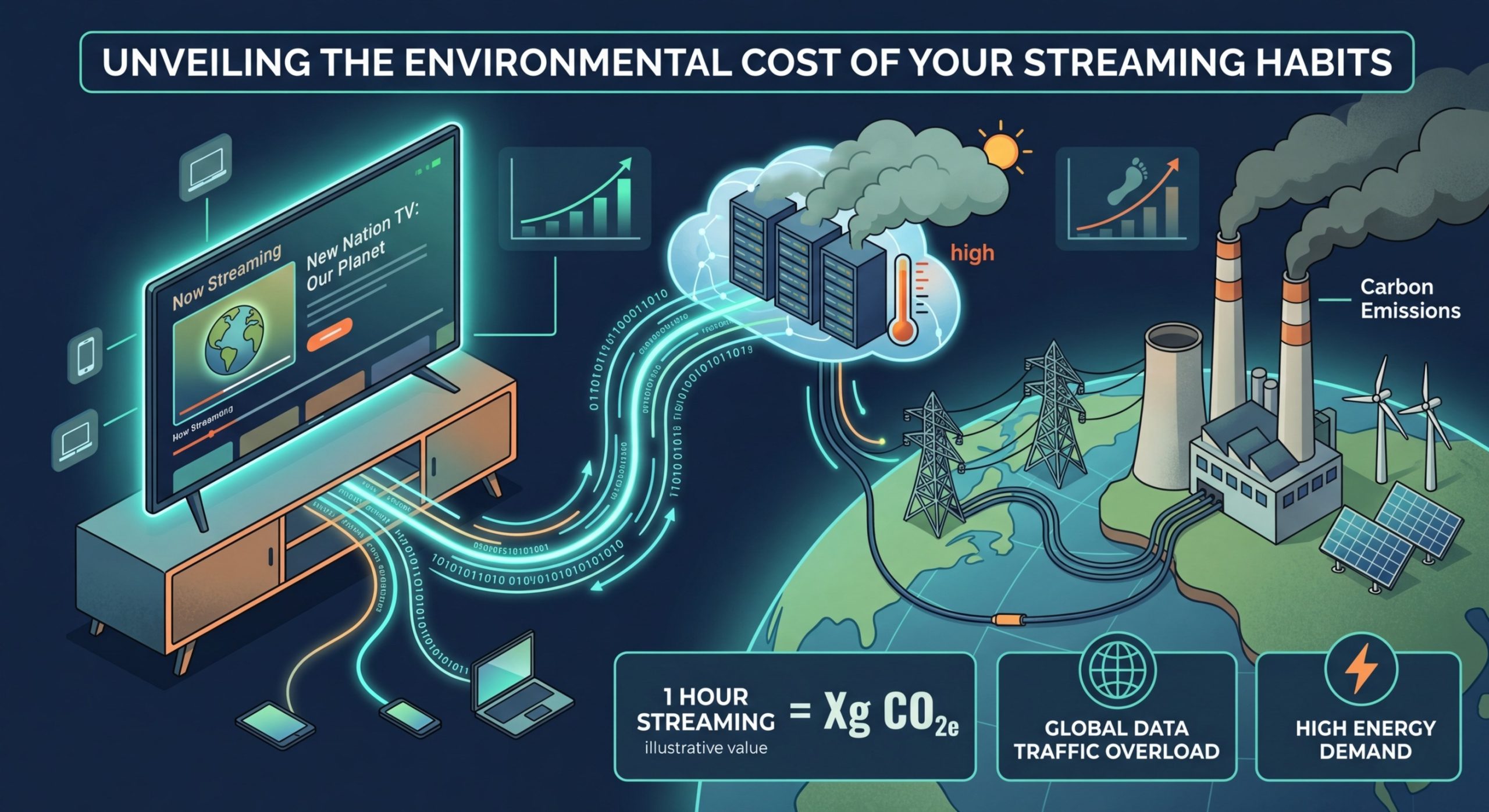
The internet infrastructure connecting data centers to your home consumes substantial energy. Cell towers, fiber optic networks, and wireless routers all draw power continuously.
Wireless streaming uses more energy than wired connections. Mobile data transmission requires cell towers that consume significant electricity. WiFi is more efficient than cellular data, and ethernet connections are the most energy efficient option.
Peak usage times strain the network more than off peak hours. When millions of people stream simultaneously during evening hours, network equipment operates at maximum capacity, drawing more power than during lower traffic periods.
The distance data travels also impacts energy use. Content delivered from a nearby server uses less energy than data transmitted across continents. Content delivery networks help by storing popular shows closer to viewers, reducing transmission distances.
Comparing streaming to physical media
Many people assume streaming is greener than buying DVDs or Blu rays, but the comparison is more nuanced. Physical media requires manufacturing, packaging, and shipping, all of which generate emissions. However, once produced, a DVD can be watched repeatedly with no additional environmental cost beyond the electricity to power your player.
Streaming generates emissions every single time you watch. If you watch a movie once, streaming likely has a lower footprint than buying a physical copy. But if you rewatch favorites multiple times, the cumulative streaming emissions can exceed the one time manufacturing impact of a disc.
The shift from ownership to access has changed consumption patterns. Streaming makes it effortless to watch vast amounts of content, often leading to increased total viewing time. This convenience factor means people consume more video overall, increasing aggregate emissions even if per view efficiency improves.
| Viewing Method | One Time CO2 Cost | Rewatchability Impact | Total Footprint |
|---|---|---|---|
| DVD purchase | High initial (manufacturing + shipping) | No additional emissions | Fixed after purchase |
| Streaming HD | Low per view | Emissions multiply with each view | Scales with usage |
| Downloaded content | Medium (one time download) | No additional streaming emissions | Lower for rewatching |
| 4K streaming | High per view | Significant emissions per rewatch | Highest for frequent viewing |
Steps you can take to reduce your streaming footprint
You don’t have to stop watching shows to lower your environmental impact. Small changes in how you stream can significantly reduce emissions.
-
Lower your video quality settings. Most streaming platforms default to the highest quality your connection supports, but standard definition uses far less data and energy than HD or 4K. The visual difference on smaller screens is minimal.
-
Download content when possible instead of streaming repeatedly. If you know you’ll rewatch a show or want to share it with family members, downloading it once saves the energy of multiple streams.
-
Use smaller screens when appropriate. Watching on a tablet or laptop instead of a large TV reduces device energy consumption. Save the big screen for movies or shows where visual quality really matters.
-
Choose wired connections over wireless when available. Ethernet uses less energy than WiFi, which uses less than cellular data. Streaming on your phone over 4G or 5G has the highest energy cost.
-
Close streaming apps when not actively watching. Many apps continue running in the background, maintaining connections and using energy even when paused for extended periods.
-
Support platforms committed to renewable energy. Companies like Google (YouTube) and Netflix have made significant investments in renewable energy for their data centers. Your viewership supports their business model and sustainability initiatives.
“The most sustainable stream is the one you don’t make. Being mindful about what you watch, avoiding endless scrolling, and making intentional viewing choices reduces both your carbon footprint and screen time.”
What streaming companies are doing
Major platforms have started addressing their environmental impact, though progress varies widely. Netflix announced a commitment to net zero greenhouse gas emissions by the end of 2022, investing in renewable energy projects to offset their data center consumption.
YouTube’s parent company Google has been carbon neutral since 2007 and aims to run on carbon free energy 24/7 by 2030. They’ve invested billions in renewable energy projects and optimized their data centers to use 50% less energy than typical facilities.
Amazon Prime Video faces criticism because Amazon Web Services, which powers the platform, still relies significantly on fossil fuels in some regions. However, the company has pledged to reach net zero carbon by 2040 and is investing heavily in renewable energy.
Smaller platforms often lack resources for major sustainability initiatives. They typically rent server space from larger providers, meaning their environmental impact depends on those third party data center policies.
Some companies are experimenting with innovative solutions:
- Using waste heat from data centers to warm nearby buildings
- Deploying underwater data centers cooled by ocean water
- Implementing AI to predict demand and power down unused servers
- Locating facilities near renewable energy sources like hydroelectric dams
The role of internet service providers
Your internet service provider plays a significant role in your streaming footprint. ISPs operate the network infrastructure that delivers content to your home, and their energy sources vary dramatically.
Some providers have committed to renewable energy, while others rely on coal or natural gas. Choosing an ISP with strong environmental commitments can reduce the carbon impact of all your internet usage, not just streaming.
Network efficiency also matters. Providers investing in modern infrastructure can deliver content using less energy than those operating outdated equipment. Fiber optic networks are generally more energy efficient than older cable systems.
Auto play and recommendation algorithms
Streaming platforms design their interfaces to maximize viewing time. Auto play features that launch the next episode without input encourage binge watching, increasing total energy consumption.
Recommendation algorithms suggest endless content, making it easy to watch more than you originally intended. These features benefit platforms by increasing engagement, but they also drive up collective emissions.
You can disable auto play in most streaming app settings. This simple change forces a conscious decision before each episode, often reducing total viewing time and the associated environmental cost.
The future of sustainable streaming
Technology improvements promise to reduce streaming’s environmental impact. More efficient video codecs compress files smaller without quality loss, reducing data transmission needs. The AV1 codec, for example, can reduce file sizes by 30% compared to older standards.
Edge computing brings content storage closer to users, reducing transmission distances and energy use. As this technology spreads, the energy cost per stream should decrease.
Renewable energy adoption continues growing. As more data centers and network infrastructure switch to solar, wind, and other clean sources, the carbon intensity of streaming will fall even if total viewing hours increase.
Some researchers propose “carbon aware” streaming that adjusts quality based on grid carbon intensity. During times when renewable energy is abundant, the system would allow higher quality streams. When fossil fuels dominate the grid, quality would automatically reduce to minimize emissions.
Balancing entertainment and environmental responsibility
Streaming has become central to how we relax and connect with culture. The goal isn’t to eliminate it but to make more conscious choices about when and how we stream.
Think of your streaming habits like any other resource consumption. You probably don’t leave lights on in empty rooms or run the tap while brushing your teeth. Applying similar mindfulness to digital habits makes sense.
Consider which shows truly deserve your attention versus what you watch out of habit or boredom. Intentional viewing reduces both your carbon footprint and the time you spend staring at screens, a win for the planet and your wellbeing.
Small individual actions add up when millions of people make similar changes. If every Netflix subscriber reduced their viewing quality from 4K to HD, the collective energy savings would be enormous.
Your entertainment choices matter more than you think
The environmental cost of streaming isn’t going away, but it doesn’t have to keep growing either. Every time you adjust your video quality, download instead of streaming repeatedly, or choose a smaller screen, you reduce your digital carbon footprint.
These changes don’t require sacrifice. Most people can’t tell the difference between HD and 4K on screens under 50 inches. Downloading your favorite comfort show once instead of streaming it monthly saves energy with zero impact on enjoyment.
The streaming industry will continue evolving toward sustainability, but consumer choices accelerate that transition. Companies respond to user priorities, and demonstrating that environmental impact matters influences their infrastructure investments and policy decisions.
Start with one small change this week. Lower your default video quality or disable auto play. Notice whether it actually affects your viewing experience. Chances are, you’ll enjoy your shows just as much while leaving a lighter footprint on the planet.