
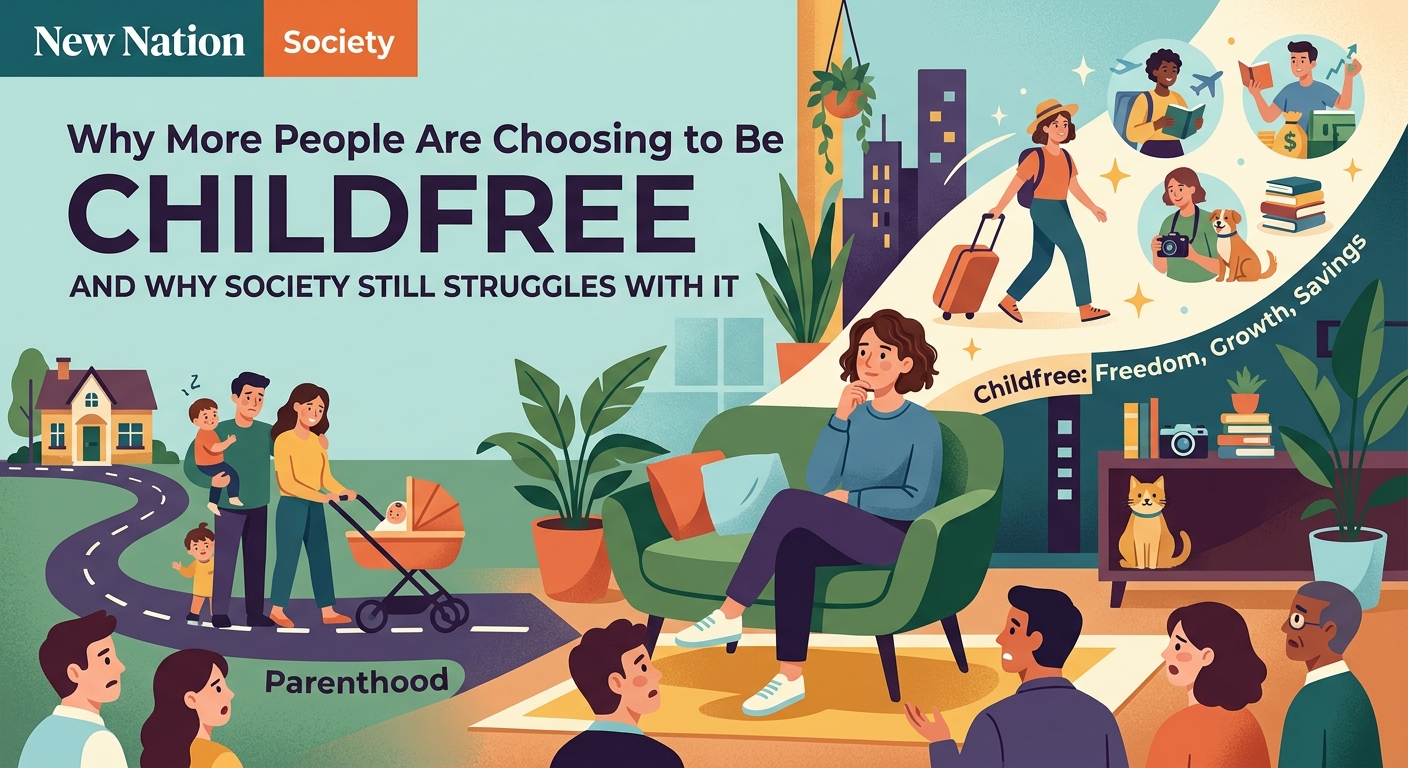
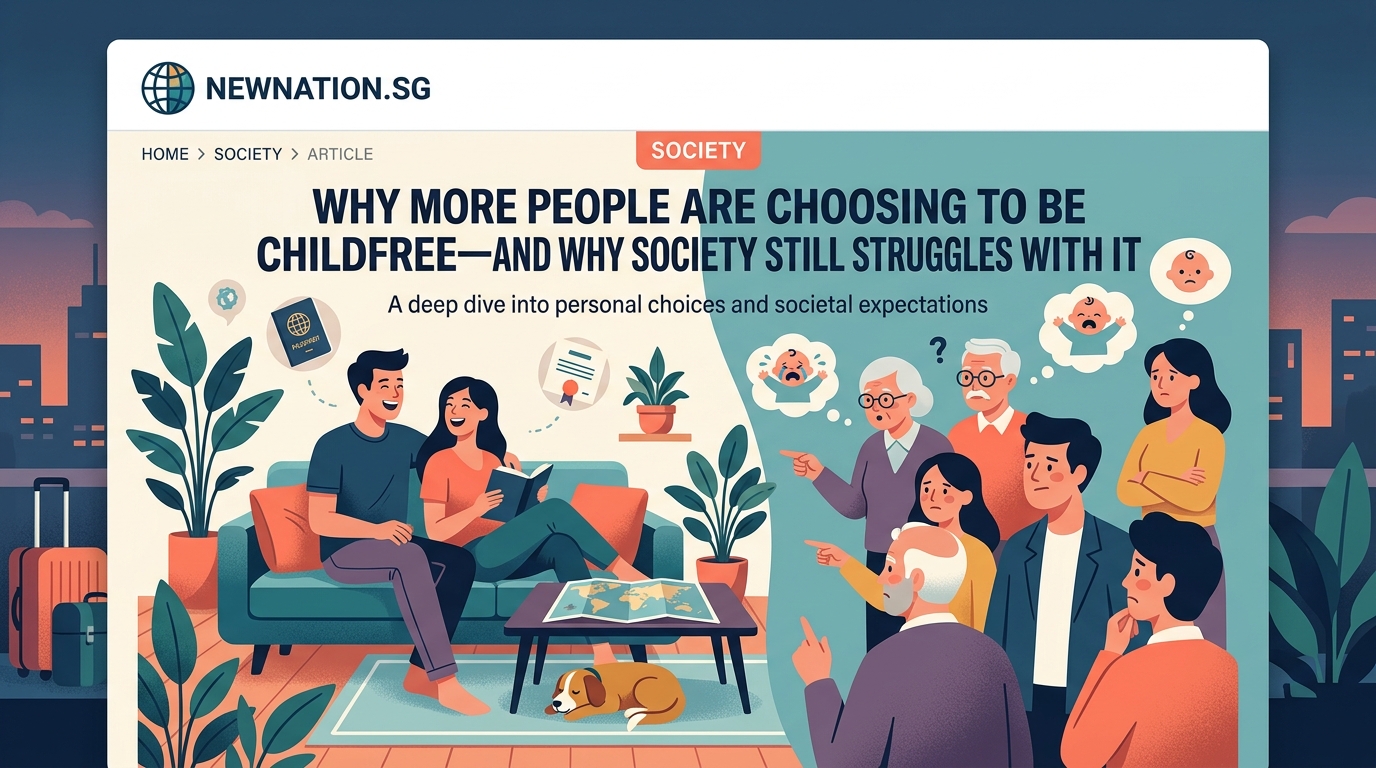
More people than ever are saying no to parenthood. Not because they hate kids or had terrible childhoods. Not because they’re selfish or broken. They’re making an active choice about how they want to live their lives.
The childfree movement has grown significantly over the past decade. What was once whispered about at family gatherings is now openly discussed on social media, in therapy sessions, and among friend groups. Yet despite this shift, those who choose not to have children still face judgment, invasive questions, and assumptions about their character.
People choose to be childfree for diverse reasons including financial stability, career ambitions, environmental concerns, personal freedom, health considerations, and the desire for authentic self-fulfillment. This decision reflects changing societal values where parenthood is viewed as one option among many, rather than an inevitable life stage everyone must complete.
Financial Freedom and Economic Reality
Money talks, and for many millennials and Gen Z adults, it’s screaming warnings about the cost of raising children.
The average cost of raising a child from birth to age 18 in the United States now exceeds $300,000. That figure doesn’t include college tuition, which can add another $100,000 to $200,000 depending on the institution. For young adults already drowning in student loan debt, struggling with housing costs, and watching their purchasing power erode, these numbers are sobering.
But the financial consideration goes beyond raw numbers. It’s about lifestyle choices and opportunity costs.
Without children, couples or individuals can:
- Build emergency funds and retirement savings faster
- Afford to live in smaller, more expensive urban areas with better amenities
- Travel internationally without coordinating school schedules
- Make career changes or start businesses with less financial risk
- Retire earlier or pursue passion projects mid-career
One 32-year-old marketing professional put it bluntly: “I watched my parents work themselves to exhaustion to give us a good life. They’re still paying off debt. I want different options.”
The economic argument isn’t about greed. It’s about security and choice in an increasingly uncertain financial landscape.
Career Ambitions and Professional Identity
Previous generations often viewed careers as something to pause or compromise for children. Today’s young professionals see their work differently.
Many millennials and Gen Z adults derive significant meaning and identity from their careers. They’ve spent years building expertise, developing skills, and creating professional reputations. The idea of stepping back, even temporarily, feels like abandoning a core part of themselves.
The professional world hasn’t made it easier. Despite progress in parental leave policies, caregiving still disproportionately falls on mothers. Women who take maternity leave often face the “motherhood penalty” where they’re perceived as less committed or competent. Fathers who take paternity leave can face similar stigma.
Remote work has blurred boundaries even further. When your office is your home, how do you separate parenting from professional responsibilities?
For some, the calculation is simple. They’ve worked too hard and care too deeply about their careers to accept the compromises parenthood would require.
“I’m not willing to be mediocre at the thing I love most, which is my research. I’ve seen too many brilliant women scientists lose momentum after having kids. That’s not a sacrifice I’m prepared to make.” — Dr. Sarah Chen, neuroscientist
Personal Freedom and Autonomy
Freedom means different things to different people. For the childfree, it often means control over their time, energy, and life direction.
Parents will tell you that children change everything. Schedules revolve around school drop-offs, sports practices, and bedtimes. Spontaneity becomes a luxury. Even simple activities like going to the grocery store require planning.
The childfree lifestyle preserves flexibility. Weekend trips don’t require coordinating with co-parents or finding childcare. Career opportunities in other cities or countries remain viable. Hobbies and friendships get the attention they deserve.
This isn’t about avoiding responsibility. Many childfree adults have demanding careers, care for aging parents, volunteer extensively, or pursue creative projects that require deep commitment. They’ve simply chosen different responsibilities.
The autonomy extends to relationships too. Couples without children can focus on their partnership without the stress and exhaustion that often accompanies parenting. They can nurture their connection, grow together, and prioritize each other.
Environmental and Ethical Concerns
Climate anxiety is real, especially among younger generations who will live with the consequences of environmental degradation.
Having fewer children is one of the most impactful personal choices someone can make to reduce their carbon footprint. One study found that having one fewer child reduces a person’s carbon emissions by 58.6 tons annually. That’s far more than going car-free, avoiding air travel, or adopting a plant-based diet.
For environmentally conscious individuals, this creates a moral dilemma. How can you claim to care about the planet while contributing to overpopulation?
The ethical concerns extend beyond environmental impact:
- Bringing children into an uncertain future with climate change, political instability, and economic inequality
- Questioning whether it’s fair to create a person who didn’t consent to existence
- Recognizing that adoption exists for those who want to parent without adding to population growth
These aren’t abstract philosophical debates. They’re genuine concerns that shape life decisions.
Health Considerations and Physical Wellbeing
Pregnancy and childbirth carry real risks that are often downplayed or ignored.
The United States has the highest maternal mortality rate among developed nations. Women of color face even greater risks. Pregnancy can trigger or worsen chronic health conditions. Postpartum depression and anxiety affect many new mothers.
Beyond pregnancy itself, some people have genetic conditions they don’t want to pass on. Others have chronic illnesses or disabilities that would make parenting extremely difficult.
Mental health plays a role too. Individuals with anxiety, depression, or trauma histories may recognize that the stress and sleep deprivation of parenting could trigger serious episodes.
Then there’s the simple acknowledgment that some bodies don’t want to experience pregnancy. That’s valid. Bodily autonomy includes the right to not use your body for reproduction.
Relationship Dynamics and Partnership Models
Not all romantic relationships are designed for co-parenting.
Some couples recognize that while they love each other deeply, they wouldn’t make good parenting partners. They might have incompatible parenting philosophies, different energy levels, or simply prefer their relationship as it is.
Others are in non-traditional relationship structures where adding children would complicate already complex dynamics. Polyamorous relationships, long-distance partnerships, or couples with significant age gaps might find parenting impractical.
Single people choosing to remain childfree avoid the pressure to find a co-parent. They can pursue relationships based on genuine connection rather than reproductive timelines.
The childfree choice also allows relationships to end without the complication of shared custody. While this might sound pessimistic, it’s realistic. Not all relationships last forever, and not having children removes one major barrier to leaving unhealthy situations.
Childhood Experiences and Breaking Cycles
Many childfree adults had difficult childhoods themselves.
Growing up with neglectful, abusive, or absent parents can create two responses. Some people are determined to do better with their own children. Others recognize they don’t have the emotional resources or desire to parent, and they choose to break the cycle by not having children at all.
There’s wisdom in this self-awareness. Recognizing that you don’t want to parent is far more responsible than having children out of obligation and resenting them.
Others had perfectly fine childhoods but witnessed the stress and exhaustion their parents experienced. They saw marriages strain under the pressure. They watched their parents sacrifice dreams and identities. They decided they wanted something different.
Social Shifts and Changing Life Scripts
The traditional life script used to be clear: education, career, marriage, house, children. In that order. On a specific timeline.
That script is dissolving.
People are marrying later or not at all. Career paths are less linear. Housing markets make homeownership challenging. The assumption that everyone should want children is being questioned.
Social media has connected childfree individuals who might have felt isolated in previous generations. Online communities provide support, validation, and practical advice for navigating a world still oriented toward parents and children.
Representation matters too. More celebrities, influencers, and public figures are openly discussing their childfree choices. This visibility normalizes the decision and provides models for different life paths.
The shift is generational. Baby boomers and Gen X parents often can’t understand why their millennial and Gen Z children aren’t giving them grandchildren. But younger generations have different values, priorities, and economic realities.
Common Reasons Across Demographics
| Reason Category | Primary Motivation | Common Age Group |
|---|---|---|
| Financial concerns | Economic stability and flexibility | 25-35 |
| Career focus | Professional achievement and identity | 28-40 |
| Personal freedom | Autonomy and lifestyle preferences | All ages |
| Environmental ethics | Climate impact and sustainability | 22-35 |
| Health factors | Physical or mental health protection | All ages |
| Relationship choice | Partnership dynamics and preferences | 30-40 |
What Childfree People Wish Others Understood
The childfree face constant questioning and judgment. Family members ask when they’ll “finally” have kids. Colleagues assume they have unlimited time for extra projects. Strangers tell them they’ll change their minds or regret their decision.
Here’s what they want people to know:
Being childfree doesn’t mean hating children. Many childfree adults enjoy their nieces, nephews, or friends’ kids. They might work in education or pediatrics. They simply don’t want the full-time, lifelong commitment of parenting.
The decision is often carefully considered, not impulsive or selfish. Most childfree adults have thought deeply about what they want from life and made an intentional choice.
“You’ll change your mind” is dismissive and disrespectful. While some people do change their minds about having children, many don’t. Telling someone they don’t know their own mind is condescending.
Childfree lives are full and meaningful. Purpose doesn’t require procreation. Contribution to society takes many forms beyond raising the next generation.
How Society Makes This Choice Harder
Despite growing acceptance, societal structures still assume everyone will eventually have children.
Healthcare is a major challenge. Many doctors refuse to perform sterilization procedures on young, childfree adults, especially women. They cite concerns about future regret, as if adults can’t make informed decisions about their own bodies.
Tax structures and workplace benefits often favor parents. Child tax credits, dependent care accounts, and family leave policies provide significant advantages. Meanwhile, childfree individuals subsidize schools and child-oriented infrastructure through their taxes without receiving equivalent benefits.
Social spaces can feel exclusionary. Friend groups often fragment when some members have children and others don’t. Schedules become incompatible. Conversations shift to parenting topics. Childfree adults can feel left behind or judged for their choices.
Family pressure remains intense in many cultures. Parents who expected grandchildren express disappointment or anger. Extended family members make inappropriate comments. Cultural or religious expectations create guilt and conflict.
Making Peace with the Decision
Choosing to be childfree requires confidence in the face of external pressure.
These steps help people feel secure in their choice:
- Reflect honestly on your motivations and ensure they align with your values
- Discuss the decision thoroughly with partners to ensure you’re on the same page
- Build a support network of like-minded individuals who respect your choice
- Set boundaries with family members and friends who question your decision
- Create a fulfilling life that reflects your priorities and brings you joy
The decision doesn’t have to be permanent or absolute for everyone. Some people remain open to changing their minds while currently identifying as childfree. Others know with certainty they never want children and take permanent steps like sterilization.
Both approaches are valid. What matters is making choices that align with your authentic self rather than external expectations.
Living Fully on Your Own Terms
The childfree choice represents a broader shift in how we think about meaningful lives.
Previous generations measured success through traditional milestones: marriage, homeownership, children, retirement. Today’s young adults are writing their own definitions of success and fulfillment.
For some, that includes children. For others, it doesn’t. Both paths can lead to rich, purposeful, joyful lives.
The childfree movement isn’t anti-parent or anti-family. It’s pro-choice in the fullest sense. It’s about recognizing that humans are diverse, with different needs, desires, and capacities. One-size-fits-all life scripts don’t serve anyone well.
As society continues to evolve, the hope is that childfree individuals will face less judgment and more acceptance. That doctors will respect bodily autonomy. That family members will support different choices. That workplaces will value all employees equally regardless of parental status.
Your life belongs to you. Whether that includes children or not is a deeply personal decision that deserves respect, not interrogation. The reasons people choose to be childfree are as varied and valid as the people making that choice. What matters most is living authentically and creating a life that feels right for you.