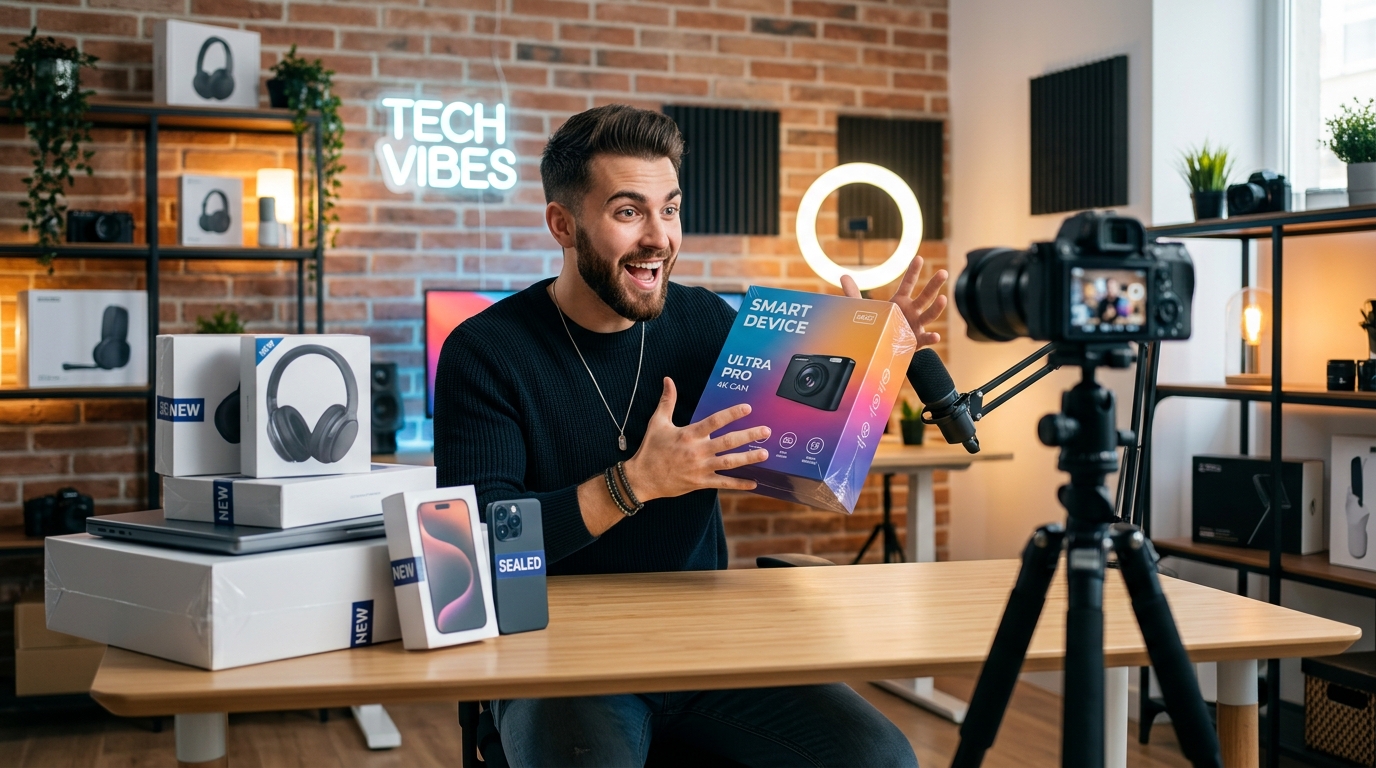
You just watched a glowing review of the latest wireless earbuds. The influencer raves about battery life, sound quality, and comfort. Three days later, you notice the same person posting identical praise for a competitor’s product. Something feels off, and you’re right to be suspicious.
Tech influencers fake reviews by recycling manufacturer talking points, using stock footage, and reviewing products they never unbox. Spotting fake reviews requires checking for specific hands-on details, comparing upload timelines across channels, and watching for generic praise that could apply to any product. Understanding these tactics protects your wallet and helps you find trustworthy recommendations.
Why tech influencers skip the actual testing
The economics make perfect sense from their perspective. A mid-tier tech influencer might receive 15 to 20 product pitches each week. Actually testing every gadget takes time they don’t have. Filming B-roll, running battery tests, and comparing features against competitors can eat up days per review.
Instead, many take shortcuts. They film an unboxing, read the spec sheet, and call it a day. Some never even open the package. The brand gets their video, the influencer gets paid, and viewers get misleading information.
Payment structures encourage this behavior. Brands often pay based on publishing speed rather than review quality. An influencer who posts within 48 hours of receiving a product earns more than someone who spends two weeks testing. The system rewards speed over honesty.
Common tactics used to fake product reviews
Understanding how influencers fabricate reviews helps you recognize the warning signs. These methods appear across platforms, from YouTube to TikTok to Instagram.
Recycling manufacturer marketing materials
The laziest approach involves copying text directly from press releases. An influencer receives the product announcement, rewrites a few sentences, and presents the manufacturer’s claims as personal experience. You’ll notice they use the exact same buzzwords the brand uses in official materials.
Watch for phrases like “industry-leading performance” or “revolutionary design.” Real users describe experiences, not marketing slogans. When someone claims a laptop has “unprecedented power,” ask yourself if they actually ran benchmarks or just read the product page.
Using stock footage and promotional materials
Many tech companies provide B-roll footage to influencers. This practice started innocently enough, helping creators show product features they couldn’t easily film. Now some influencers use nothing but stock footage, never recording their own clips.
You can spot this by watching carefully. Stock footage usually looks too polished, shot in professional studios with perfect lighting. Real reviews show fingerprints, desk clutter, and imperfect camera angles. If every shot looks like an Apple commercial, someone probably didn’t film it themselves.
Posting reviews before product availability
This red flag appears constantly with major product launches. An influencer posts a “full review” the same day a product gets announced. That smartphone hasn’t shipped to customers yet, but somehow they’ve already tested the camera in 12 different scenarios.
Check the dates. If a review appears before the official release date by more than a few days, the reviewer either got special early access or they’re faking it. Real early access usually comes with embargoes that prevent publishing until specific dates.
The anatomy of a fake tech review
Breaking down the structure reveals patterns that repeat across fake reviews. Learning these patterns helps you evaluate any tech content you encounter.
| Element | Fake Review | Genuine Review |
|---|---|---|
| Intro | Generic excitement, no specifics | Mentions why they wanted to test it |
| Unboxing | Quick flip through accessories | Comments on packaging quality, compares to previous versions |
| Features | Lists specs from website | Explains how features work in practice |
| Testing | “I’ve been using this” with no examples | Specific scenarios, comparisons, measurements |
| Problems | Maybe one minor issue | Multiple real-world frustrations |
| Conclusion | “Definitely recommend” | Nuanced recommendation for specific users |
The differences matter. Fake reviews stay surface level because the creator lacks hands-on experience. Genuine reviews include details that only come from actual use.
How to verify if an influencer actually tested the product
You don’t need to be a detective, but a few simple checks reveal the truth. These verification methods work across any platform or product category.
-
Look for unique camera angles and environments. Real reviewers film in their actual workspace, which changes between videos. Fake reviews often use the same generic background or suspiciously clean desk setups.
-
Check if they mention specific firmware versions or software builds. Products ship with particular software versions, and reviewers who actually use devices notice these details. Someone reading a spec sheet won’t know the difference.
-
Search for comparison mentions with products they previously reviewed. Genuine reviewers naturally compare new products to old favorites. “The battery lasts longer than the model I tested last month” indicates real experience. Generic praise suggests otherwise.
-
Watch their eyes during the review. People who used a product look at it naturally while discussing features. Those reading scripts keep glancing off-camera at notes or teleprompters.
-
Listen for hesitation and natural speech patterns. Real experiences produce spontaneous comments and occasional stumbles. Perfectly smooth delivery often means someone memorized marketing copy.
Red flags that scream fake review
Certain patterns appear so consistently in fake reviews that spotting them becomes automatic. Train yourself to notice these warning signs.
- Every product gets 4 or 5 stars with minimal criticism
- Reviews get published on the exact same day across multiple channels
- The influencer never shows the product in use, only sitting on a desk
- Comparison sections lack specific numbers or real-world examples
- Comments asking detailed questions go unanswered or get vague responses
- The video description contains affiliate links but no disclosure about receiving the product for free
- Thumbnail images use official product renders instead of actual photos
- Battery life claims match manufacturer specs exactly, with no real-world variance
- The reviewer praises features that contradict each other (lightweight but premium build quality, for example)
Pay special attention to comment sections. Genuine reviewers engage with technical questions and admit when they don’t know something. Fake reviewers ignore detailed questions or give answers that could apply to any product.
The role of affiliate programs in dishonest reviews
Money changes behavior. Affiliate commissions create financial incentives to recommend products regardless of quality. An influencer earns 5% to 10% of every sale through their link, which can mean thousands of dollars for popular products.
This doesn’t make every affiliate review dishonest. Many creators genuinely test products and only link to items they recommend. The problem emerges when affiliate earnings become the primary motivation. Some influencers choose which products to review based solely on commission rates, not product quality or audience relevance.
Watch for disclosure language. Honest creators clearly state when they earn commissions. They also mention if they received products for free. Lack of disclosure suggests someone hiding their financial relationship with brands.
The best tech reviewers I follow always mention at least three things they dislike about every product. Nobody creates perfect gadgets. If someone can’t find flaws, they’re not looking hard enough or they’re being paid not to look.
Platform-specific fake review tactics
Different platforms enable different deception methods. Understanding platform-specific tricks helps you evaluate content wherever you find it.
YouTube creators sometimes post “reviews” that are actually unboxing videos with speculation. They film themselves opening the package, then spend 10 minutes guessing how features might work. The title says “review” but the content provides no real testing.
Instagram influencers face character limits that encourage shallow coverage. A grid post with three photos and two sentences can’t provide meaningful analysis. Yet brands pay for these posts because they reach large audiences. The influencer gets paid, posts pretty pictures, and moves on without using the product.
TikTok’s short format makes substantive reviews nearly impossible. Sixty seconds allows time for “this is cool” but not genuine evaluation. Some creators post series covering one product across multiple videos, which works better. Single-video TikTok reviews rarely provide useful information.
Twitter threads sometimes compile thoughts after real testing, but just as often repeat press release information formatted as personal experience. Check if the thread author links to longer-form content with actual testing details.
What brands get from fake reviews
Companies aren’t innocent victims here. Many actively encourage shallow, positive coverage by structuring their influencer programs to reward speed and reach over honesty.
Brands send products to 50 influencers knowing maybe 10 will actually test them thoroughly. The other 40 will post something positive based on specs and marketing materials. That still generates 40 pieces of content praising the product, which drives awareness and sales.
Some PR firms explicitly tell influencers not to mention certain flaws. Others provide talking points that influencers repeat verbatim. The brand gets control over messaging while maintaining the appearance of independent reviews.
Return policies factor in too. Brands that require influencers to return products after reviewing discourage thorough testing. Nobody runs extensive battery tests on a laptop they must ship back in two weeks. Influencers who keep products have more incentive to actually use them.
Finding trustworthy tech reviewers
Reliable reviewers exist, but you need to know what separates them from the crowd. These characteristics indicate someone who prioritizes accuracy over affiliate income.
Look for creators who regularly criticize products, even from brands they usually like. Honest reviewers call out problems regardless of manufacturer. Someone who loves Apple products but roasts the butterfly keyboard shows independence.
Check their testing methodology. Good reviewers explain how they test battery life, measure performance, or evaluate camera quality. They show their process, not just results. This transparency proves they actually conducted tests rather than copying manufacturer claims.
Review their disclosure practices. Trustworthy creators clearly state their relationship with every brand. They mention free products, paid sponsorships, and affiliate relationships upfront. This honesty extends to explaining how compensation might influence their coverage.
Notice their recommendation specificity. Strong reviewers say “buy this if you need X, but avoid it if you prioritize Y.” Weak reviewers say “everyone should buy this.” Real products suit some users better than others. Blanket recommendations suggest someone pushing sales over providing guidance.
How fake reviews hurt actual consumers
The consequences extend beyond wasted money on bad products. Fake reviews erode trust in all online content, making it harder to find legitimate information when you need it.
You might buy a product based on glowing reviews, only to discover it fails at basic tasks. That $200 mistake hurts, but the bigger damage comes from losing faith in reviews entirely. When you can’t trust any source, making informed decisions becomes nearly impossible.
Brands that make genuinely good products suffer too. Their competitors pay for fake positive reviews while honest companies rely on authentic feedback. This creates a race to the bottom where marketing budgets matter more than product quality.
The entire influencer ecosystem degrades. Creators who invest time in honest testing can’t compete with those who pump out fake reviews in a fraction of the time. Audiences drift toward shallow content because algorithms reward posting frequency over quality.
Protecting yourself from misleading recommendations
You can’t eliminate all risk, but smart habits dramatically reduce your chances of getting fooled. These practices work whether you’re buying headphones or laptops.
- Read multiple reviews from different sources before making decisions
- Prioritize reviewers who show detailed testing processes
- Check product forums and user communities for real-world experiences
- Wait at least two weeks after launch before buying based on reviews
- Look for reviewers who use products as their daily drivers for extended periods
- Trust creators who sometimes say “don’t buy this” or “wait for the next version”
- Verify technical claims by checking manufacturer specs and independent tests
- Watch for consistency across a creator’s content over months and years
Building a list of trusted sources takes time but pays dividends. Once you identify three to five reliable reviewers in your areas of interest, their recommendations become genuinely useful.
What happens when influencers get caught
Consequences vary wildly. Some influencers face backlash and lose followers. Others apologize and continue as before. A few double down and deny wrongdoing despite clear evidence.
Platform policies theoretically prohibit deceptive practices, but enforcement remains inconsistent. YouTube’s disclosure requirements exist but violations rarely result in serious penalties. Instagram and TikTok struggle even more with enforcement.
The Federal Trade Commission requires disclosure of material connections between brands and influencers. Violations can trigger fines, but the FTC lacks resources to police millions of social media posts. Most fake reviews fly under the radar.
Audience reactions matter more than official penalties. When a trusted creator gets exposed for faking reviews, their community often abandons them. Rebuilding that trust takes years, if it happens at all. This social consequence provides the strongest deterrent against dishonest practices.
Recognizing your own confirmation bias
Sometimes you want to believe a review because you already decided to buy the product. Your brain seeks validation, not information. This makes you vulnerable to fake reviews that tell you what you want to hear.
Notice when you’re shopping for reviews that support a predetermined conclusion. If you catch yourself dismissing negative reviews and embracing positive ones, step back. That’s confirmation bias at work.
Try actively seeking critical perspectives on products you want to buy. Force yourself to read negative reviews and consider whether the complaints matter for your use case. This mental exercise counteracts the natural tendency to cherry-pick supporting evidence.
Ask yourself why you trust a particular reviewer. Is it because they provide detailed evidence, or because they recommend products you already own? The second reason indicates bias rather than sound judgment.
Why the problem keeps getting worse
Economic pressures intensify every year. More creators compete for brand deals, pushing them to accept worse terms and lower standards. Brands spread budgets across more influencers, reducing individual compensation and encouraging volume over quality.
Algorithm changes reward frequent posting, which conflicts with thorough testing. A creator who posts three times weekly will outperform someone who posts monthly, regardless of content quality. This structural incentive drives the race toward shallow coverage.
Audiences share blame too. Videos with flashy thumbnails and exaggerated claims get more views than measured, nuanced reviews. Creators respond to these incentives by optimizing for clicks rather than accuracy. The system rewards the wrong behaviors.
Tools that enable fake reviews keep improving. AI can now generate review scripts that sound natural. Stock footage libraries expand constantly. Editing software makes it easier to create professional-looking content without substantive testing. Technology lowers the barrier to producing convincing fake reviews.
Teaching others to spot fake reviews
Share these skills with friends and family who might not recognize manipulation tactics. Your parents, siblings, or kids probably trust influencer recommendations without questioning them.
Start conversations by asking what they noticed in reviews they found helpful. Guide them toward recognizing specific details versus generic praise. Help them understand why “the battery lasted exactly as long as advertised” sounds suspicious compared to “I got about six hours of actual use, which was less than I hoped.”
Show them how to check multiple sources and compare claims. Demonstrate the verification techniques you use. Walk through examples of fake reviews together, pointing out red flags in real time.
Creating informed consumers makes the entire ecosystem healthier. As more people recognize and reject fake reviews, the economic incentive to produce them decreases. Brands will shift budgets toward creators who provide genuine value.
Making smarter decisions with imperfect information
You’ll never have perfect information about products before buying. Even honest reviews reflect individual experiences that might not match yours. The goal isn’t certainty but better odds.
Accept that some purchases won’t work out. Even with careful research, you’ll occasionally buy something that disappoints. That’s normal. What matters is improving your hit rate over time by developing better evaluation skills.
Use return policies as safety nets. Buy from retailers with generous return windows. This reduces the cost of mistakes and lets you verify claims through personal testing.
Trust your instincts when something feels off. If a review seems too positive, too vague, or too perfectly aligned with marketing materials, you’re probably right to be skeptical. Your gut reaction to content carries information worth considering.
Building a healthier relationship with tech content
Step back from the hype cycle occasionally. Not every product launch deserves your attention. Most “revolutionary” gadgets offer incremental improvements over last year’s version. Waiting a few months for honest long-term reviews often reveals whether excitement was justified.
Recognize that you don’t need most of the products being reviewed. Influencers create desire for things you never knew existed. That’s their job. Your job is deciding whether those products actually solve problems you have.
Follow creators who review products you already own. This lets you calibrate their perspective against your experience. If they praise features you found frustrating, or criticize aspects you love, you learn how their preferences differ from yours. This knowledge helps you interpret their other reviews more accurately.
Consider the source’s expertise. A gaming YouTuber might provide excellent graphics card reviews but lack knowledge about productivity software. Matching reviewer expertise to product category improves the value you get from their content.
Moving forward with sharper eyes
The landscape of tech influencers fake reviews won’t improve overnight. Economic incentives, platform structures, and audience behaviors all push toward shallow, misleading content. But individual consumers can protect themselves by learning to recognize manipulation.
Start applying these verification techniques today. Pick a product you’re considering and evaluate three reviews using the frameworks outlined here. Notice which reviewers provide specific details versus generic praise. Check how many actually show the product in real use versus just sitting on a desk.
Your purchasing decisions will improve as these habits become automatic. You’ll waste less money on overhyped products and discover genuinely useful gadgets that deserve your investment. The skills transfer beyond tech too, helping you evaluate all kinds of online content with appropriate skepticism.
Remember that good reviewers exist and deserve your support. When you find creators who invest time in honest testing, engage with their content. Leave thoughtful comments, share their videos, and consider supporting them directly if they offer membership options. Building a sustainable model for quality reviews requires audiences who value and reward that work.