
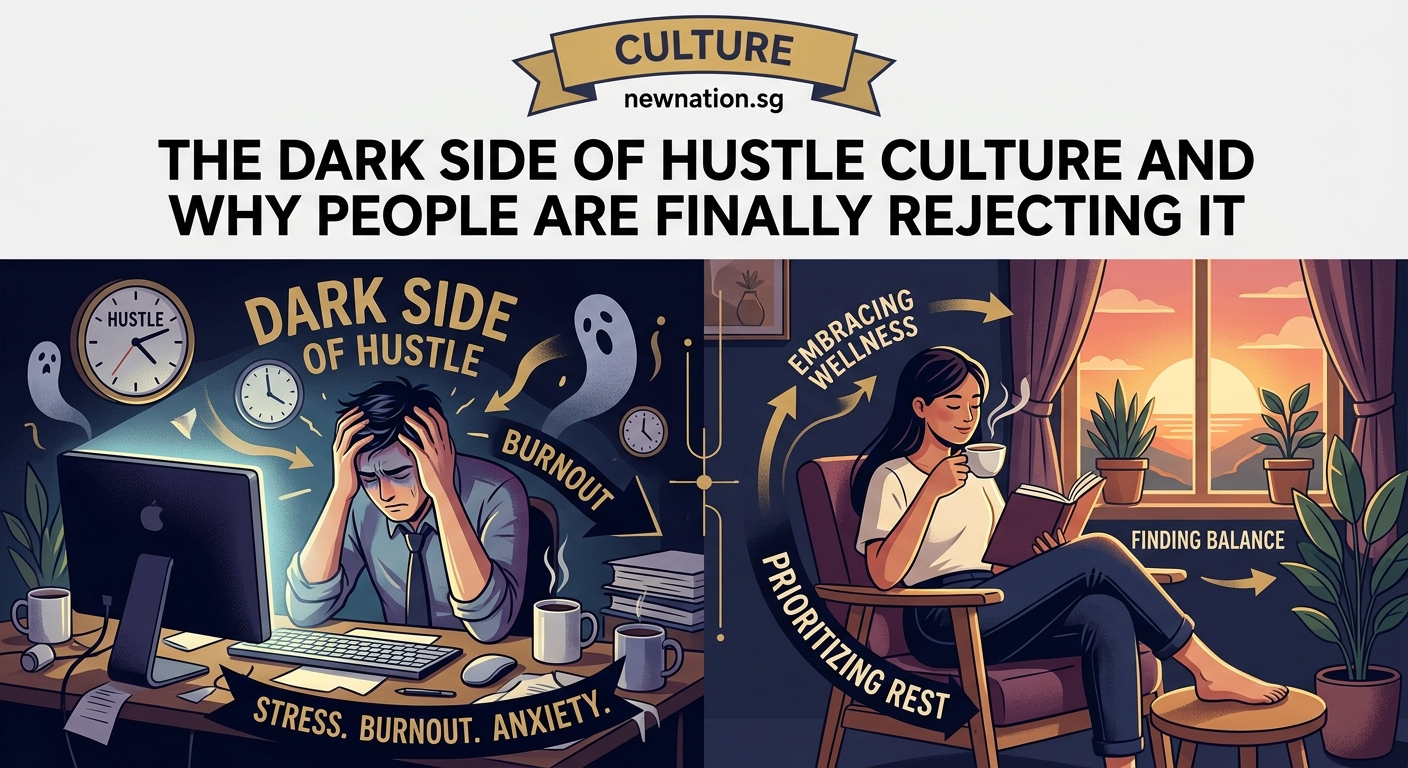
You wake up at 5 AM, answer emails before breakfast, skip lunch to finish a project, then spend your evening on a side hustle. Sound familiar? For years, this grind was celebrated as the path to success. But behind the motivational Instagram posts and productivity hacks lies a darker reality that’s finally coming to light.
The dark side of hustle culture includes chronic burnout, deteriorating mental health, damaged relationships, and the false promise that constant work equals success. Workers are rejecting this mentality after realizing that productivity at all costs sacrifices wellbeing, creativity, and genuine achievement. The shift toward sustainable work habits and proper boundaries represents a healthier approach to professional and personal growth.
What hustle culture actually costs you
Hustle culture sells a simple story. Work harder than everyone else, sacrifice sleep and social time, and you’ll reach your goals faster. The reality is far less glamorous.
Chronic stress becomes your baseline. Your body stays in fight-or-flight mode constantly. Cortisol floods your system day after day. This isn’t just uncomfortable. It damages your cardiovascular system, weakens your immune response, and accelerates aging at a cellular level.
Sleep deprivation becomes a badge of honor. You hear people brag about functioning on four hours of rest. But your brain needs sleep to consolidate memories, process emotions, and clear metabolic waste. Cutting sleep doesn’t make you more productive. It makes you slower, more forgetful, and prone to mistakes.
Relationships suffer silently. You cancel plans with friends repeatedly. You’re physically present with family but mentally elsewhere, checking your phone every few minutes. These connections don’t just pause while you grind. They deteriorate. People stop inviting you. Partners feel neglected. Years pass before you realize what you’ve lost.
Your mental health takes a beating. Anxiety becomes constant background noise. Depression creeps in gradually. You might not even notice the shift because you’re too busy to check in with yourself. By the time you recognize the problem, you’re already deep in it.
The toxic beliefs that keep you grinding
Hustle culture doesn’t survive on logic. It thrives on beliefs that sound reasonable but crumble under scrutiny.
Rest equals laziness. This lie runs deep. Taking breaks feels like failure. A day off triggers guilt. But muscles grow during recovery, not during the workout. Your brain works the same way. Rest isn’t the opposite of productivity. It’s a requirement for it.
Your worth equals your output. You start measuring your value by how much you produce. A slow day feels like a personal failing. But you’re not a machine. Your humanity exists separate from your work. This belief turns you into your own harshest critic.
Success requires suffering. Pain becomes proof you’re doing something right. If it’s easy, it doesn’t count. This mindset confuses struggle with progress. Sometimes the smartest path is the one that doesn’t destroy you along the way.
Everyone else is outworking you. Social media amplifies this fear. You see curated highlights of other people’s productivity and assume they’re grinding 24/7. Most of those posts are performative. The person posting about their 4 AM workout probably took a three-hour nap yesterday.
Here’s how these beliefs manifest in daily decisions:
| Toxic Belief | What It Looks Like | Actual Reality |
|---|---|---|
| Rest equals laziness | Skipping weekends, working while sick | Recovery improves performance |
| Worth equals output | Measuring value by hours worked | Quality matters more than quantity |
| Success requires suffering | Pulling all-nighters regularly | Sustainable effort wins long-term |
| Others are outworking you | Constant comparison and anxiety | Everyone’s struggling privately |
Why burnout became an epidemic
Burnout isn’t just feeling tired. The World Health Organization classifies it as an occupational phenomenon with three dimensions: exhaustion, cynicism toward your job, and reduced professional efficacy.
You stop caring about work that once excited you. Tasks that used to take an hour now consume your entire afternoon. You feel detached from colleagues. Nothing feels meaningful anymore.
The numbers tell a grim story. Studies show that over 70% of millennials report experiencing burnout. Gen Z workers are burning out even faster, often before they turn 25. This isn’t because younger workers are weaker. They entered a workforce that normalized overwork and dressed it up as ambition.
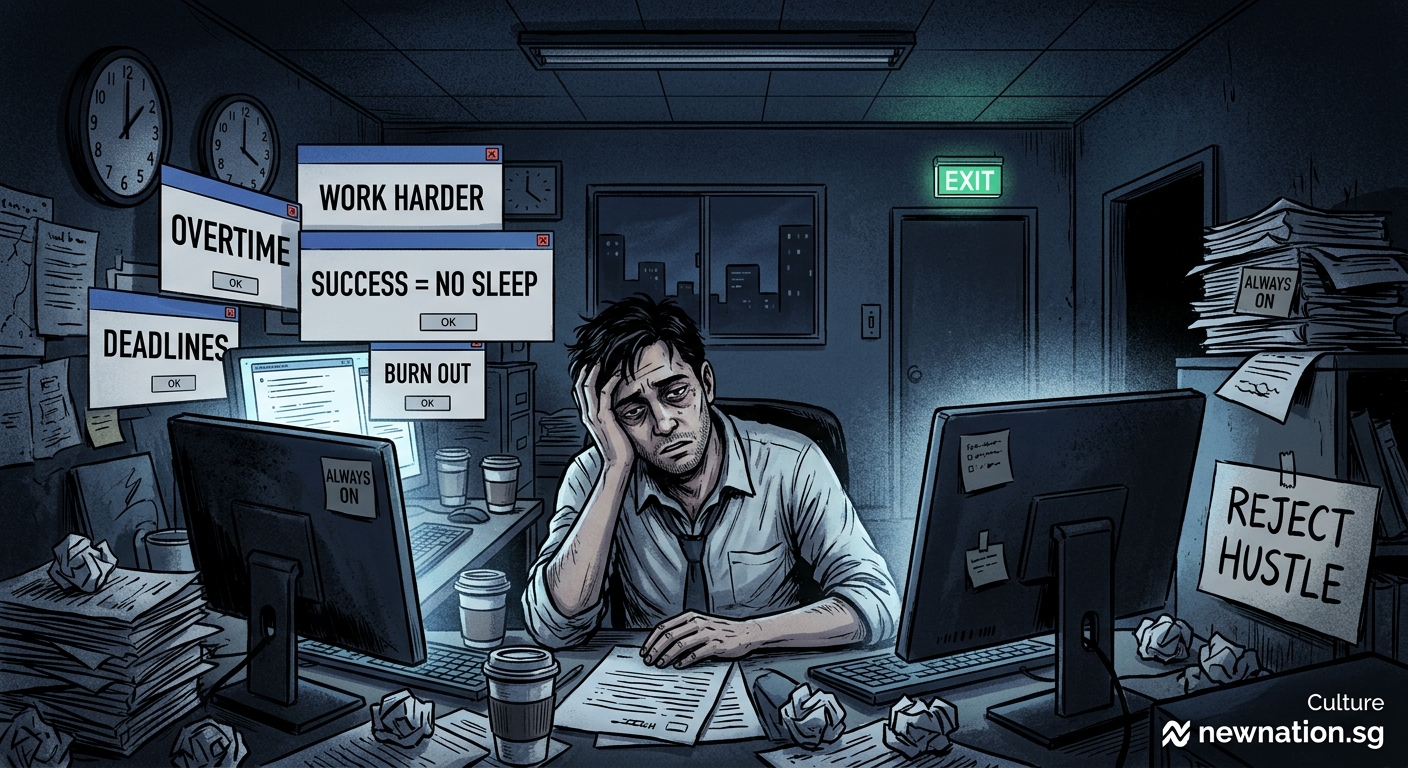
Technology erased the boundary between work and life. Your boss can reach you at 9 PM. Clients expect responses on weekends. The office follows you home through every device you own. Previous generations clocked out and actually left work behind. That option barely exists anymore.
The gig economy promised freedom but delivered instability. Multiple income streams sound empowering until you realize you’re working three jobs with no benefits. There’s no safety net. Every hour not working is money lost. The hustle never stops because stopping means financial risk.
“We glorified busy. We made exhaustion a status symbol. And we’re paying for it with our health, our relationships, and our actual ability to do good work.” — Organizational psychologist studying workplace burnout
The false promise of productivity porn
Productivity content floods every platform. Morning routines of successful people. Time-blocking methods. Apps that gamify your to-do list. Biohacking tips. It’s endless.
Most of it misses the point entirely.
These systems assume more productivity is always better. They optimize for output without asking if that output matters. You can perfectly schedule every minute of your day and still accomplish nothing meaningful.
The content also ignores context completely. A CEO’s morning routine doesn’t work for a single parent. A venture capitalist’s productivity system assumes resources most people don’t have. Copying someone else’s method without their circumstances sets you up for failure.
Productivity porn creates a different kind of trap. You spend hours researching the perfect system instead of actually working. You buy apps, journals, and courses. You reorganize your entire life around a method you saw in a YouTube video. Then you feel guilty when it doesn’t transform everything overnight.
The real issue isn’t your system. It’s the belief that you need to maximize every moment. Some time should be unproductive. Boredom sparks creativity. Downtime lets your subconscious solve problems. Not everything needs optimization.
What rejection actually looks like
People aren’t just complaining about hustle culture anymore. They’re actively walking away from it.
The “lying flat” movement in China saw young workers refuse to participate in the grind. They chose minimal work over career advancement. Western media portrayed this as laziness, but it was actually a rational response to impossible expectations.
Quiet quitting became a trend, though the name is misleading. People didn’t quit their jobs. They quit going above and beyond for employers who didn’t reciprocate. They did their actual job description and nothing more. The backlash to this concept revealed how normalized unpaid overtime had become.
The four-day workweek is gaining traction. Companies testing it report maintained or improved productivity. Workers are happier and healthier. Turns out people accomplish more when they’re not exhausted.
Here are concrete ways people are stepping back:
- Setting actual boundaries with work communication. Turning off notifications after hours. Not checking email on weekends. Letting calls go to voicemail.
- Redefining success on personal terms. Choosing jobs that pay enough rather than chasing maximum income. Valuing time with family over promotions. Measuring success by wellbeing instead of achievements.
- Saying no without elaborate justification. Declining extra projects. Refusing to work late without compensation. Protecting personal time unapologetically.
- Building lives outside of work identity. Developing hobbies that have nothing to do with career. Investing in friendships. Creating meaning beyond professional accomplishment.
The mental shifts that actually help
Rejecting hustle culture isn’t about becoming lazy. It’s about working smarter and living better.
Separate your identity from your job. You are not your career. Your work is something you do, not who you are. This distinction protects your self-worth when projects fail or jobs end.
Embrace constraints. Limited time forces prioritization. When you can’t do everything, you choose what actually matters. Constraints breed creativity and efficiency in ways unlimited time never does.
Reframe rest as strategic. Athletes don’t train every single day. Musicians don’t practice 24/7. Your brain needs recovery time to perform well. Rest isn’t slacking. It’s preparation for better work.
Question productivity advice. Before adopting any system, ask if it serves your goals or someone else’s. Does this method fit your life, or are you contorting your life to fit the method?
Value process over performance. Focus on sustainable habits rather than dramatic results. Small, consistent actions beat sporadic heroic efforts. The tortoise really does win this race.
Consider these alternative approaches:
- Energy management over time management. Work during your peak hours. Rest when you’re depleted. Match tasks to your energy level instead of forcing productivity during low periods.
- Depth over breadth. Do fewer things better. One focused hour beats three distracted ones. Quality compounds over time in ways quantity doesn’t.
- Seasonal intensity. Some periods require more effort. Others allow recovery. Accept that your pace will vary instead of maintaining maximum output constantly.
Building a life beyond the grind
The alternative to hustle culture isn’t doing nothing. It’s doing things that actually matter to you.
Start by auditing how you spend time. Track a week honestly. You’ll probably find hours disappearing into activities you don’t value. Social media scrolling. Meetings that could be emails. Tasks you do out of obligation rather than necessity.
Identify what energizes you versus what drains you. Some work feels hard but fulfilling. Other work just depletes you. The goal isn’t to avoid all difficulty. It’s to invest your effort where it creates genuine value.
Build recovery into your routine. Not as a reward for productivity, but as a non-negotiable part of your schedule. Exercise. Sleep. Time with people you care about. Hobbies that have no productive output. These aren’t luxuries. They’re requirements for sustainable performance.
Set boundaries and enforce them. This feels uncomfortable at first. People will push back. Some will call you uncommitted. Let them. Your health matters more than their opinion.
Create success metrics that include wellbeing. Track how you feel, not just what you accomplish. A promotion that destroys your mental health isn’t success. It’s a bad trade.
When the pressure to perform never stops
The hardest part about rejecting hustle culture is the fear. What if you fall behind? What if others get ahead? What if taking your foot off the gas ruins everything?
These fears are real but often exaggerated. The people who seem to be winning the hustle game are often miserable behind the scenes. Their social media doesn’t show the panic attacks or failing relationships.
You’re not competing against everyone else. You’re building a life that works for you. Someone else’s success doesn’t diminish yours. There’s no finite amount of achievement to go around.
The pressure also comes from economic anxiety. Bills don’t care about your boundaries. Rent doesn’t pause for your mental health. This is valid. But burning yourself out doesn’t solve financial problems. It just makes you too exhausted to address them effectively.
Sometimes the system is genuinely broken. Your job might demand unreasonable hours. Your industry might normalize overwork. Recognizing this isn’t defeatist. It’s realistic. You can work to change systems while also protecting yourself within them.
Look for communities of people rejecting the grind. They exist in every field. These connections remind you that another way is possible. You’re not alone in questioning whether constant hustle is worth the cost.
Finding your own sustainable pace
There’s no universal formula for healthy work. What works for someone else might not work for you. That’s fine.
Some people thrive with structured routines. Others need flexibility. Some do their best work in intense bursts. Others prefer steady consistency. The goal is finding your rhythm, not copying someone else’s.
Pay attention to what your body tells you. Persistent headaches, digestive issues, and sleep problems are signals, not obstacles to push through. Your body knows when you’re overdoing it.
Notice what actually moves the needle in your work. Often, a small percentage of your efforts create most of your results. Focus there. Let the rest go.
Give yourself permission to change your mind. Maybe you tried the hustle approach and it worked for a while. That doesn’t mean you have to keep doing it. You’re allowed to want something different now.
The dark side of hustle culture is finally getting the attention it deserves. More people are speaking up about burnout. Companies are experimenting with better models. The conversation is shifting from “how much can you endure” to “how well can you live.”
You don’t have to wait for perfect conditions to make changes. Start small. Protect one evening this week. Take a full lunch break tomorrow. Say no to one unnecessary commitment. These tiny acts of resistance add up.
Your worth isn’t determined by your productivity. Your value exists independent of your output. You deserve rest, boundaries, and a life that doesn’t revolve entirely around work. That’s not radical. It’s human.