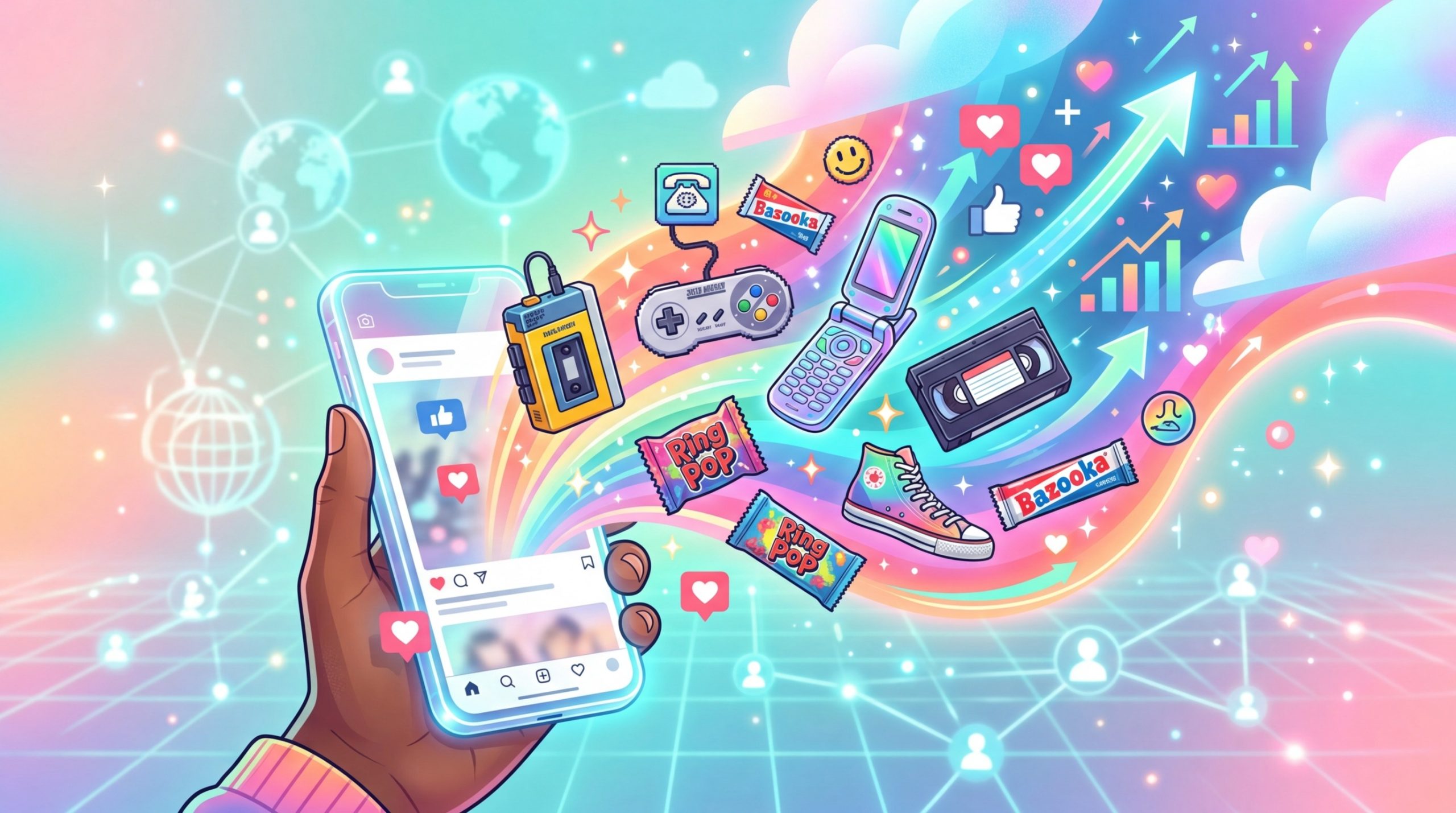
Nostalgia sells. Not because consumers are stuck in the past, but because memory triggers emotion faster than any rational pitch ever could. Brands that understand this psychological shortcut are winning attention, loyalty, and sales in a marketplace where traditional advertising falls flat.
Nostalgia marketing leverages emotional memory to create instant brand connection. By tapping into shared cultural moments, familiar aesthetics, and comforting references from the past, brands bypass rational skepticism and trigger positive associations that drive purchasing decisions. This approach works because our brains process emotional memories faster and more deeply than new information, making nostalgic content more memorable and shareable than conventional advertising.
What makes nostalgia marketing different from regular advertising
Traditional advertising asks consumers to care about something new. Nostalgia marketing reminds them they already do.
The difference is fundamental. When you see an ad for a new smartphone, your brain evaluates features, price, and necessity. When you see a recreation of a 1990s living room with a chunky TV and dial-up modem sounds, your brain lights up with recognition. No evaluation needed. The emotion arrives first.
This emotional shortcut is why nostalgia campaigns consistently outperform standard product-focused ads. A study by the Journal of Consumer Research found that nostalgic feelings increase willingness to pay by making products feel more valuable. The memory does the selling.
Brands using this strategy aren’t just showing old logos or vintage packaging. They’re reconstructing entire sensory experiences. The crackle of a VHS tape. The specific blue of a childhood cereal box. The exact font from a 1980s arcade game. Each element triggers a cascade of associated memories that create positive feelings toward the brand.
The psychology behind why memory sells products
Your brain treats nostalgic memories differently than regular ones. Neuroscience research shows that recalling positive past experiences activates the brain’s reward centers, the same regions that light up when you eat chocolate or receive money.
This isn’t accidental. Human brains evolved to remember emotionally significant events because survival depended on it. That same mechanism now makes you feel warm and safe when you see a brand reference from your childhood, even though rationally you know it’s just marketing.
The effect is measurable. When researchers at the University of Southampton tested nostalgic advertising, they found it increased purchase intent by 15% compared to non-nostalgic ads for identical products. The product didn’t change. The emotional context did.
Three specific psychological mechanisms drive this response:
- Emotional contagion: Positive memories from the past transfer their emotional charge to the present moment and the brand triggering them.
- Social connectedness: Shared cultural references make consumers feel part of a community, reducing isolation and increasing brand affinity.
- Temporal distancing: Past events feel safer and more comfortable than uncertain futures, making nostalgic brands feel more trustworthy.
Marketing professionals can leverage these mechanisms by identifying which specific memories resonate with their target demographic. A campaign aimed at millennials might reference dial-up internet or early mobile phones. One targeting Gen X could use 1980s arcade aesthetics or Saturday morning cartoons.
The key is specificity. Generic “retro” styling doesn’t trigger the same neural response as precise recreation of actual cultural moments.
How successful brands are using memory-based campaigns
Major brands have turned nostalgia into a core strategy, not just an occasional tactic.
Coca-Cola regularly releases limited-edition packaging that recreates designs from specific decades. These aren’t random throwbacks. Each design targets a demographic that was young when that packaging was current, triggering personal memories of first tastes, family gatherings, or summer vacations.
Nintendo built an entire product line around this principle. The NES Classic and SNES Classic consoles sold millions of units despite offering games available free through emulation. Consumers weren’t buying the games. They were buying the experience of being twelve again, sitting cross-legged in front of a TV with friends.
Spotify’s annual “Wrapped” campaign succeeds partly through nostalgia mechanics. By showing users their listening history, the platform triggers memories associated with those songs. That emotional response increases platform loyalty and drives social sharing.
Fast fashion retailers like Urban Outfitters stock vinyl records and cassette tapes, products objectively inferior to digital music. Sales remain strong because the format itself triggers nostalgic associations with music discovery, album art, and the ritual of physical media.
“The most effective nostalgia marketing doesn’t just show the past. It recreates the feeling of experiencing it for the first time. That emotional authenticity is what converts attention into sales.” – Brand strategist perspective
Common mistakes that make nostalgia campaigns fail
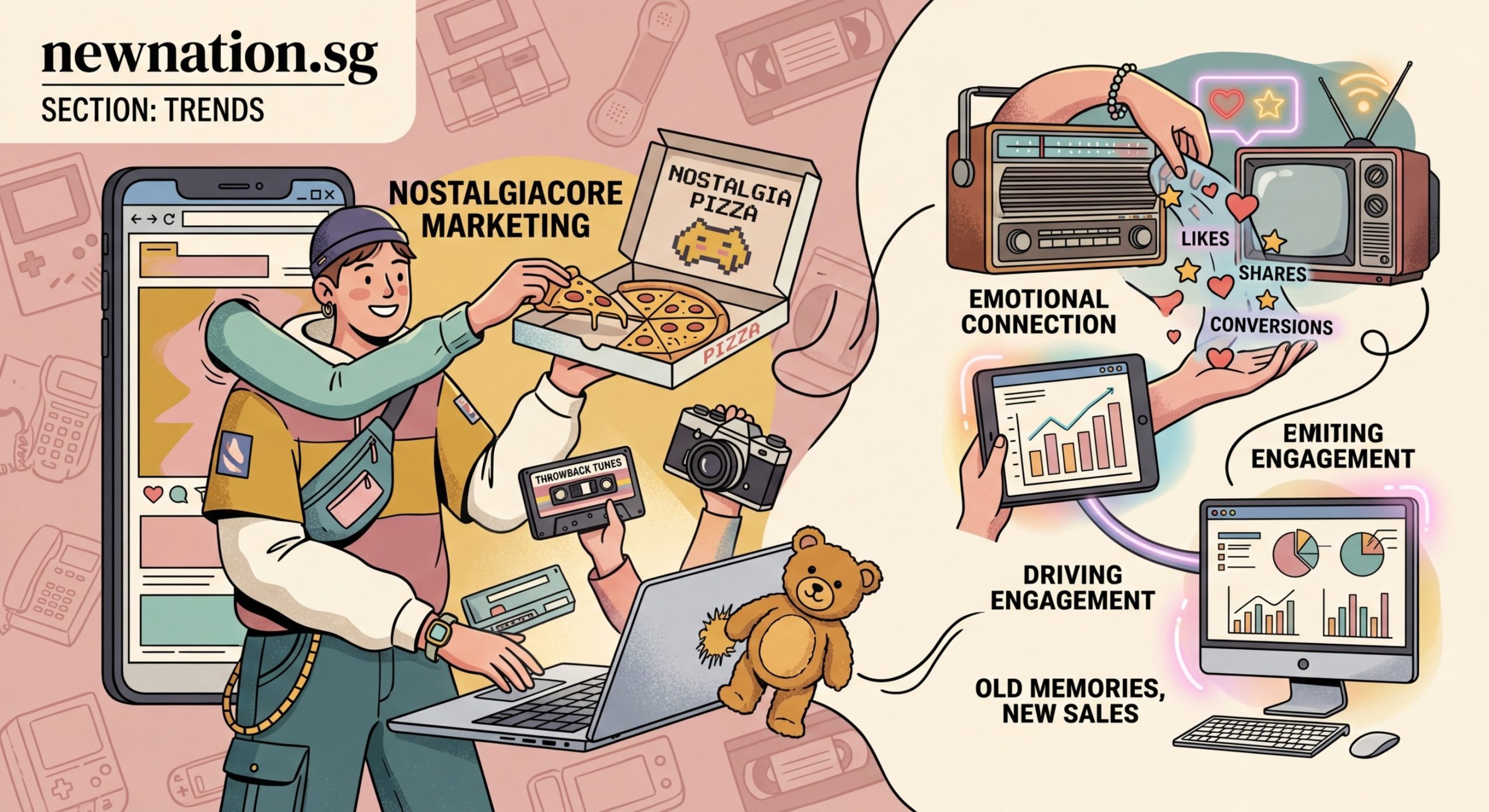
Not all attempts at memory-based marketing succeed. Several patterns consistently predict failure.
Targeting the wrong generation: Using 1970s references to reach millennials creates confusion, not connection. Each generation has specific cultural touchstones. Mismatching them breaks the emotional circuit.
Aesthetic without substance: Slapping a retro filter on modern content doesn’t create genuine nostalgia. Consumers recognize superficial styling instantly. The campaign needs authentic recreation of period-specific details to trigger real emotional response.
Ignoring negative associations: Not all memories are positive. Brands that reference economic downturns, social conflicts, or traumatic events alienate audiences instead of connecting with them.
Overexplaining the reference: Nostalgia works through recognition, not explanation. When brands add captions like “Remember this?” or “Throwback to…” they undermine the emotional impact. The reference should speak for itself.
Here’s how effective and ineffective approaches compare:
| Effective Approach | Ineffective Approach | Why It Matters |
|---|---|---|
| Recreate specific product packaging from 1995 | Use vague “90s style” design | Specificity triggers actual memories |
| Partner with original creators or voices | Hire generic voice actors | Authenticity validates the nostalgia |
| Reference shared cultural moments | Use personal family photos | Collective memory creates community |
| Let the reference stand alone | Add explanatory text | Recognition creates stronger emotion |
| Test with target demographic | Assume universal appeal | Generational specificity is critical |
Building a nostalgia campaign that actually converts
Creating effective memory-based marketing requires systematic planning, not just creative inspiration.
-
Identify your demographic’s formative years: Research shows the strongest nostalgic memories form between ages 10 and 30. If your target customer is 40, focus on references from 1993 to 2013.
-
Map cultural touchstones to business goals: List specific products, media, events, and aesthetics from that period. Match them to your campaign objectives. Product launch? Use “new release” aesthetics from that era. Brand refresh? Reference “comeback” narratives.
-
Source authentic materials: Don’t approximate. Find actual fonts, color palettes, packaging designs, and audio samples from the target period. Archives, design museums, and specialized agencies can provide licensed materials.
-
Test emotional response before launch: Show concepts to focus groups from your target demographic. Measure emotional reaction, not just recognition. Strong nostalgia should produce measurable positive affect within seconds.
-
Plan distribution through memory-compatible channels: Different platforms trigger different mindsets. Instagram’s visual focus suits aesthetic nostalgia. Podcasts work well for audio-based memory triggers. Email campaigns can recreate the experience of receiving physical mail.
-
Create participation opportunities: The strongest nostalgic campaigns let audiences share their own memories. User-generated content campaigns that ask “What do you remember?” extend reach and deepen emotional investment.
Measuring whether your nostalgia strategy is working
Memory-based marketing requires different metrics than traditional campaigns.
Standard conversion tracking still matters, but several additional indicators reveal whether the nostalgic elements are actually driving results.
Engagement duration: Nostalgic content should hold attention longer than standard ads. If viewers drop off at normal rates, the emotional trigger isn’t working.
Social sharing velocity: Content that successfully triggers nostalgia gets shared rapidly as people tag friends who share the memory. Slow sharing suggests weak emotional resonance.
Sentiment analysis: Comments and mentions should include specific memory references. Phrases like “I remember when…” or “This reminds me of…” indicate successful emotional connection.
Demographic clustering: Shares and engagement should concentrate in your target age group. If response is evenly distributed across ages, the nostalgic reference is too generic or unclear.
Repeat engagement: Nostalgic content often gets revisited. Track how many users return to view the same content multiple times. This behavior indicates strong emotional attachment.
Brand strategists should also monitor competitor response. When multiple brands simultaneously reference the same cultural moment, the nostalgic appeal dilutes rapidly. First-mover advantage matters significantly in memory-based marketing.
Adapting nostalgia tactics for different platforms and formats
Each marketing channel requires modified approaches to memory-based content.
Social media: Short-form platforms like TikTok and Instagram favor rapid recognition. Use instantly identifiable visual or audio cues. The platform’s algorithm rewards content that generates immediate emotional response, making nostalgia particularly effective.
Email marketing: Longer attention spans allow for deeper storytelling. Structure campaigns as “remember when” narratives that guide subscribers through a specific memory before connecting it to current offerings.
Retail environments: Physical spaces can recreate entire sensory experiences. Stores can use period-appropriate music, lighting, and product displays to immerse customers in nostalgic atmospheres.
Product packaging: Limited edition nostalgic packaging drives both initial sales and collector behavior. Consumers buy multiple units to preserve the packaging itself, increasing transaction volume.
Video content: Longer formats allow recreation of period-specific editing styles, aspect ratios, and visual effects. A 30-second ad using VHS tracking effects and 4:3 aspect ratio instantly communicates temporal context.
Different industries should emphasize different nostalgic elements:
- Food and beverage brands: Focus on taste memory and family gathering contexts
- Technology companies: Reference obsolete formats and the excitement of early adoption
- Fashion retailers: Recreate specific style moments and celebrity influences
- Entertainment platforms: Tap into media consumption rituals and shared viewing experiences
- Financial services: Connect to economic optimism and milestone moments like first jobs or home purchases
What happens when everyone uses the same nostalgic references
Market saturation is a real risk. When multiple brands simultaneously mine the same cultural period, the emotional impact weakens.
This happened with 1980s nostalgia around 2015. Stranger Things, Ready Player One, and dozens of brands all referenced the same decade simultaneously. Consumer response showed diminishing returns as the references became predictable.
Smart marketers address this through increased specificity. Instead of broad “80s nostalgia,” successful campaigns now reference specific years, regions, or subcultures. A campaign might target 1987 specifically, or focus on Pacific Northwest grunge culture rather than generic 90s references.
Another strategy involves layering multiple nostalgic periods. Brands can reference how past decades themselves looked back to earlier eras, creating nested nostalgia that feels fresh despite using familiar elements.
The most sophisticated approach involves creating new nostalgic content in real-time. Brands that consistently deliver memorable experiences today are building the nostalgic references they’ll leverage in future campaigns. This long-term thinking transforms nostalgia from a mining operation into a renewable resource.
Why memory-based marketing will keep working
Nostalgia marketing isn’t a trend that will fade. It’s a fundamental aspect of human psychology that brands have learned to systematically trigger.
As long as humans form emotional memories, those memories will influence purchasing decisions. The specific references will change as new generations age into prime consumer demographics, but the underlying mechanism remains constant.
Marketing professionals who master this approach gain a sustainable competitive advantage. While others chase algorithm changes and platform trends, memory-based campaigns tap into neural pathways that don’t change with technology updates.
The brands winning today aren’t just selling products. They’re selling the feeling of coming home to something familiar in an increasingly unfamiliar world. That emotional value proposition will remain powerful regardless of how markets evolve.
Start by identifying which memories your target customers treasure most. Then build campaigns that honor those memories with authentic, specific references that trigger genuine emotional response. The sales will follow the feelings.