
Remember when the internet felt like a sprawling mall where everyone hung out in the same few stores? Facebook, Twitter, Instagram. Those days are fading fast. Today’s digital landscape looks more like a hidden network of speakeasy bars, each one catering to obsessively specific interests. Knitters who only use vintage patterns. People who collect Soviet-era calculators. Fans who write 50,000-word essays analyzing background characters in obscure anime. These communities aren’t just surviving. They’re absolutely flourishing.
The golden age of internet communities is happening right now, driven by platforms like Discord, Reddit, and Substack that enable hyper-specific groups to form around shared passions. While mainstream social media fragments, niche communities offer deeper connections, better moderation, and authentic engagement. However, challenges like platform dependency, monetization struggles, and potential isolation threaten their long-term sustainability. The question isn’t whether we’re in a golden age, but how long it will last.
Why niche communities are exploding right now
The numbers tell a compelling story. Discord added over 150 million users between 2020 and 2023. Reddit communities (subreddits) passed 3.4 million active forums. Substack newsletters grew from a curiosity to a legitimate media ecosystem. But raw numbers miss the real shift.
People are tired of algorithmic feeds that show them content designed to provoke rather than connect. They’re exhausted by the performative nature of mainstream platforms where every post feels like shouting into a void. Niche communities offer something different: a place where your weird hobby isn’t weird at all.
Take r/mechanicalkeyboards, a subreddit dedicated entirely to custom keyboards. Members spend hundreds of dollars on keycaps, debate switch types with religious fervor, and share photos of their latest builds. To outsiders, it looks absurd. To the 1.5 million members, it’s home.
This pattern repeats across thousands of communities. The more specific the interest, the more passionate the members. General interest spaces breed casual engagement. Niche spaces breed devotion.
The platforms making it all possible
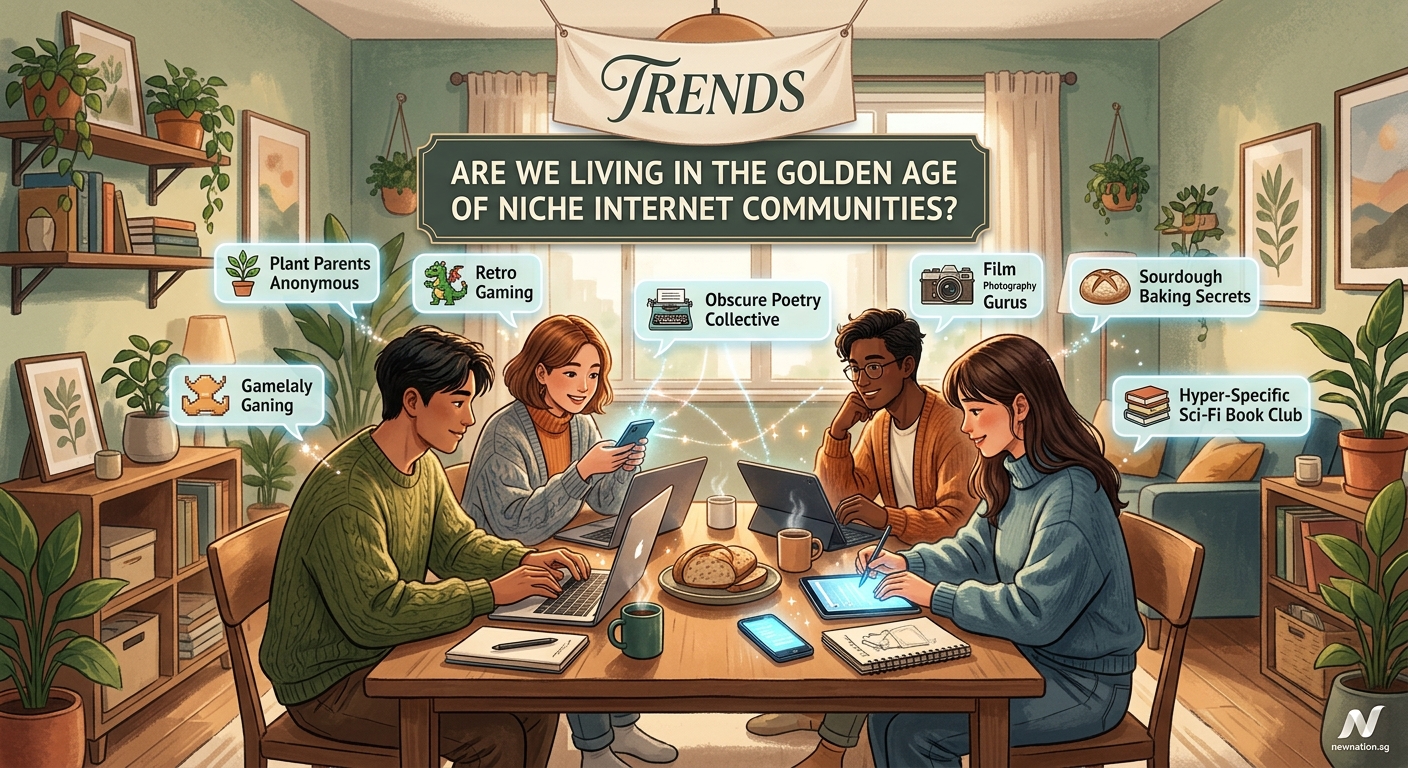
Not all platforms are created equal when it comes to fostering tight-knit communities. The golden age of internet communities depends heavily on tools that prioritize connection over virality.
Discord changed everything for real-time communities. Originally built for gamers, it became the default infrastructure for any group that wants voice chat, text channels, and custom roles. Book clubs use it. Study groups coordinate there. Even professional networks have migrated from Slack to Discord because it feels less corporate.
Reddit remains the king of asynchronous discussion. Its upvote system and nested comments create conversations that can span days or weeks. Moderation tools let communities self-govern effectively. The platform’s structure rewards quality contributions rather than follower counts.
Substack and Ghost gave writers direct relationships with readers. No algorithm decides who sees your work. Subscribers choose to receive every piece you publish. Comment sections become genuine discussions rather than drive-by reactions.
Mighty Networks, Circle, and Geneva represent the next wave: purpose-built community platforms that combine elements of social media, forums, and membership sites. They’re less well-known but growing fast among creators who want full control.
The common thread? All these platforms deprioritize the metrics that dominated 2010s social media. Follower counts matter less than active participation. Viral reach matters less than sustained engagement.
What makes a community thrive versus just survive
Not every online group becomes a thriving community. Most fizzle out after initial enthusiasm fades. The ones that last share specific characteristics.
Here’s what separates communities that flourish from those that fade:
- Clear boundaries and purpose: Members know exactly what the space is for and what behavior is acceptable
- Active moderation: Not heavy-handed control, but consistent enforcement of community standards
- Rituals and traditions: Regular events, inside jokes, shared vocabulary that creates belonging
- Multiple engagement levels: Lurkers, occasional contributors, and power users all have a place
- Member-generated content: The community creates value for itself rather than consuming from a central source
The best communities also have what sociologists call “permeable boundaries.” New members can join relatively easily, but becoming a respected contributor takes time and genuine participation. This balance prevents both stagnation and dilution.
“The healthiest online communities I’ve studied have strong norms but weak hierarchies. Everyone knows the rules, but no one person controls the conversation. That’s when magic happens.” – Dr. Jenny Davis, sociologist studying digital communities
The practical steps to finding your people online
If you’re looking to join or build a niche community, the process follows a predictable pattern. Here’s how to do it right:
-
Identify your actual interest, not the broad category. Don’t search for “fitness communities.” Search for “bodyweight fitness for people over 40” or “powerlifting for vegetarians.” Specificity is your friend.
-
Lurk before you leap. Spend at least a week reading without posting. Learn the community’s norms, sense of humor, and unwritten rules. Every group has them.
-
Make your first contribution valuable. Ask a thoughtful question or share something genuinely useful. Avoid introducing yourself with “hey, new here!” unless the community specifically requests introductions.
-
Engage consistently rather than intensely. Showing up three times a week beats posting 50 times in one day then disappearing for a month.
-
Respect the community’s medium. If it’s a Discord server, participate in real-time conversations. If it’s a forum, write considered responses. Match the energy of the space.
The timeline varies, but most people report feeling like genuine community members after about three months of regular participation. That’s when you start recognizing usernames, getting inside jokes, and feeling comfortable contributing without overthinking.
The dark side nobody talks about
For all the benefits of niche communities, genuine problems exist beneath the surface. The golden age of internet communities has a shadow side that deserves honest examination.
Platform dependency creates fragility. When a Discord server gets banned or a subreddit gets shut down, entire communities can evaporate overnight. Years of accumulated knowledge, relationships, and culture vanish. Some communities maintain backup plans, but most don’t.
Echo chambers intensify in tight-knit groups. When everyone shares the same baseline assumptions, those assumptions rarely get challenged. Political communities become more extreme. Hobby communities develop groupthink about “the right way” to do things. Health communities can reinforce dangerous behaviors.
Moderation becomes a second job. The people who keep communities healthy often burn out. They’re usually volunteers managing hundreds or thousands of members, dealing with conflicts, enforcing rules, and preventing bad actors from ruining everything. The labor is invisible until it stops.
Monetization remains awkward. Community builders struggle to make money without destroying what makes their communities special. Patreon helps, but most community managers earn far less than the value they create.
| Community Strength | Potential Weakness |
|---|---|
| Shared values and norms | Echo chamber effects |
| Deep expertise concentration | Gatekeeping and elitism |
| Strong member bonds | Cliquishness and exclusion |
| Self-governance | Inconsistent moderation |
| Passion-driven participation | Burnout and churn |
How this compares to internet history
Understanding whether we’re truly in a golden age requires historical context. The internet has cycled through several distinct community eras.
The forum era (1990s-2000s) gave us phpBB boards and vBulletin communities. These were often attached to specific websites or interests. They thrived but required technical knowledge to set up and maintain.
The social media takeover (2006-2016) centralized everything. Facebook Groups, Twitter, and later Instagram became where communities formed. Convenience won, but platform control increased dramatically.
The great fragmentation (2016-present) saw users fleeing mainstream platforms for specialized alternatives. This current era combines the specificity of old forums with modern infrastructure and user experience.
Each era had advantages. Forums offered permanence and searchability. Early social media provided unprecedented reach. Today’s niche platforms balance both while adding real-time communication.
But here’s what makes now different: the tools are better, the audience is larger, and people actively seek smaller communities instead of settling for massive platforms. That combination hasn’t existed before.
The signals pointing toward sustainability or collapse
Will this golden age last? Several indicators suggest where things might head.
Positive signals:
– Platform diversification reduces single points of failure
– Web3 technologies promise community ownership (though implementation remains messy)
– Younger users prefer intimate group chats over public posting
– Monetization tools improve gradually
– Community management is becoming a recognized profession
Warning signs:
– Economic pressure pushes platforms toward aggressive monetization
– Regulatory uncertainty threatens encrypted community spaces
– Attention fragmentation makes it harder to sustain engagement
– Platform consolidation could repeat the Facebook era
– Community fatigue affects long-time members
The most likely scenario isn’t total collapse or indefinite growth. Instead, we’ll probably see cycles. Communities will form, thrive for 3-7 years, then either evolve or dissolve. New ones will constantly emerge. The ecosystem remains healthy even as individual communities come and go.
What creators and members should do right now
Whether you run a community or just participate in one, specific actions increase the chances of long-term success.
For community builders:
Create documentation early. Write down your community’s values, moderation policies, and cultural norms. This helps new moderators and preserves institutional knowledge when founders step back.
Build redundancy into your infrastructure. Maintain presence on multiple platforms. Keep backups of important discussions. Have contingency plans for platform changes.
Develop leadership pipelines. Identify engaged members who could become moderators. Distribute power before you burn out.
For community members:
Contribute more than you consume. The ratio doesn’t need to be 1:1, but aim for something better than 1:100.
Support community infrastructure financially when possible. A few dollars monthly from many members beats dependence on a single sponsor.
Respect the invisible labor of moderation. When someone enforces a rule you don’t like, remember they’re probably preventing ten worse problems you never see.
The communities shaping what comes next
Certain communities are pioneering models that others will copy. They’re worth studying regardless of your interests.
r/AskHistorians proved that strict moderation creates quality. Their requirement that answers be comprehensive and sourced produces the internet’s best historical discussions. Other communities now copy their approach.
The Fediverse (Mastodon and related platforms) experiments with federated communities. Users choose servers based on values and moderation styles while still connecting across the network. It’s messy but innovative.
Write of Passage and similar cohort-based courses create temporary intense communities that often spawn permanent connections. The model combines education with community building.
Offline integration is happening more. Online communities increasingly organize local meetups, conferences, and real-world projects. The boundary between digital and physical community blurs.
These experiments will shape the next evolution of online gathering spaces. Some will fail spectacularly. Others will become standard practice.
Your community might already be waiting
The golden age of internet communities isn’t something to passively observe. It’s something you participate in, shape, and benefit from directly.
Your people are out there right now, gathered around interests you didn’t know could sustain entire communities. They’re sharing knowledge, supporting each other through challenges, and building something that matters to them. The barrier to joining isn’t technical skill or social status. It’s simply showing up consistently and contributing authentically.
The question isn’t whether we’re living through a special moment for online communities. We clearly are. The real question is whether you’ll find your corner of it before this era shifts into whatever comes next. Start looking. Your community is already having conversations you’d want to join.