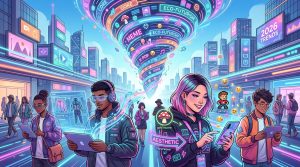
You scroll through your feed and see posts from the same five friends. You search for a product once and ads follow you for weeks. You watch one video about cats and suddenly your entire homepage is filled with feline content.
None of this is random.
Behind every platform you use, algorithms are making thousands of decisions about what content deserves your attention. These invisible systems filter, rank, and prioritize information based on complex rules that most users never see or understand.
Algorithms use your behavior, engagement patterns, and profile data to curate what appears in your feeds and search results. These systems prioritize content that keeps you engaged longer, often creating [filter bubbles](https://en.wikipedia.org/wiki/Filter_bubble) that reinforce existing interests while hiding diverse perspectives. Understanding how these mechanisms work helps you regain control over your online experience and make informed choices about digital consumption.
What algorithms actually do on your favorite platforms
Every major platform uses algorithms differently, but they all share one goal: keeping you engaged.
Social media feeds don’t show posts chronologically anymore. Instead, algorithms predict which posts you’re most likely to interact with. Facebook’s algorithm weighs thousands of signals, including who you message most often, which posts you linger on, and what type of content makes you click.
Instagram prioritizes posts based on your relationship with the poster, the timeliness of the content, and how much you typically engage with similar posts. If you always like your sister’s photos but scroll past your coworker’s updates, the algorithm learns this pattern.
YouTube’s recommendation system is particularly aggressive. It analyzes watch time, not just clicks. A video that keeps viewers watching for eight minutes performs better than one where people click away after thirty seconds. This creates an incentive for creators to make longer, more engaging content that sometimes prioritizes retention over accuracy.
Search engines like Google use algorithms to rank billions of web pages. Your search results depend on hundreds of factors: your location, search history, device type, and even the time of day. Two people searching the same term from different cities often see completely different results.
The data points that shape your feed
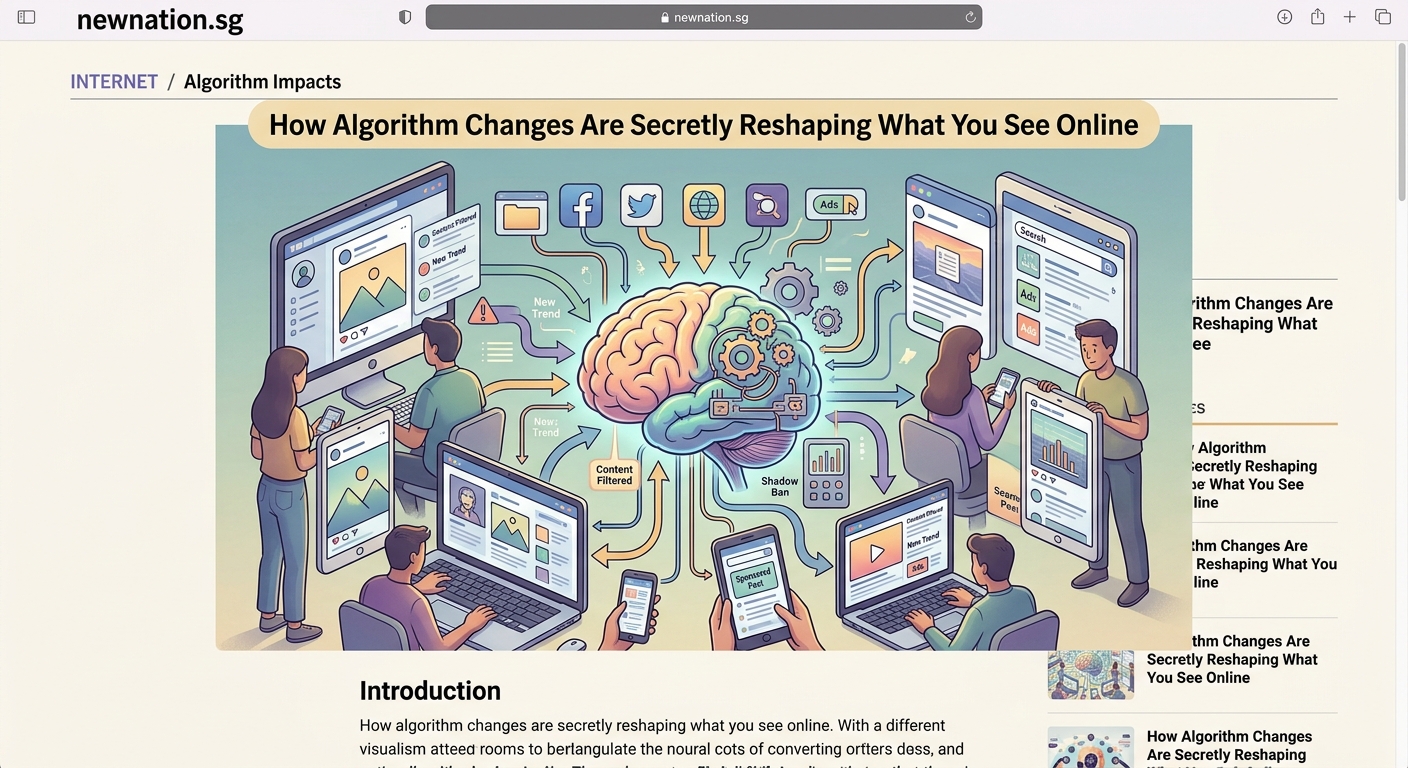
Algorithms need fuel, and that fuel is your data.
Every action you take online feeds the system. Clicks, likes, shares, comments, and even how long you pause on a post all contribute to your algorithmic profile. But the data collection goes deeper than most people realize.
Platforms track:
- Which posts you scroll past without engaging
- How long you watch videos before clicking away
- The time of day you’re most active
- Which friends you interact with most frequently
- What you search for within the app
- External websites you visit (through tracking pixels)
- Your location and movement patterns
- The device you’re using and its specifications
This data creates a detailed picture of your preferences, habits, and behaviors. Algorithms use machine learning to identify patterns you might not even recognize in yourself.
For example, you might not realize you engage more with political content on weekday mornings but prefer entertainment posts on weekend evenings. The algorithm notices these patterns and adjusts what it shows you accordingly.
How engagement metrics drive content selection
Platforms measure success through engagement. More engagement means more time on the platform, which translates to more advertising revenue.
This creates a specific type of content ecosystem. Posts that generate strong reactions (likes, comments, shares) get prioritized over posts that people simply read and move on from. Controversial content often performs better than nuanced discussion because it triggers emotional responses.
The algorithm doesn’t care if that emotion is positive or negative. Anger drives engagement just as effectively as joy. This is why outrage-inducing headlines and polarizing opinions spread so effectively on social media.
Video content typically receives preferential treatment because it keeps users on the platform longer. A two-minute video generates more “dwell time” than a text post someone reads in fifteen seconds. Platforms like Facebook and LinkedIn have adjusted their algorithms to favor video, even when users might prefer other formats.
The algorithm is optimized for engagement, not truth, not health, not democracy. It’s optimized to keep you scrolling, clicking, and coming back for more.
The filter bubble effect and content reinforcement
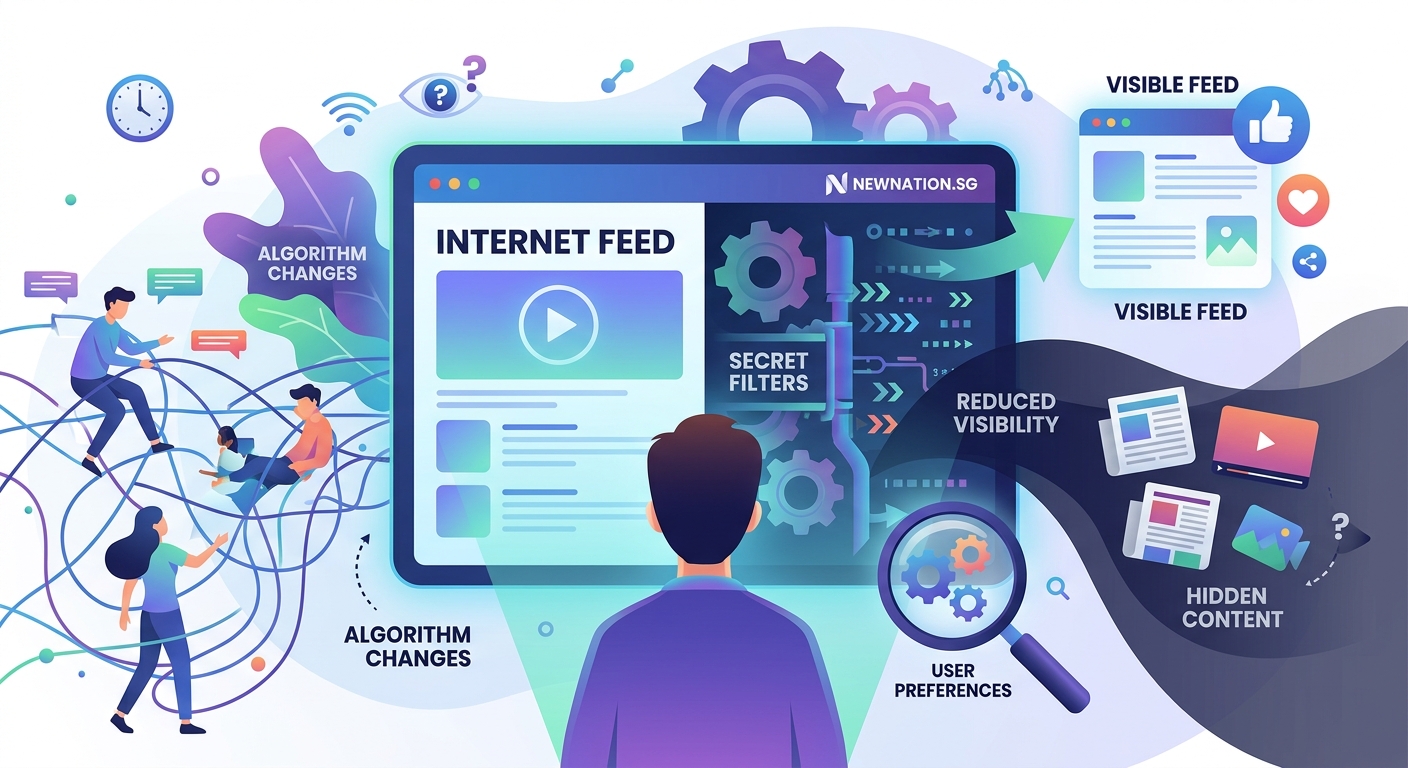
When algorithms learn your preferences, they create a feedback loop.
You see content you’re likely to engage with. You engage with it. The algorithm interprets this as confirmation that you want more similar content. Your feed becomes increasingly narrow, showing you variations on the same themes while filtering out diverse perspectives.
This phenomenon, called a filter bubble, can be subtle. You might think you’re seeing a representative sample of your friends’ posts or news stories, but you’re actually seeing a curated selection based on what the algorithm predicts you want.
Someone interested in fitness might see their feed dominated by workout videos, supplement ads, and health influencers. Their friend with different interests sees an entirely different version of the same platform. Both users exist in separate algorithmic realities.
The same pattern applies to news and information. If you regularly engage with articles from certain political perspectives, the algorithm shows you more content that aligns with those views. Contradictory information gets filtered out, not because of deliberate censorship, but because the algorithm predicts you won’t engage with it.
How different platforms prioritize different signals
Each platform has its own algorithmic priorities based on its business model and user base.
| Platform | Primary Ranking Factors | Content Type Preference | Update Frequency |
|---|---|---|---|
| Personal connections, engagement rate, content type | Video, shared content | Multiple times daily | |
| Recency, relationship, interest | Photos, Reels, Stories | Several times per hour | |
| Recency, engagement, relevance | Text, images, trending topics | Constantly updating | |
| YouTube | Watch time, click-through rate, session time | Long-form video | After each video |
| TikTok | Completion rate, rewatches, shares | Short-form video | Constantly updating |
| Professional relevance, engagement, connection strength | Text posts, articles | Multiple times daily |
TikTok’s algorithm is particularly interesting because it relies less on your social graph. You don’t need to follow anyone to get an engaging feed. The “For You” page shows content based purely on your behavior, making it possible for unknown creators to go viral overnight.
LinkedIn prioritizes content from your professional network and posts that generate meaningful discussion. The platform penalizes external links because they take users away from the site, while native posts and articles get boosted.
The role of timing and recency
When you post matters almost as much as what you post.
Algorithms favor fresh content, but they also consider when your audience is most active. A post published at 3 AM might get buried before your followers wake up, even if it’s high quality.
Most platforms use a two-stage ranking process:
- Initial distribution to a small subset of your followers
- Broader distribution if the initial group engages positively
This means the first hour after posting is critical. If your most engaged followers happen to be offline when you post, your content might never reach its full potential audience.
Recency also affects search results. Google’s algorithm includes a “freshness” factor for certain queries. News topics, trending subjects, and time-sensitive searches prioritize recently published content over older, potentially more authoritative sources.
Why some content goes viral while similar posts don’t
Virality isn’t random, but it’s also not entirely predictable.
Algorithms amplify content that generates engagement rapidly. A post that gets fifty likes in the first ten minutes signals to the algorithm that it’s resonating with people. The system then shows it to a wider audience, creating a snowball effect.
Timing plays a role. Posting when your audience is most active gives your content a better chance at that critical early engagement. But timing alone doesn’t guarantee success.
Content that goes viral typically has certain characteristics:
- Strong emotional resonance (humor, surprise, anger, inspiration)
- Easy to understand at a glance
- Relatable to a broad audience
- Encourages sharing or tagging friends
- Aligns with current trends or conversations
The algorithm also considers the credibility of early engagers. If influential accounts or highly engaged users interact with your post first, it carries more weight than engagement from inactive accounts.
How search algorithms differ from social algorithms
Search engines and social platforms use fundamentally different algorithmic approaches.
Social algorithms predict what will keep you engaged based on your past behavior. They’re personalized, constantly updating, and designed to maximize time spent on the platform.
Search algorithms aim to answer specific queries with the most relevant results. While they do personalize results based on your history and location, their primary goal is utility rather than engagement.
Google’s algorithm evaluates hundreds of factors to rank web pages:
- Relevance to the search query
- Authority of the website
- Quality and depth of content
- Page loading speed
- Mobile compatibility
- Backlinks from other reputable sites
- User experience signals
Search algorithms also fight against manipulation. Websites that try to game the system with keyword stuffing or artificial backlinks get penalized. Social algorithms are more tolerant of optimization tactics because engagement is the goal.
The commercial side of algorithmic content
Advertising revenue drives most algorithmic decisions.
Free platforms make money by showing you ads. The longer you stay engaged, the more ads you see. This creates an incentive structure where algorithms prioritize addictive content over informative content.
Paid promotion also affects what you see. Sponsored posts and promoted content get algorithmic boosts that organic posts don’t receive. Businesses can pay to ensure their content appears in your feed, even if you’ve never interacted with their page.
The line between organic and paid content has become increasingly blurred. Many posts you see from brands aren’t traditional ads but boosted organic content that looks like regular posts. The algorithm treats these differently than purely organic content.
Some platforms now offer “pay-to-play” models where organic reach is deliberately limited to encourage advertising spend. Facebook’s organic reach has declined significantly over the past decade, with some business pages reaching less than 5% of their followers without paid promotion.
How algorithms learn and adapt to your behavior
Machine learning allows algorithms to improve continuously.
Every interaction teaches the system something new about your preferences. These models don’t follow simple if-then rules. They identify complex patterns across millions of data points.
If you watch cooking videos but never engage with baking content, the algorithm learns this distinction. If you typically scroll past celebrity gossip but stop for science news, it adjusts accordingly.
The learning process happens in real time. Your feed tomorrow will reflect the choices you make today. This creates a dynamic experience where the algorithm constantly experiments with new content to test your boundaries.
Sometimes the algorithm gets it wrong. You might see content that seems completely irrelevant. These are often tests to see if your interests have expanded or changed. If you ignore the content, it disappears. If you engage, the algorithm recalibrates.
Taking back control of your algorithmic experience
You’re not powerless against algorithms, but taking control requires intentional action.
Most platforms offer some level of customization. You can tell Facebook you want to see less of certain content types. You can mark YouTube recommendations as “not interested.” You can mute keywords on Twitter.
These controls have limitations. They adjust your experience at the margins but don’t fundamentally change how the algorithm works. The system still prioritizes engagement over everything else.
More effective strategies include:
- Actively seeking out diverse perspectives
- Following accounts outside your typical interests
- Using chronological feeds when available
- Clearing your watch and search history periodically
- Engaging with content you want to see more of
- Ignoring content you want to discourage
- Using browser extensions that block recommendations
- Setting time limits on social media apps
You can also use platform-specific features. Instagram lets you add accounts to your “favorites” list, ensuring you see their posts. Twitter allows you to create lists of accounts that appear in chronological order. YouTube’s subscription feed shows new uploads from channels you follow.
What happens when you stop engaging
The algorithm interprets inactivity as disinterest.
If you stop liking posts from a friend, their content gradually disappears from your feed. If you ignore recommendations for a certain topic, the algorithm tries different content categories. Extended inactivity can reset parts of your algorithmic profile.
This creates an interesting dynamic. Taking breaks from social media can actually refresh your feed. When you return after a week or month away, the algorithm hasn’t received engagement signals and may show you a broader range of content.
Some users intentionally “train” their algorithms by engaging only with content they genuinely want to see. They scroll past everything else without clicking, liking, or commenting. This requires discipline but can create a more intentional feed over time.
The future of algorithmic content curation
Algorithms are becoming more sophisticated, not less.
Artificial intelligence models can now understand context, sentiment, and even visual content within images and videos. Future algorithms might analyze your facial expressions through your device’s camera to gauge emotional responses.
Some platforms are experimenting with transparency features that explain why you’re seeing specific content. Instagram’s “Why am I seeing this?” feature provides basic information about algorithmic decisions. These explanations are often vague but represent a step toward accountability.
Regulatory pressure is mounting. Governments in Europe, the United States, and elsewhere are considering laws that would require platforms to offer non-algorithmic alternatives or limit certain types of personalization.
Alternative platforms are emerging that promise chronological feeds, transparent algorithms, or user-controlled ranking systems. Whether these gain mainstream adoption remains uncertain, but they represent growing awareness of algorithmic influence.
Understanding the system that shapes your digital world
Algorithms aren’t inherently good or bad. They’re tools designed to solve specific problems: organizing vast amounts of content and connecting users with information they find valuable.
The challenge comes from misaligned incentives. When algorithms optimize for engagement rather than wellbeing, they can amplify misinformation, deepen polarization, and create addictive patterns.
Understanding how these systems work gives you more agency. You can make informed choices about which platforms to use, how to engage with content, and when to step back. You can recognize when you’re being shown a curated reality rather than a complete picture.
The algorithms will keep evolving. Your awareness of how they shape your experience is the first step toward using technology on your own terms rather than letting it use you.