
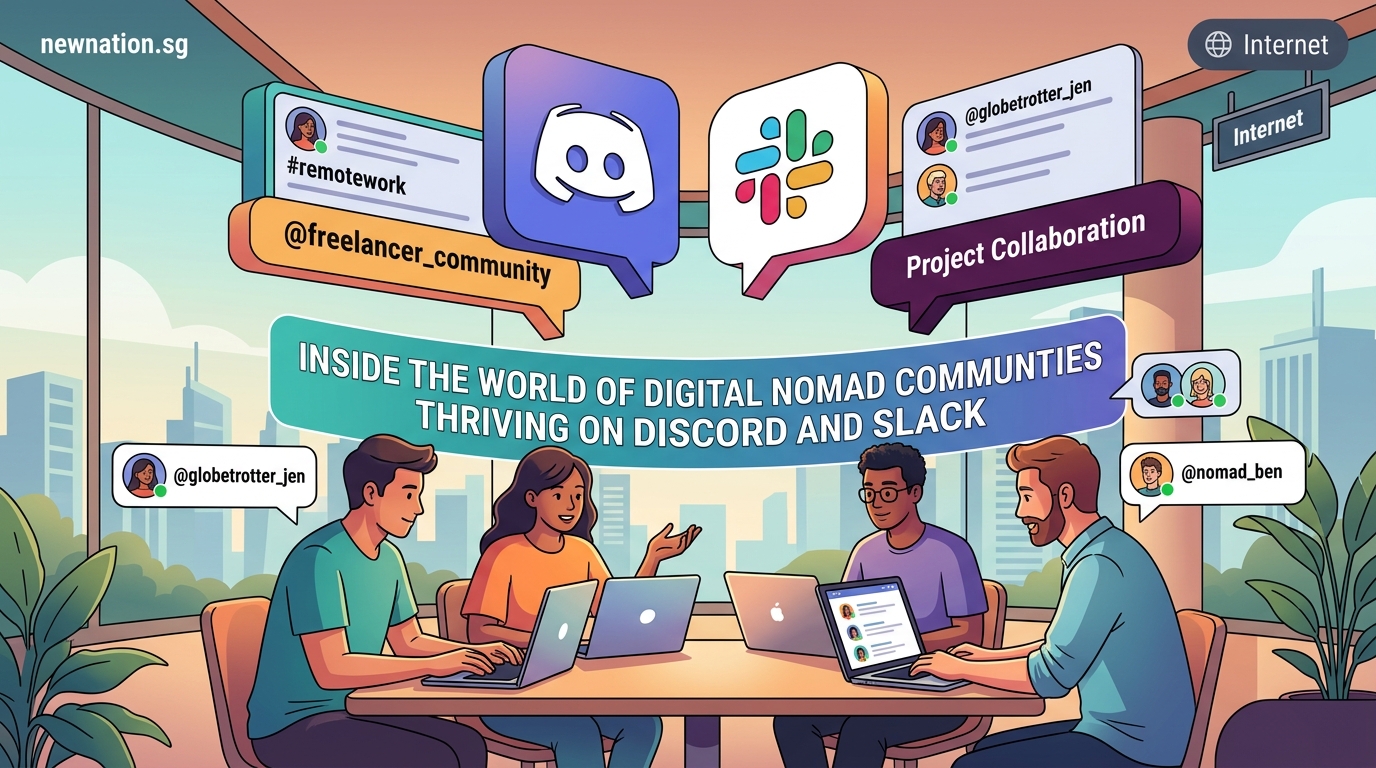
Remote work changed everything. Now thousands of professionals bounce between countries while staying connected through screens. The old ways of networking at coffee shops or coworking spaces still matter, but online communities became the backbone of digital nomad life.
Discord servers and Slack workspaces transformed how location-independent workers find each other. These platforms host vibrant groups where people swap visa tips, recommend apartments in Bali, troubleshoot tax questions, and celebrate wins together. Some communities have 50 members. Others have 50,000.
Digital nomad communities on Discord and Slack offer remote workers instant access to advice, accountability, and friendship across time zones. Popular servers like Nomad List, Remote Year alumni groups, and niche profession-specific channels help members find housing, solve visa problems, book coworking spaces, and combat isolation. Choosing the right community depends on your work style, experience level, and whether you prefer large public servers or intimate private groups.
Why remote workers flock to Discord and Slack
Email feels slow. Facebook groups get cluttered with ads and algorithm changes. WhatsApp works for small friend circles but breaks down at scale.
Discord and Slack hit a sweet spot. Both platforms organize conversations into channels by topic. You can mute what bores you and focus on what matters. Real-time chat feels immediate without the pressure of a phone call. Threaded replies keep discussions organized even when hundreds of people participate.
Discord started as a gamer platform but evolved into a home for all kinds of communities. The interface feels casual and fun. You can hop into voice channels to work alongside others or join video calls for virtual coworking sessions.
Slack began as a workplace tool and still carries that professional vibe. Many digital nomad communities prefer it because members already use Slack for client work. The muscle memory transfers seamlessly.
Both platforms support bots that automate helpful tasks. Communities use bots to welcome new members, share job postings, track time zones, or run polls about the next group meetup location.
How to find communities worth joining
Searching “digital nomad Discord” or “remote work Slack” returns hundreds of results. Quality varies wildly.
Start with established communities that have track records. Nomad List runs one of the largest and most active Slack workspaces for location-independent workers. Members pay a small fee, which filters out trolls and keeps conversations focused.
Look for communities built around your profession. Developers have channels like Remotely Interesting. Designers gather in groups like Design Nomads. Writers join communities like The Writing Cooperative. Niche groups often provide better advice than massive general-interest servers.
Check if the community matches your experience level. Some groups cater to aspiring nomads still planning their first trip. Others assume you already understand visa runs and tax residency. Join the wrong one and you’ll either feel overwhelmed or bored.
Pay attention to activity levels before committing. A server with 10,000 members but zero messages this week is dead. A group with 200 members and daily conversations is alive.
Read the rules and culture guides. Some communities ban self-promotion entirely. Others allow it in designated channels. Some expect professional behavior. Others embrace memes and casual banter.
What happens inside these communities
Daily life in digital nomad communities revolves around questions and answers.
Someone asks where to find affordable housing in Lisbon. Three people respond within minutes with neighborhood recommendations and landlord contacts. Another person shares a Google Doc with apartment listings.
A member posts about feeling lonely after two months in Thailand. Others share their own struggles and suggest local meetups or coworking spaces with friendly crowds.
Tax season brings waves of questions about filing from abroad, foreign earned income exclusion, and which countries have tax treaties. Experienced nomads and occasional accountants chime in with guidance.
Communities also organize real-world meetups. A channel dedicated to Mexico City coordinates weekly dinners. Another arranges hiking trips in the Alps. These online relationships turn into actual friendships.
Some groups run accountability systems. Members share their weekly goals on Monday and report progress on Friday. The social pressure helps people stay productive when working alone in unfamiliar cities.
Job boards appear in many communities. Companies post remote positions. Freelancers offer services. People find collaborators for side projects.
Voice channels let members work together in silence, recreating the feeling of a shared office. You hear keyboard clicks and occasional sighs but mostly just enjoy the presence of other humans grinding through their tasks.
Comparing Discord and Slack for nomad communities
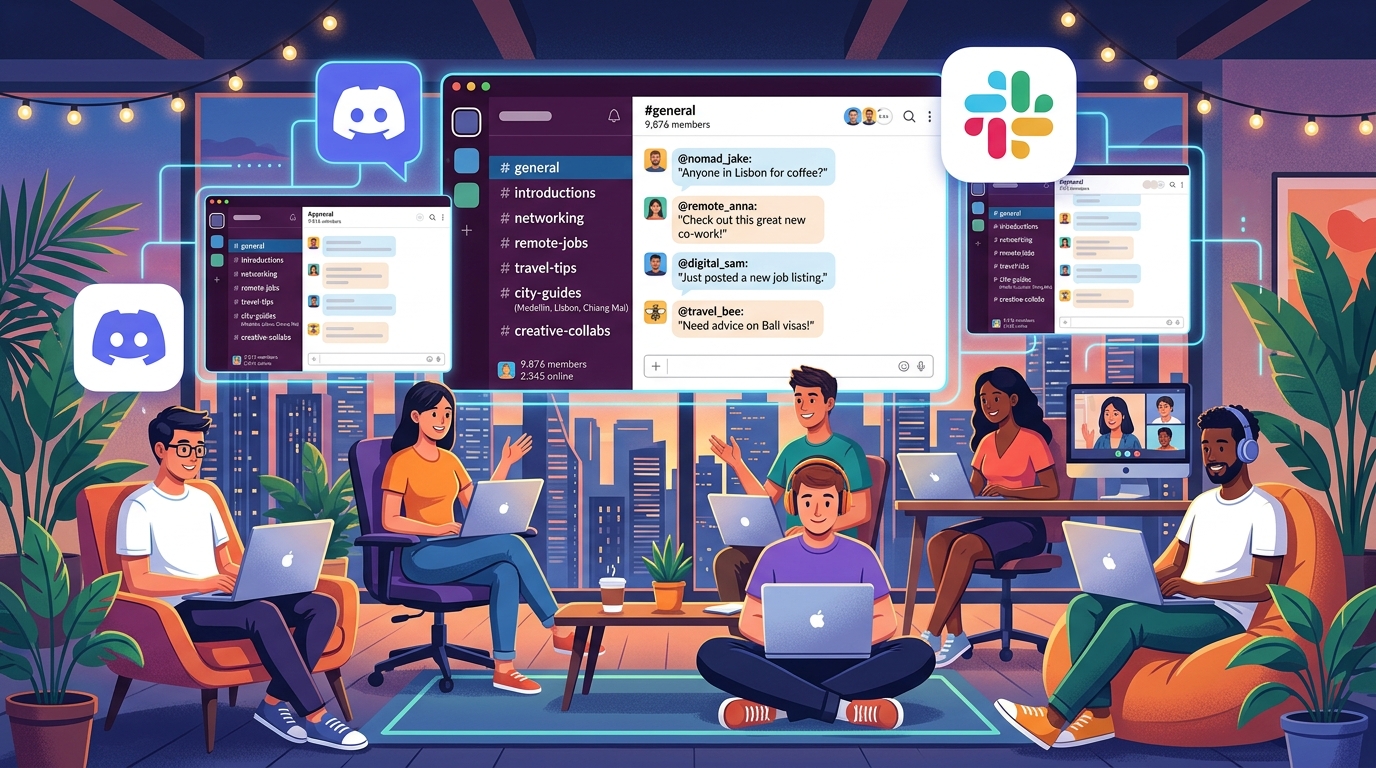
| Feature | Discord | Slack |
|---|---|---|
| Voice channels | Always-on rooms you can drop into | Scheduled calls via Huddles |
| Free tier limits | Generous, keeps full history | 90-day message history, 10 integrations |
| Mobile experience | Excellent, built for on-the-go | Good, sometimes battery-heavy |
| Professional feel | Casual, gaming roots | Business-oriented |
| Bots and integrations | Massive ecosystem | Strong but more corporate-focused |
| Screen sharing | Built-in and smooth | Requires call setup |
| Community size limits | No practical limit | Free workspaces capped at 10,000 |
Discord wins for spontaneous interaction and voice chat. Slack wins for searchable knowledge bases and professional networking.
Many nomads join communities on both platforms. You might use Discord for social connection and Slack for career-focused groups.
Joining your first community step by step
Getting started takes less than ten minutes.
-
Pick one community that matches your profession or destination. Don’t join five at once. You’ll get overwhelmed and abandon all of them.
-
Create your profile with a real photo and brief bio. Communities trust members who show their faces. Mention your work, current location, and what you hope to gain from the group.
-
Read the welcome channel and rules before posting. Every community has its own culture. Some require introductions in a specific channel. Others let you jump straight into conversations.
-
Introduce yourself authentically. Share where you are, what you do, and maybe one challenge you’re facing. People respond better to vulnerability than polish.
-
Spend a few days reading before asking questions. Someone probably already asked about the best SIM card in Portugal or how to handle US taxes while abroad. Search first, then ask if you can’t find answers.
-
Answer questions when you can. Communities thrive on reciprocity. If someone asks about a city you know well, share your experience. You’ll build reputation and friendships faster.
-
Mute channels that don’t interest you. A community might have 30 channels but you only care about five. Customize your notifications so you’re not constantly distracted.
The goal is not to consume everything. The goal is to find your people and build relationships that make remote work less isolating.
“I joined three digital nomad Slacks in my first month abroad and felt more overwhelmed than connected. I left two, focused on one, and actually started making friends. Less is more when you’re already adjusting to a new country.” – Sarah Chen, freelance developer
Common mistakes people make
Joining too many communities at once splits your attention. You become a ghost member everywhere instead of an active participant somewhere.
Lurking forever without contributing makes you invisible. Communities reward people who engage. You don’t need profound insights. Simple responses like “I’m in Bangkok too, want to grab coffee?” build connections.
Treating communities like customer service desks annoys everyone. Asking “What’s the best city for digital nomads?” without any context about your preferences or budget feels lazy. Do basic research first, then ask specific questions.
Ignoring time zones causes confusion. When you post “Anyone want to meet for lunch?” without specifying your location, you’ll get crickets. Always mention your city and time zone.
Self-promoting too aggressively gets you banned. Most communities allow sharing your work in designated channels but hate spam in general discussion. Read the rules about promotion before posting your services or blog.
Expecting instant responses leads to frustration. People live across the planet. Someone might answer your question about Chiang Mai coworking spaces eight hours later when they wake up.
Private communities versus public servers
Public communities are easy to find and free to join. They offer diverse perspectives and large networks. But quality control suffers. You’ll encounter more spam, off-topic chatter, and unhelpful advice.
Private communities require applications, referrals, or membership fees. The barriers filter for serious members. Conversations stay focused and valuable. You’re more likely to form real friendships in a group of 100 vetted people than 10,000 strangers.
Some of the best communities exist in the middle ground. They’re technically public but require a small payment or application. The friction removes tourists while staying accessible to committed nomads.
Consider joining one large public community for breadth and one small private group for depth. The combination gives you access to widespread knowledge plus intimate support.
Niche communities for specific types of nomads
General digital nomad servers work fine but specialized groups often provide better value.
Families traveling with kids join communities like Worldschool Family or Families Without Borders. These groups focus on education, child-friendly destinations, and balancing work with parenting.
Solo female travelers gather in communities like Girls Gone Global or Solo Female Travelers Network. Safety tips, accommodation recommendations, and emotional support matter more in these spaces.
Older nomads (40+) prefer groups like Nomads Over 40 or Grown-Up Nomads. Conversations shift toward retirement planning, health insurance, and slower travel.
Budget nomads congregate in servers focused on cheap destinations and money-saving strategies. Luxury nomads join different groups where people discuss business class flights and premium coworking spaces.
Your profession might have its own nomad community. Remote teachers, nurses, therapists, and consultants all have specialized groups where industry-specific advice flows freely.
Building your own community
Starting a community makes sense if you can’t find what you need.
Maybe you’re a vegan digital nomad who wants to connect with others who care about plant-based eating while traveling. Or you’re a nomadic parent with teenagers and existing groups focus on younger kids.
Creating a Discord server or Slack workspace takes five minutes. Growing it into something valuable takes months of consistent effort.
- Define your niche clearly so the right people find you
- Set up organized channels from day one
- Welcome every new member personally
- Post regularly even when nobody responds yet
- Cross-promote in related communities (with permission)
- Organize a real-world meetup once you have local members
Small communities often provide more value than massive ones. A tight-knit group of 30 people who genuinely care about each other beats a 5,000-member server where nobody knows anyone.
Staying safe in online communities
Most digital nomad communities are friendly and helpful. But basic safety practices still matter.
Don’t share your exact address or travel schedule publicly. Mention your neighborhood or city but keep specifics private until you know people better.
Be cautious about financial advice. Some communities attract scammers promoting crypto schemes or sketchy investment opportunities. Verify information independently before sending money anywhere.
Protect your personal information. Use a separate email for community signups. Don’t share your passport number, bank details, or other sensitive data in public channels.
Meet new friends in public places first. Coffee shops and coworking spaces are safer than inviting strangers to your apartment.
Trust your instincts. If someone makes you uncomfortable, use the block feature. Good communities have moderators who take harassment seriously.
Making online connections feel real
Text on a screen only goes so far. The best communities blend digital and physical interaction.
Turn online acquaintances into real friends by suggesting meetups. “I’m working from that cafe on Main Street tomorrow morning if anyone wants to join” often leads to great conversations.
Attend community-organized events. Many groups host monthly dinners, weekend trips, or coworking days. These gatherings transform usernames into faces.
Use video calls strategically. Hopping into a Discord voice channel or starting a Slack huddle adds warmth that text lacks. You pick up tone, humor, and personality through voice.
Share photos of your location. Communities love seeing where members are working. A picture of your laptop setup with a mountain view or beach background sparks conversations.
Celebrate milestones together. Got a new client? Finished a big project? Reached your one-year nomad anniversary? Share it. Communities thrive on mutual celebration.
Finding your people while working remotely
Digital nomad communities on Discord and Slack solve the biggest challenge of location-independent work: isolation.
You can earn money from anywhere with WiFi. But humans need connection. These platforms provide structure for building relationships across continents and time zones.
The right community becomes your virtual office, your support system, and your social life rolled into one. You’ll find practical help, professional opportunities, and genuine friendships.
Start with one community that matches your situation. Show up consistently. Contribute what you can. Ask for help when you need it.
The digital nomad lifestyle gets easier when you’re not doing it alone. These communities prove you never have to be.