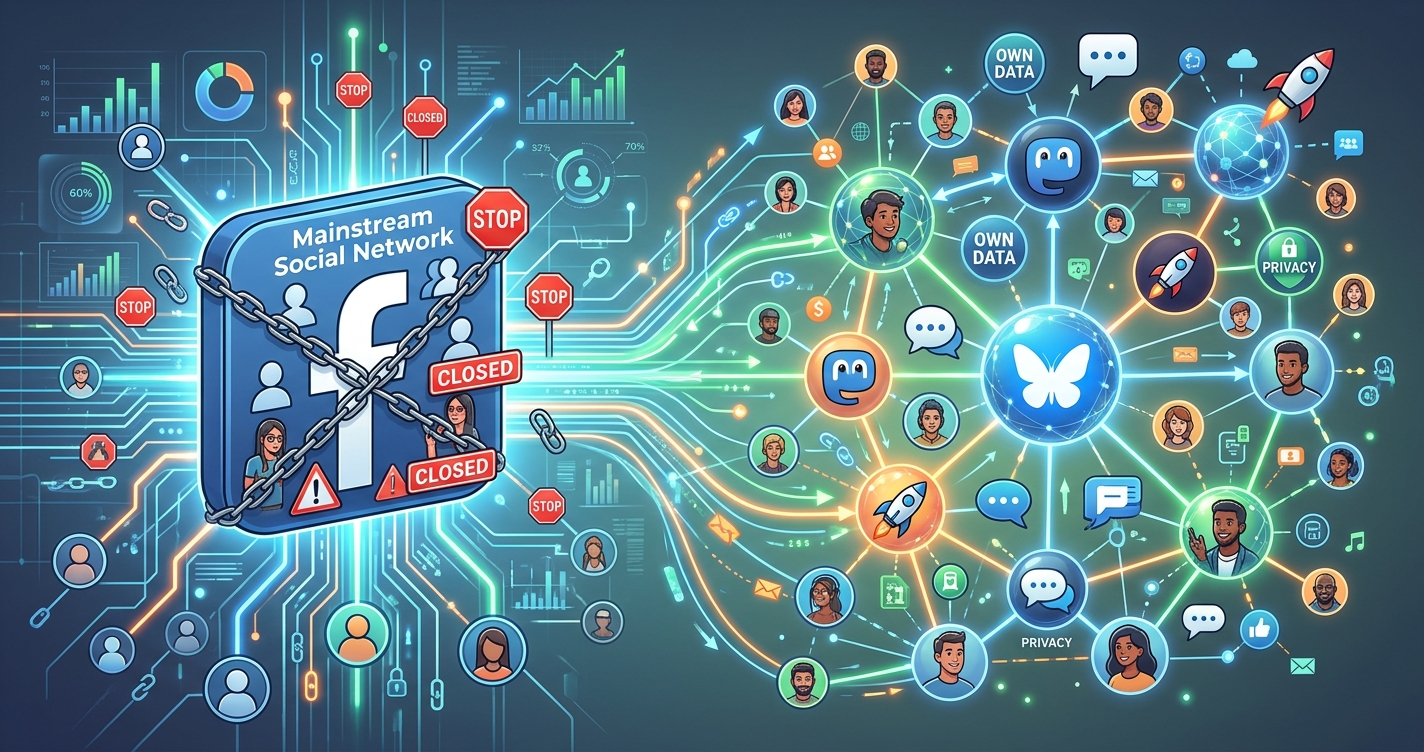
You’ve probably noticed more people talking about Mastodon, Bluesky, and other platforms that sound nothing like Facebook or Twitter. These aren’t just new apps with different interfaces. They represent a fundamental shift in how social networks operate, and the movement is picking up speed for reasons that affect every person who posts, shares, or scrolls online.
Decentralized social media distributes control across multiple servers instead of concentrating power in one company’s hands. Users are migrating to these platforms because they offer genuine data ownership, resistance to censorship, transparent moderation policies, and freedom from algorithmic manipulation. While the technology requires learning new concepts, the benefits of user autonomy and community-driven governance are driving mainstream adoption beyond early tech enthusiasts.
The core problem with centralized platforms
Traditional social media puts one company in complete control of your data, your connections, and what you see. Facebook decides what appears in your feed. Twitter determines who gets banned and who stays. TikTok’s algorithm controls which videos go viral.
This setup creates several issues that become clearer every year.
Your posts, photos, and messages live on servers you don’t control. The company can change privacy policies, sell data to advertisers, or shut down features you depend on. You agreed to all of this in a terms of service document you probably didn’t read.
Moderation decisions happen behind closed doors. Accounts disappear without explanation. Appeals go nowhere. The rules change based on business pressures, not community input.
Algorithms prioritize engagement over everything else. Content that makes you angry or anxious keeps you scrolling longer, so that’s what the system shows you. Your feed stops reflecting what you actually want to see.
How decentralized networks actually work
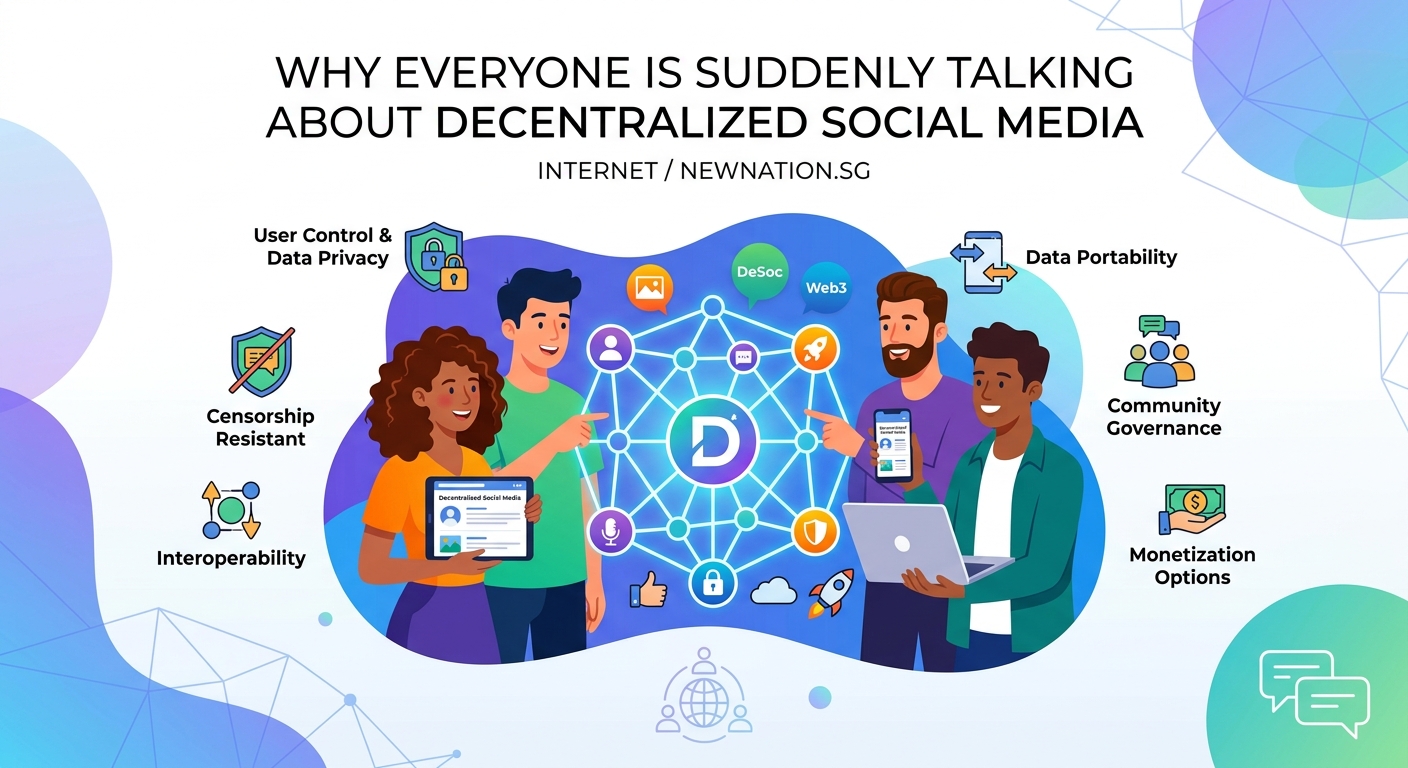
Decentralized social media splits the infrastructure across many independent servers called instances or nodes. Each instance runs the same open-source software but operates independently.
Think of it like email. You can have a Gmail account and send messages to someone using Outlook or ProtonMail. Different providers, but they all communicate through shared protocols.
On Mastodon, you might join an instance focused on photography while your friend joins one about gaming. You can still follow each other, share posts, and interact normally. No single company owns the entire network.
Here’s what makes this structure different:
- Each instance sets its own moderation rules
- You can move your account and followers to a different instance
- Your data stays on servers run by people you can actually contact
- No central authority can shut down the entire network
- Open-source code means anyone can verify what the software does
The protocol handles communication between instances. Individual server operators handle storage and moderation. Users choose which instance aligns with their values.
Why people are making the switch
The reasons for migration vary, but several patterns keep appearing.
Data ownership becomes real. You’re not renting space on someone else’s platform. Many decentralized networks let you export everything and move it elsewhere. Your content belongs to you in a meaningful way, not just legally.
Censorship resistance matters to more people. Journalists in restrictive countries, activists organizing protests, and anyone discussing controversial topics face constant deplatforming risks on centralized networks. Decentralized systems make it much harder for any single entity to silence voices.
Algorithmic feeds lose their appeal. Chronological timelines show posts in the order they were published. You see what people actually shared, not what an algorithm thinks will keep you engaged. Many users report feeling less anxious and more connected.
Transparency builds trust. Open-source code means security researchers can find vulnerabilities. Community members can propose changes. You’re not trusting a corporation’s promises; you’re verifying the actual software.
Ad-free experiences exist. Many instances run on donations or small subscription fees. No advertisers means no tracking pixels, no data harvesting for ad targeting, and no content decisions driven by sponsor pressure.
“The shift to decentralized platforms isn’t just about technology. It’s about reclaiming agency over our digital social lives. When users control the infrastructure, the incentives align with community wellbeing instead of shareholder returns.” – Technology researcher and digital rights advocate
Common concerns and real tradeoffs
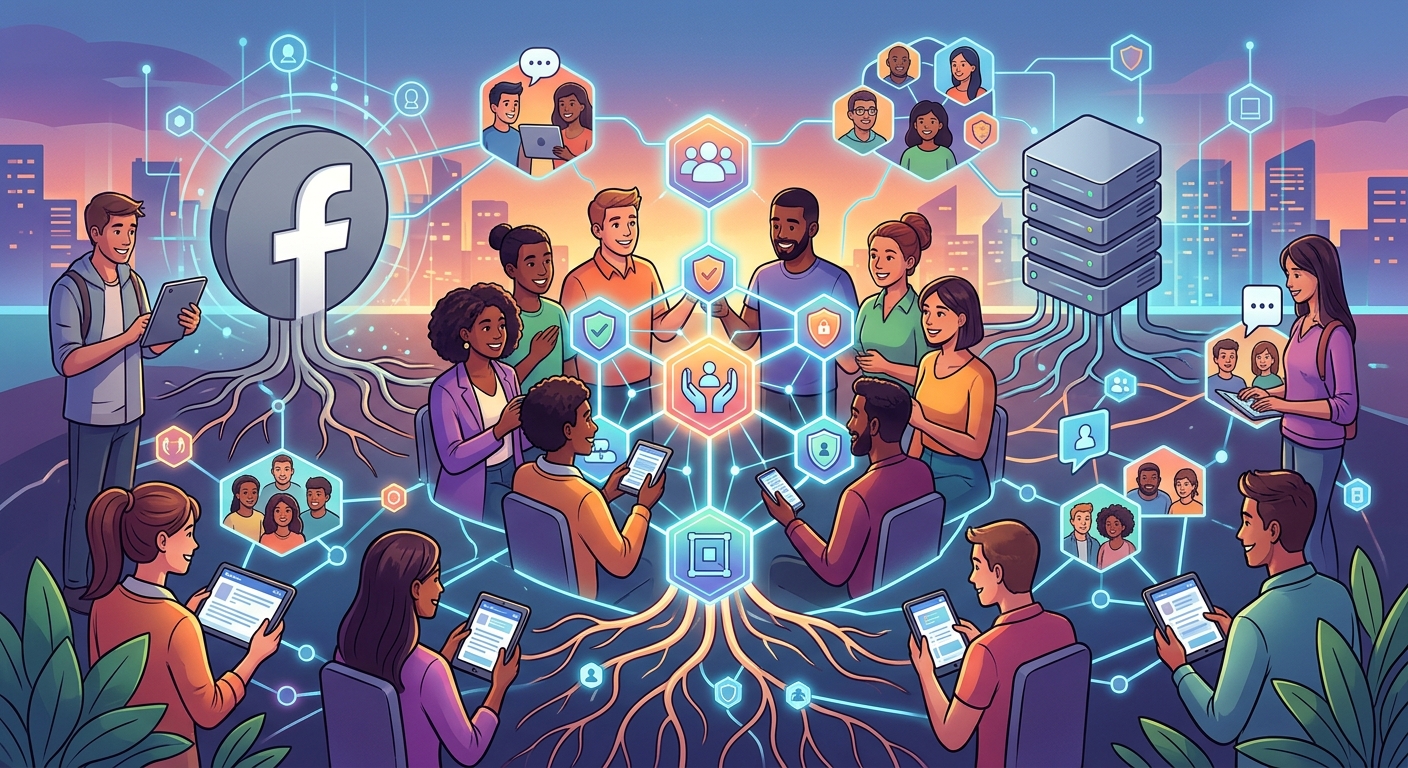
Decentralized social media isn’t perfect. Understanding the tradeoffs helps set realistic expectations.
| Challenge | Reality | Workaround |
|---|---|---|
| Smaller user base | Fewer people than Twitter or Instagram | Growing steadily; niche communities thrive |
| Technical learning curve | New concepts like instances and federation | Simplified onboarding; better documentation |
| Instance reliability | Some servers go offline | Choose established instances; easy migration |
| Moderation inconsistency | Each instance has different rules | Research instance policies before joining |
| Feature gaps | Missing some mainstream platform features | Active development; prioritizes user needs |
The network effect cuts both ways. Fewer users means less content, but it also means less noise. You might not find every celebrity or brand, but you’ll find engaged communities discussing topics you care about.
Instance selection requires research. You need to understand an instance’s moderation philosophy, technical reliability, and funding model. This takes more effort than clicking “Sign up with Google.”
Some instances will disappear. Operators lose interest, run out of money, or face technical problems. Good platforms make migration straightforward, but it’s still an inconvenience.
Practical steps to get started
Making the switch doesn’t require abandoning existing accounts immediately. Most people run both for a while.
-
Research instance options. Look for servers focused on your interests or values. Check their rules, uptime history, and user reviews. Popular general-purpose instances include Mastodon.social, but specialized ones often provide better community fit.
-
Create an account and test the waters. Follow some accounts, post a few times, and see how the culture feels. Each instance has its own personality. You’re not locked in.
-
Find your people. Use hashtags actively since there’s no algorithm pushing content to you. Search for topics you care about. Many instances have local timelines showing all public posts from that server.
-
Learn the etiquette. Decentralized platforms often have different norms. Content warnings are common. Alt text on images is expected. Self-promotion gets handled differently. Observe before jumping in.
-
Export your data regularly. Most platforms let you download everything. Do this periodically so you can move instances if needed.
The learning curve flattens after the first week. The concepts that seem confusing at first become second nature.
The bigger picture for internet freedom
Decentralized social media represents more than new apps. It’s a structural alternative to the surveillance capitalism model that dominates the current internet.
When a handful of companies control how billions of people communicate, they wield enormous power over public discourse, political movements, and cultural trends. They decide what’s acceptable speech. They determine which news spreads and which gets buried.
Decentralization distributes that power. No single CEO can change the rules for everyone. No government can pressure one company to censor content globally. No advertising algorithm can manipulate what you see to maximize revenue.
This matters for democracy, free expression, and digital rights. It also matters for innovation. When the protocol is open, anyone can build new features or interfaces. Competition happens at the application layer, not the infrastructure layer.
The movement faces real challenges. Mainstream adoption requires better user experiences. Funding models need to scale sustainably. Moderation across federated networks creates complex problems.
But the core value proposition keeps attracting users: genuine control over your digital social life. Not the illusion of control offered by privacy settings that change every few months. Actual ownership of your data, your connections, and your online presence.
What this means for your online life
Decentralized social media won’t replace centralized platforms overnight. Facebook, Instagram, and Twitter have massive network effects and established user bases.
But the trajectory is clear. Every controversy about censorship, every privacy scandal, and every algorithm change that makes feeds worse pushes more people to consider alternatives.
You don’t need to be a privacy activist or a tech enthusiast to benefit from decentralized platforms. You just need to value transparency, community governance, and freedom from manipulative algorithms.
The platforms exist now. They work. Real communities are forming and thriving. The question isn’t whether decentralized social media is viable. It’s whether you’re ready to try something that puts users first instead of advertisers and shareholders.
Start with one account on one instance. See how it feels to scroll a chronological feed. Experience moderation decisions made by community members you can actually talk to. Own your data in a way that means something.
The internet doesn’t have to be controlled by a few massive corporations. Decentralized social media proves there’s another way, and more people are choosing it every day.