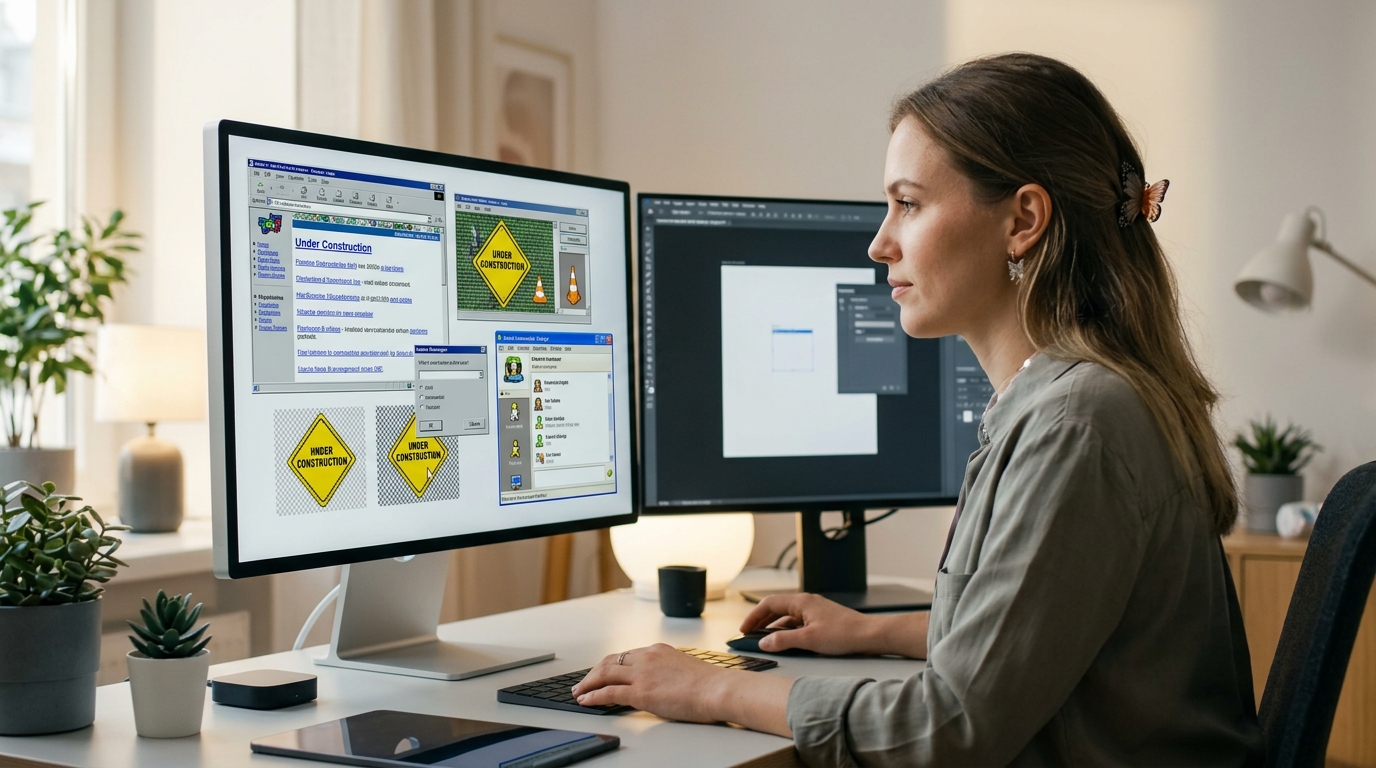
You’ve probably noticed it. The pixelated GIFs. The under construction banners. The rainbow Comic Sans headers that once screamed “amateur hour” now appear on carefully curated Instagram accounts and personal portfolio sites. Millennials aren’t just remembering the early 2000s internet. They’re actively rebuilding it, pixel by pixel.
Millennials are recreating early 2000s web aesthetics because that era represented creative freedom, authentic self-expression, and optimism before algorithms dictated online behavior. This nostalgia movement reflects deeper dissatisfaction with corporate-controlled social media, surveillance capitalism, and the loss of internet spaces that felt genuinely personal. Understanding why millennials are obsessed with early 2000s internet reveals broader cultural shifts toward reclaiming digital autonomy and creative control.
The internet used to feel like yours
Between 1998 and 2006, the internet was a different beast. You didn’t scroll through endless feeds optimized for engagement metrics. You built your own corner of the web from scratch.
GeoCities gave you free hosting. Angelfire let you upload custom HTML. LiveJournal became your digital diary with mood icons and custom CSS themes. You picked background music that auto-played when visitors arrived, whether they wanted it or not.
This wasn’t professional web design. It was messy, personal, and completely yours.
Nobody worried about SEO rankings or follower counts. You made websites about your hamster, your favorite anime characters, or absolutely nothing at all. The internet rewarded experimentation over polish.
That freedom is what millennials miss most. Modern social media platforms give you templates, character limits, and algorithm-driven visibility. You don’t own your content. You rent space on someone else’s platform.
Early 2000s websites felt like digital bedrooms. You decorated them however you wanted. Blinking text? Sure. Tiled background of your favorite band? Absolutely. Guestbook for visitors to sign? Essential.
Why nostalgia hits differently for digital natives
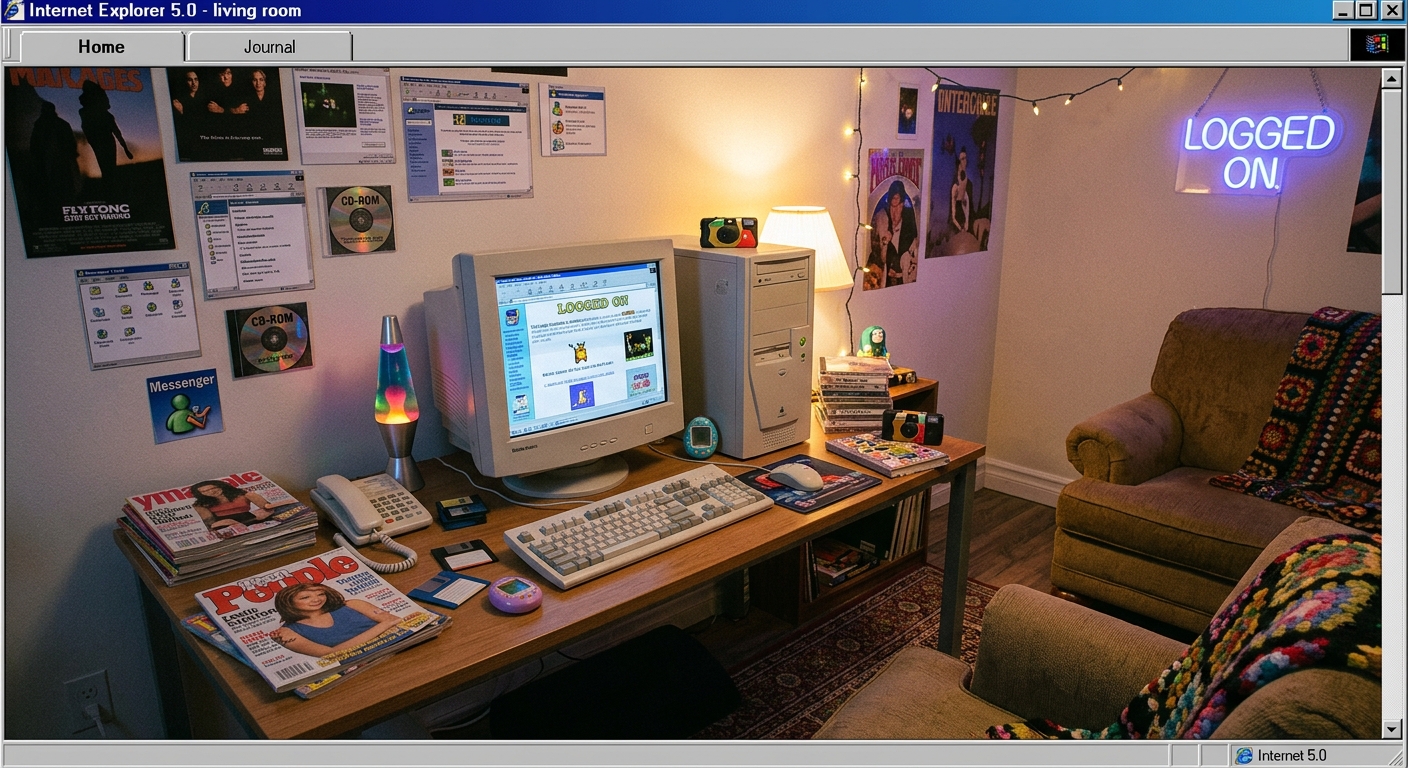
Millennials experienced a unique technological transition. They remember life before smartphones but came of age online.
The early 2000s internet coincided with formative years. Middle school. High school. College. These were the years when identity formation happened both offline and online simultaneously.
Psychologists call this “reminiscence bump.” People remember experiences from ages 10 to 30 more vividly than other life periods. For millennials born between 1981 and 1996, the early 2000s internet sits squarely in that window.
But this isn’t just about remembering good times. It’s about mourning what was lost.
“Nostalgia serves as a psychological resource that people use to move forward,” explains Dr. Constantine Sedikides, a nostalgia researcher. “It provides a sense of continuity and meaning, especially during times of change or uncertainty.”
The internet changed dramatically. Corporate platforms replaced personal websites. Algorithms replaced chronological feeds. Surveillance capitalism replaced digital anonymity.
Millennials aren’t just nostalgic for outdated design trends. They’re nostalgic for an internet that felt human-scale, controllable, and genuinely social rather than “social media.”
The aesthetic rebellion against modern web design
Today’s internet looks eerily uniform. Every website uses the same sans-serif fonts. The same minimalist layouts. The same white space. The same mobile-first responsive design.
This homogenization makes business sense. Clean interfaces convert better. Fast-loading pages rank higher. Accessibility standards matter.
But something got lost in the optimization process. Personality. Weirdness. The sense that a human made this thing.
Early 2000s web design was gloriously chaotic:
- Animated cursor trails that followed your mouse
- Hit counters displaying exactly three visitors
- Frames dividing pages into awkward sections
- Marquee text scrolling endlessly across headers
- Web rings connecting sites about identical topics
- MIDI files playing tinny background music
- Guestbooks filled with “cool site!” comments
- Under construction GIFs that stayed up for years
Modern designers would call this cluttered and unusable. They’d be right. But it was also unmistakably human.
The current revival isn’t about literally recreating unusable websites. It’s about injecting personality back into digital spaces that feel increasingly sterile and corporate-controlled.
How social media killed the personal website
Facebook launched in 2004. Twitter in 2006. Instagram in 2010. These platforms promised to make online socializing easier.
You didn’t need to learn HTML anymore. Just create a profile and start posting.
The trade-off seemed reasonable at first. Convenience for customization. Reach for ownership.
But the deal got worse over time. Platforms introduced algorithms that decided who saw your posts. They added advertising. They harvested data. They changed terms of service. They banned accounts without appeal processes.
You built an audience on someone else’s property. Then they changed the rules.
Personal websites gave you complete control. You decided what appeared where. You owned your content and your audience. Nobody could delete your site except you or your hosting provider.
The shift from personal websites to social media profiles fundamentally changed online identity. You went from creator to content provider. From website owner to platform user.
Millennials who grew up making GeoCities pages and Xanga blogs remember what ownership felt like. The current nostalgia wave represents a desire to reclaim that autonomy.
The technical skills gap fueling nostalgia
Here’s an uncomfortable truth: many millennials who built websites in 2003 can’t do it anymore.
Early web design required basic HTML and CSS knowledge. You learned by viewing source code on sites you liked, copying snippets, and experimenting until things worked.
Modern web development is exponentially more complex. Frameworks. Package managers. Build tools. Responsive design. Cross-browser compatibility. Accessibility standards. Security protocols.
Building a simple personal website now requires navigating a technical landscape that didn’t exist twenty years ago.
This creates a strange situation. The generation that grew up customizing MySpace layouts and building Neopets guild pages now feels locked out of modern web creation.
The nostalgia isn’t just for the aesthetic. It’s for the accessibility. You could make something cool on the internet without a computer science degree.
| Early 2000s Web | Modern Web Development |
|---|---|
| HTML and CSS basics | React, Vue, or Angular frameworks |
| Free GeoCities hosting | Domain registration and hosting fees |
| View source to learn | Minified and bundled code |
| Instant publishing | Build processes and deployment |
| Desktop-only design | Mobile-first responsive layouts |
| Optional accessibility | Legal accessibility requirements |
The barrier to entry rose dramatically. The early internet felt like anyone could participate. Modern web development feels like a professional skill.
Recreating the aesthetic without the limitations
The current revival doesn’t actually want the technical limitations back. Nobody misses dial-up speeds or browser compatibility nightmares.
Instead, creators are selectively borrowing aesthetic elements while using modern tools.
You’ll see:
- Neocities hosting that mimics GeoCities but with better reliability
- Tumblr themes designed to look like LiveJournal layouts
- Instagram accounts posting pixelated graphics and low-res photos
- Discord servers using early forum aesthetics
- Portfolio sites incorporating intentional “retro” design elements
- Glitch art that mimics JPEG compression artifacts
- Vaporwave aesthetics pulling from Windows 95 and early internet imagery
This approach cherry-picks the good parts. The personality and creativity without the technical frustrations.
Modern tools make recreation easier. CSS can replicate table-based layouts without actually using tables. JavaScript can add interactive elements that would’ve required Flash. Responsive design ensures sites work on phones while maintaining desktop aesthetics.
The result is a hybrid. Websites that look and feel like 2003 but function like 2024.
The psychology of control in uncertain times
Timing matters. The early 2000s internet nostalgia wave intensified around 2016 and exploded during the 2020 pandemic.
Both periods featured significant uncertainty. Political upheaval. Economic anxiety. Social isolation. Global crises that made the future feel unpredictable.
Nostalgia provides psychological comfort during uncertain times. It reminds you that you’ve survived difficult periods before. It connects you to a version of yourself that felt more optimistic.
But the early 2000s internet nostalgia goes deeper than typical comfort-seeking. It’s about control.
Modern internet platforms give users minimal control. Algorithms decide what you see. Terms of service changes happen without consent. Your account can be suspended or deleted based on opaque moderation decisions. Your data gets harvested and sold.
The early internet felt different. You controlled your space completely. You decided what appeared on your site. You chose who could visit. You owned your content.
Recreating early 2000s aesthetics becomes an act of reclaiming digital autonomy. Even if it’s just a personal blog with twelve visitors, it’s yours.
Community-driven creation versus corporate platforms
Early internet communities formed around shared interests, not algorithmic recommendations.
You found web rings connecting sites about your favorite TV show. You joined forums dedicated to specific hobbies. You discovered blogs through blogrolls and manual linking.
This discovery process was slower but more intentional. You built genuine connections with people who shared niche interests.
Modern platforms optimize for engagement, not community. Recommendation algorithms prioritize content that keeps you scrolling. Viral posts reach millions but create shallow interactions. Comment sections devolve into arguments designed to boost engagement metrics.
The early 2000s internet fostered smaller, tighter communities. Forums had regular members who knew each other. LiveJournal friend groups actually felt like friendships. Guestbook signatures came from real visitors who chose to be there.
Millennials recreating these aesthetics often recreate the community structures too. Discord servers organized like old forums. Neocities sites linking to each other through webrings. Email newsletters replacing RSS feeds.
The aesthetic revival is inseparable from the desire for more meaningful online communities.
What the revival teaches us about the future
This nostalgia movement reveals what people actually want from the internet.
They want ownership. They want creative control. They want communities built around shared interests rather than algorithmic recommendations. They want online spaces that feel human-scale and personally meaningful.
The corporate internet won’t provide these things. Platforms profit from the opposite: rented space, algorithmic control, engagement optimization, and data harvesting.
But the tools for creating independent web spaces still exist. Domain registration costs less than a monthly streaming subscription. Static site generators make publishing easier. Platforms like Neocities offer free hosting. Communities like IndieWeb promote personal website ownership.
The early 2000s internet aesthetic revival might seem like pure nostalgia. But it’s also a blueprint for what comes next.
As dissatisfaction with corporate platforms grows, more people are rediscovering the appeal of owning their corner of the internet. The aesthetic might be retro, but the impulse is forward-looking.
Why this matters beyond aesthetics
The obsession with early 2000s internet culture isn’t trivial. It represents a fundamental tension about who controls digital spaces and how we interact online.
Every pixelated GIF and under construction banner is a small rebellion against platform uniformity. Every personal website is a vote for digital independence. Every web ring is a rejection of algorithmic discovery.
Millennials aren’t just being nostalgic. They’re remembering a version of the internet that worked differently and asking why we accepted the current model as inevitable.
That question matters. The internet doesn’t have to look like five massive platforms controlling everything. It can be weird, personal, and genuinely creative again.
The early 2000s internet had real problems. Accessibility issues. Security vulnerabilities. Digital divides. Limited mobile access. We shouldn’t romanticize everything about that era.
But it also had something worth preserving: the sense that ordinary people could make interesting things and share them without corporate intermediaries extracting value from every interaction.
Understanding why millennials are obsessed with early 2000s internet helps us imagine better digital futures. Ones where creativity matters more than engagement metrics. Where ownership matters more than reach. Where the internet feels like it belongs to the people using it.
That’s not nostalgia. That’s a roadmap.