When Dallas police asked Twitter users to submit protest footage through an app in June 2020, they expected cooperation. Instead, K-pop fans flooded the system with fancams, rendering it useless within hours. That same weekend, fans claimed credit for inflating attendance expectations at a Trump rally in Tulsa by reserving tickets they never planned to use.
These weren’t isolated pranks. They marked a turning point in how fan communities engage with political movements.
K-pop fandoms have transformed from entertainment communities into sophisticated political organizing networks. Using skills developed for chart manipulation and streaming campaigns, fans now coordinate mass actions for social justice causes, fundraise millions for movements like Black Lives Matter, and disrupt opposition infrastructure through coordinated digital tactics. Their decentralized structure, algorithmic literacy, and global reach make them uniquely effective at rapid-response activism that transcends traditional organizational boundaries.
From streaming parties to street protests
K-pop fans spent years perfecting digital coordination. They learned to game algorithms, trend hashtags, and mobilize thousands within minutes. These skills were developed to boost artists on charts and social media metrics.
The infrastructure was already there. Fan accounts with hundreds of thousands of followers. Discord servers organizing streaming schedules across time zones. Shared Google docs tracking goals and progress.
When George Floyd was murdered in May 2020, fans redirected this machinery toward activism. BTS fans matched their group’s $1 million donation to Black Lives Matter within 24 hours. Other fandoms followed. Within weeks, K-pop Twitter accounts had raised over $2 million for bail funds, mutual aid organizations, and racial justice groups.
The transition felt natural. Fans were already organized, already online, already practiced at collective action.
How fan activism actually works
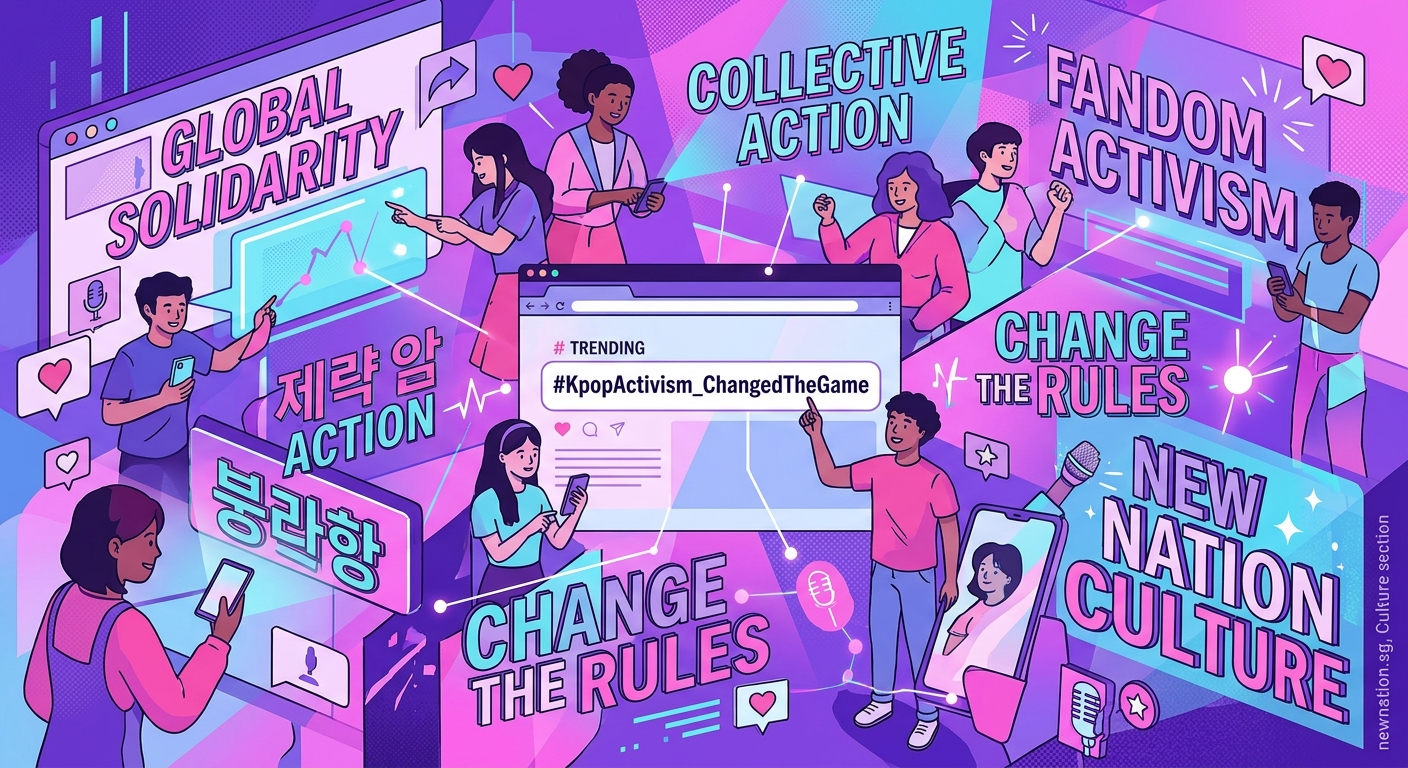
The mechanics mirror comeback campaigns. A goal gets announced. Accounts with large followings amplify the message. Smaller accounts spread it further through retweets and quote tweets. Within hours, a hashtag trends globally.
But political campaigns require different tactics than streaming parties:
-
Rapid response coordination happens through private channels like Discord, Telegram, or group DMs. When a call to action drops, moderators assess feasibility and potential impact before pushing it to public channels.
-
Message discipline keeps campaigns focused. During the Tulsa rally incident, fans coordinated on TikTok to reserve tickets without posting about it publicly until after the event. This prevented countermeasures.
-
Cross-fandom collaboration multiplies reach. BTS fans might start a fundraiser, but EXO-Ls, Blinks, and NCTzens amplify it. Rivalries get set aside for shared causes.
The structure is deliberately decentralized. No single leader can be targeted or silenced. If one account gets suspended, dozens of others continue the work.
The toolkit of digital disruption
K-pop fans bring specific technical skills to activism that traditional organizers often lack.
Algorithmic manipulation comes naturally. Fans understand how platforms prioritize content. They know posting times, engagement patterns, and hashtag strategies that maximize visibility. During the 2020 protests, fans used these techniques to drown out police scanner hashtags and white supremacist tags.
Mass reporting can remove harmful content fast. When racist or threatening posts appear, fan networks can generate thousands of reports within minutes. Platforms respond to volume. Content that might take days to review gets flagged and removed in hours.
Fundraising infrastructure already exists. Fan projects regularly collect money for birthday ads, charity donations, and streaming funds. The same payment processors and verification systems work for political causes.
“What makes K-pop fans effective isn’t just their numbers. It’s their literacy in how digital platforms actually function. They’ve reverse-engineered the systems that most people just use passively.” – Dr. Crystal Abidin, internet culture researcher
Techniques that translate across causes
| Tactic | Original Use | Activist Application |
|---|---|---|
| Streaming parties | Chart manipulation | Coordinated amplification of protest footage |
| Fancam spam | Artist promotion | Disrupting opposition hashtags and surveillance |
| Voting campaigns | Award shows | Petition drives and poll brigading |
| Translation networks | Content access | Multilingual protest information |
| Fundraising projects | Billboard purchases | Bail funds and mutual aid |
The same organizational patterns work whether you’re trying to get a music video to 100 million views or flood a tip line with useless data.
Common mistakes that undermine campaigns
Not every fan activism effort succeeds. Some backfire spectacularly.
Performative actions without follow-through damage credibility. Posting a black square for Blackout Tuesday felt good but did nothing. Worse, it buried actual resources and information under empty gestures.
Savior complexes alienate the communities fans claim to support. Swooping into movements without listening to organizers or understanding context creates chaos. Effective activism requires following the lead of those directly affected.
Doxxing and harassment cross ethical lines. Some fans justify extreme tactics against perceived enemies. But posting personal information or coordinating attacks makes movements vulnerable to legal action and moral criticism.
Ignoring local context leads to misguided interventions. A hashtag campaign that works in the US might endanger activists in countries with authoritarian governments. Global coordination requires understanding regional risks.
The most effective fan activism stays focused on concrete goals, respects existing movement leadership, and maintains ethical boundaries even when angry.
Why traditional organizers pay attention now
Political campaigns and advocacy groups now study fan organizing tactics. The distributed structure resists infiltration and survives platform crackdowns. The speed of mobilization outpaces traditional phone trees and email lists.
Fan networks also cross demographic boundaries that often divide movements. K-pop appeals globally across race, nationality, and class. This creates coalition potential that geographically or culturally bound organizing struggles to achieve.
The youth demographic matters too. Most active K-pop fans are under 25. They represent voting power that will shape elections for decades. Campaigns that understand fan culture can tap into organizing energy that conventional outreach misses.
Some organizations now hire former fan account operators as digital strategists. The skills transfer directly: audience building, engagement optimization, rapid response coordination.
Limitations and sustainability questions
Fan activism has real constraints. Attention spans are short. A cause that trends one week might be forgotten the next. Sustained organizing requires more than viral moments.
The parasocial relationship with idols can complicate political engagement. When artists make problematic statements or stay silent on important issues, fans face conflicting loyalties. Some prioritize defending their favorite over consistent political principles.
Burnout hits fan activists hard. The same people running streaming campaigns, translation projects, and political actions often overlap. Volunteer labor has limits. Without sustainable structures, even passionate organizers exhaust themselves.
Platform dependence creates vulnerability. Twitter suspensions, algorithm changes, or TikTok bans could fragment the networks that make mass coordination possible. Building resilience requires diversifying communication channels.
Skills fans developed that activists need
The lessons from K-pop organizing extend beyond specific campaigns:
- Narrative control through coordinated messaging keeps movements on offense rather than defense
- Gamification makes participation feel rewarding rather than obligatory
- Horizontal structures distribute leadership and prevent single points of failure
- Cross-platform strategy ensures messages reach audiences wherever they spend time
- Metrics tracking provides clear feedback on what tactics work
Traditional activism often relies on hierarchical organizations with slow decision-making processes. Fan networks move faster because trust and shared goals replace formal authority.
The challenge is adapting fan tactics to causes that require long-term commitment. Streaming a song for a week is different from sustaining a movement for months or years.
Real impact beyond the internet
Digital actions sometimes translate into material change. The fundraising numbers are concrete: millions of dollars moved to organizations that needed resources. Bail funds got people out of jail. Mutual aid fed families.
Disruption campaigns had measurable effects. The Dallas police app shutdown forced authorities to find alternative methods. Hashtag flooding made certain organizing spaces unusable for opposition groups.
Political awareness increased within fandoms. Fans who joined for music stayed for activism. Some got involved in local organizing. Others voted for the first time.
But online action alone rarely shifts power structures. The most effective fan activism supports rather than replaces traditional organizing. It amplifies existing movements, provides resources, and creates pressure through visibility.
The question isn’t whether fan activism matters. It clearly does. The question is how to channel that energy toward sustained change rather than episodic interventions.
When fandoms become political infrastructure
The evolution continues. What started as ad hoc responses to 2020 protests has become more systematic. Some fandoms now have dedicated activism subgroups with clear missions and ongoing projects.
These groups maintain relationships with established advocacy organizations. They participate in coalition work. They plan campaigns months in advance rather than just reacting to news cycles.
The professionalization brings benefits and risks. More strategic action increases impact. But institutionalization can also dampen the spontaneous energy that made fan activism distinctive.
Younger fans entering communities now find activism integrated into fandom culture. It’s not a separate activity but part of what being a fan means. This normalization could sustain political engagement as the initial 2020 energy fades.
The infrastructure built for entertainment purposes has proven remarkably adaptable to political ends. Whether that adaptation becomes permanent or fades as a generational moment remains to be seen.
What this means for organizing going forward
K-pop fans didn’t invent internet activism. But they refined techniques that work at unprecedented scale and speed. Their success offers a template for other communities seeking to coordinate collective action online.
The key elements are transferable: develop shared skills, build trust through non-political activities first, create communication infrastructure before you need it, maintain decentralized leadership, and stay adaptable to platform changes.
Not every community has K-pop fandom’s size or dedication. But the principles work at smaller scales too. Any group that spends time together online can develop similar coordination capacity.
The future of digital organizing likely includes more fan-style tactics across various movements. We’re already seeing it: crypto communities, sports fans, and hobby groups using similar playbooks for their causes.
K-pop fans showed what’s possible when digital literacy meets political motivation. They turned entertainment infrastructure into activist machinery. That transformation changed how we think about online organizing and who gets to participate in political action.
The rules of internet activism have shifted. Decentralized networks can outmaneuver traditional hierarchies. Algorithmic knowledge beats institutional resources. Speed and coordination matter more than formal authority.
These changes won’t reverse. The next generation of activists will build on what K-pop fans pioneered, adapting these tactics to new platforms and causes. The entertainment origins will fade, but the organizational innovations will persist.