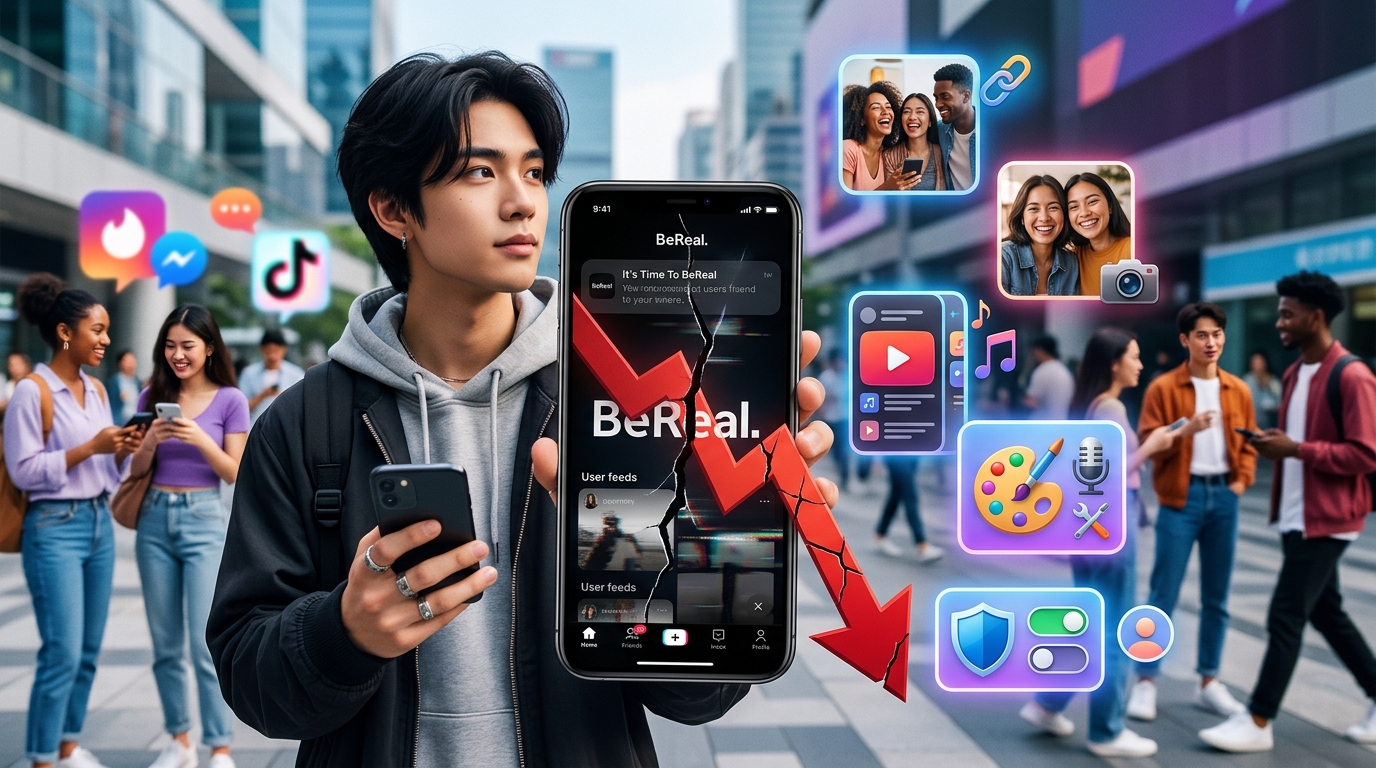
BeReal exploded onto the social media scene in 2022, capturing the attention of millions of Gen Z users who seemed tired of Instagram’s polished perfection and TikTok’s algorithm-driven chaos. The app’s premise was simple: once a day, at a random time, users received a notification to post a photo within two minutes. No filters, no edits, just raw reality.
But what made this stripped-down approach so magnetic to a generation raised on social media? Understanding the forces behind BeReal’s appeal reveals crucial insights about what Gen Z actually values in their digital spaces.
Gen Z embraced BeReal because it offered authenticity without performance pressure, spontaneity over curation, and genuine connection instead of comparison. The app’s daily two-minute window eliminated the stress of perfect timing and aesthetic consistency, creating a social space where showing up mattered more than standing out. For brands, this signals a fundamental shift toward valuing real moments over manufactured content.
The authenticity factor that changed everything
Gen Z grew up watching influencers craft perfect lives on Instagram. They saw the behind-the-scenes machinery of social media fame. They understood, perhaps better than any generation before them, that most online content was staged, edited, and optimized for engagement.
BeReal arrived as an antidote to this exhaustion.
The app’s no-filter, no-edit policy meant everyone showed up as they actually were. Messy rooms, bad lighting, awkward angles. The playing field leveled itself instantly. You couldn’t spend hours perfecting a post because you only had two minutes to respond to the notification.
This constraint became liberating rather than limiting.
Users posted photos from their desks at work, from their couches mid-Netflix binge, from grocery store aisles. The mundane became the content. There was no pressure to be somewhere interesting or doing something impressive because everyone else was posting equally ordinary moments.
For a generation constantly comparing themselves to highlight reels, this shift was profound. BeReal removed the anxiety of curation. You couldn’t fail at BeReal because there was no standard to meet beyond simply participating.
Spontaneity replaced strategic posting
Traditional social media platforms trained users to think strategically about timing. Post during peak hours. Analyze your engagement metrics. Build a consistent aesthetic. Maintain a posting schedule.
BeReal threw all of that out the window.
The random daily notification meant you couldn’t plan your content. You couldn’t wait for golden hour lighting or coordinate your outfit with your background. You posted from wherever you were, doing whatever you were doing.
This randomness appealed to Gen Z’s desire for genuine moments. The unpredictability meant that every post was, by definition, authentic. You couldn’t manufacture authenticity when you didn’t know when you’d need to post.
The two-minute timer added urgency without stress. It was enough time to open the app and snap a photo, but not enough to overthink it. This sweet spot eliminated the paralysis that comes from too many options or too much time to second-guess yourself.
Real connection over follower counts
BeReal’s design choices actively discouraged the metrics game that dominates other platforms. The app didn’t show follower counts prominently. There were no likes in the traditional sense. Instead, users could react with “RealMojis,” selfie-based reactions that required more effort than a simple tap.
This friction was intentional and effective.
Gen Z users appreciated that BeReal wasn’t about building an audience or going viral. It was about staying connected with actual friends. The app felt more like a group chat than a broadcasting platform.
The friend-focused design meant users typically connected with people they actually knew rather than accumulating followers for status. This intimacy created a different kind of social experience, one that felt safer and more genuine.
| Feature | Traditional Social Media | BeReal Approach |
|---|---|---|
| Posting schedule | User controlled, strategic timing | Random daily notification |
| Content editing | Unlimited filters and edits | No filters, no retakes |
| Metrics displayed | Likes, followers, shares prominently shown | Minimal emphasis on metrics |
| Content permanence | Posts stay indefinitely | Daily refresh cycle |
| Primary audience | Broad follower base | Close friends only |
The appeal of low-stakes participation
One of BeReal’s most underrated features was how it lowered the stakes of social media participation. Missing a day didn’t matter. Posting late was allowed, though the app labeled you as tardy. There were no streaks to maintain or algorithms to appease.
This low-pressure environment was refreshing for users burned out by the constant demands of other platforms. You could participate casually without feeling like you were falling behind or losing relevance.
Gen Z responded positively to this casual approach because it aligned with their growing awareness of social media’s mental health impacts. They wanted to stay connected without the anxiety that came from constant performance pressure.
The daily reset also meant that yesterday’s awkward photo didn’t haunt you. Every day brought a fresh start. This impermanence reduced the fear of judgment that keeps many people from posting at all.
“BeReal succeeded because it made being boring acceptable. For the first time, you didn’t need to be aspirational or entertaining. You just needed to be present. That simple shift removed the biggest barrier to authentic sharing: the fear that your real life wasn’t interesting enough to post.”
FOMO worked differently on BeReal
Fear of missing out typically drives social media engagement, but BeReal flipped the script. Instead of FOMO about other people’s exciting lives, users experienced FOMO about the daily posting ritual itself.
The notification became a shared experience. Everyone in your friend group got it at the same time. There was a collective aspect to posting that felt communal rather than competitive.
This shift was subtle but significant. Users weren’t afraid of missing out on seeing perfect vacation photos or glamorous events. They were afraid of missing the daily check-in with friends, of not being part of the shared moment.
The time-limited nature of viewing also changed behavior. You had to check the app regularly to see what your friends posted before the next day’s notification arrived. This created engagement without relying on infinite scroll or algorithmic feeds designed to maximize time on platform.
Why brands struggled to crack the BeReal code
Marketing professionals initially struggled to understand how to use BeReal effectively. The app’s design actively resisted traditional social media marketing tactics.
You couldn’t schedule posts. You couldn’t use professional photography. You couldn’t target audiences beyond your friend list. The entire platform seemed designed to keep brands at arm’s length.
Some companies tried posting behind-the-scenes content during their daily BeReal notification. These attempts often felt forced. The brand voice that worked on Instagram or TikTok didn’t translate to BeReal’s casual, friend-focused environment.
The lesson here was clear: Gen Z valued spaces that weren’t commercialized. They appreciated having at least one platform where they weren’t being marketed to constantly. BeReal’s appeal partly rested on this commercial-free zone.
Smart brands recognized this and adjusted their strategies accordingly. Instead of trying to build a presence on BeReal, they focused on understanding what the app’s popularity revealed about Gen Z’s values and preferences.
The three core needs BeReal satisfied
Looking at BeReal’s appeal through a strategic lens reveals three fundamental needs the app addressed:
-
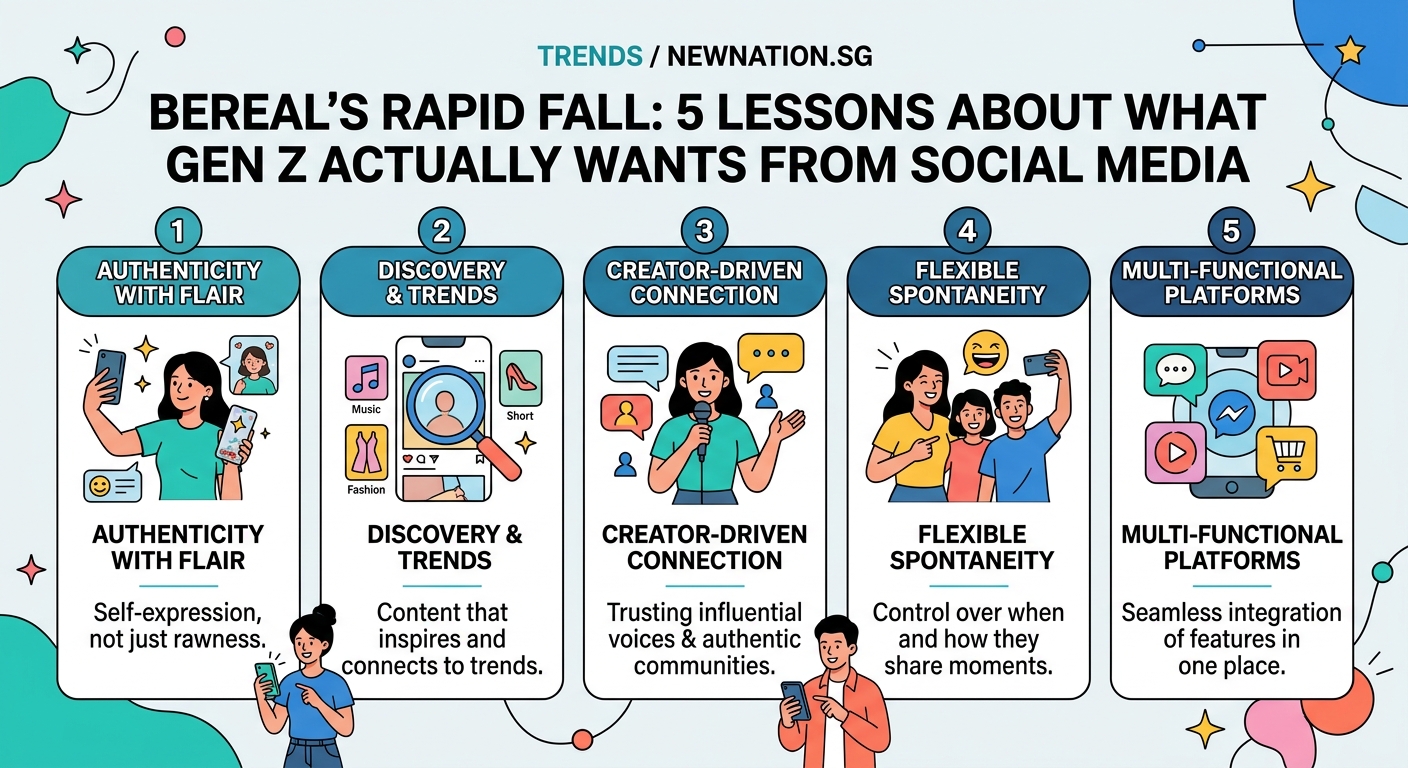
Authenticity without effort: Users could be genuine without the work of crafting authenticity, which had become its own form of performance on other platforms.
-
Connection without comparison: The app facilitated staying in touch with friends without triggering the comparison and envy that plague traditional social media.
-
Participation without pressure: The low stakes meant users could engage casually without feeling obligated to maintain a certain standard or frequency.
These three needs point to larger trends in how Gen Z approaches digital spaces. They want authenticity but they’re tired of the labor involved in performing it. They want connection but not at the cost of their mental health. They want to participate but on their own terms.
What BeReal’s popularity reveals about content strategy
For social media managers and marketers, BeReal’s rise offered valuable lessons about Gen Z preferences:
- Imperfection resonates more than polish: Content that feels too produced can trigger skepticism rather than engagement.
- Spontaneity signals authenticity: Planned authenticity is an oxymoron that Gen Z can spot immediately.
- Less frequent, more genuine: Daily posting isn’t necessary if each post feels real and valuable.
- Community over audience: Building tight connections with a smaller group often beats broadcasting to masses.
These insights translate across platforms. Even if your brand isn’t on BeReal, understanding why it appealed to Gen Z should inform your broader content strategy.
The shift toward authenticity isn’t just a trend. It reflects a fundamental change in how younger users evaluate content. They’ve developed sophisticated filters for detecting inauthenticity, and they reward brands that respect their intelligence.
The platform features that made authenticity possible
BeReal’s design choices weren’t accidental. Each feature supported the app’s core mission of promoting authentic sharing:
The dual camera feature captured both what you were seeing and your reaction simultaneously. This made it harder to stage photos because you appeared in every post. You couldn’t just photograph something beautiful; you had to show yourself in that moment too.
The time limit prevented overthinking. Two minutes was enough to participate but not enough to obsess over every detail. This constraint forced spontaneity.
The lack of editing tools removed the temptation to enhance or alter your photos. What you captured was what you posted. This simplicity was revolutionary in an era of increasingly sophisticated photo editing apps.
The discovery features were minimal. BeReal didn’t push you to find new people to follow or suggest content you might like. The app assumed you already knew who you wanted to connect with.
How Gen Z’s digital literacy shaped BeReal’s appeal
Gen Z’s sophisticated understanding of social media mechanics made them particularly receptive to BeReal’s approach. They recognized that algorithms prioritized engagement over authenticity. They understood how influencers used specific tactics to game the system. They saw through performative authenticity.
This digital literacy meant they could appreciate BeReal’s design choices on a deeper level. They recognized that the app’s constraints weren’t limitations but features that protected the authentic experience.
Younger Gen Z users, who grew up entirely in the smartphone era, felt the weight of social media pressure more acutely than older generations. They’d spent their formative years navigating the anxiety of likes, comments, and follower counts. BeReal offered relief from that constant evaluation.
The app also arrived at a moment when conversations about social media’s mental health impacts had reached mainstream awareness. Gen Z was actively looking for healthier ways to stay connected. BeReal’s timing was perfect.
Practical applications for marketing teams
Understanding BeReal’s appeal should inform how brands approach Gen Z across all platforms. Here are actionable takeaways:
Show the unpolished moments: Share behind-the-scenes content that isn’t overly produced. Let your audience see the messy, real parts of your business.
Reduce posting frequency, increase authenticity: Post less often but make each piece of content more genuine. Quality and authenticity matter more than consistency.
Minimize the sales pitch: Gen Z can smell marketing copy from a mile away. Focus on building genuine connections rather than pushing products.
Embrace imperfection: Don’t be afraid to show mistakes, challenges, or less-than-perfect moments. These humanize your brand.
Create spaces for community: Focus on fostering genuine connections among your audience members, not just broadcasting to them.
Respect their intelligence: Don’t try to manufacture authenticity or use tactics that feel manipulative. Gen Z will call it out.
Why the novelty factor wasn’t the whole story
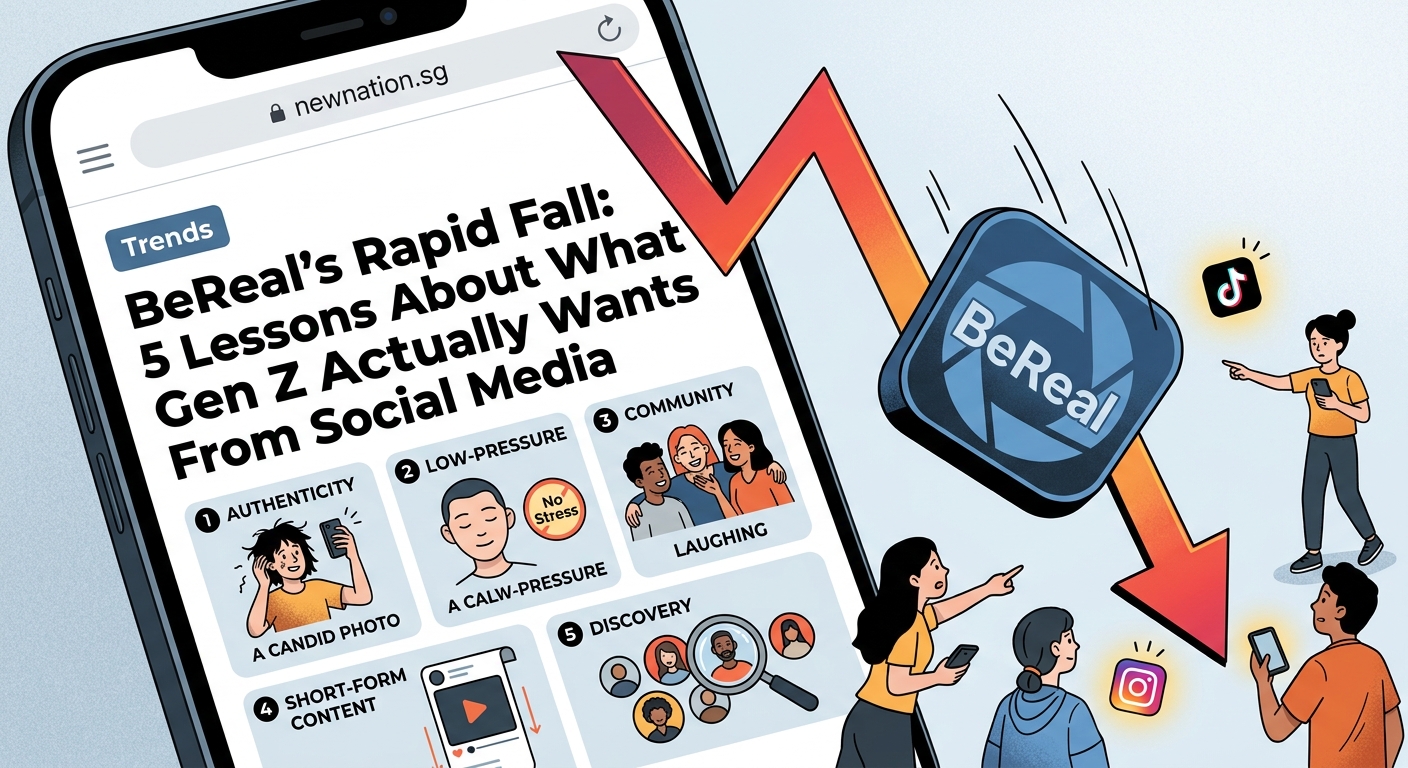
Some analysts dismissed BeReal’s popularity as a novelty that would fade once the newness wore off. While the app did eventually see declining engagement, attributing its initial success purely to novelty misses the point.
BeReal succeeded because it addressed real pain points in the social media experience. The fact that it struggled to maintain momentum doesn’t invalidate the insights about what Gen Z values. Instead, it reveals the challenge of sustaining engagement without the addictive features that make other platforms sticky.
The app’s eventual struggles also highlighted another Gen Z trait: they’re willing to move on when something stops serving them. They’re not loyal to platforms for loyalty’s sake. They’ll adopt new apps, use them intensely, and abandon them without guilt when something better comes along.
This fluidity should inform how brands think about platform strategy. Chasing Gen Z to every new platform isn’t sustainable. Understanding the underlying values that drive their platform choices is more valuable than maintaining a presence everywhere.
Authenticity as a moving target
One challenge that emerged from BeReal’s story is that authenticity itself can become performative. As the app grew, some users began staging “authentic” moments. They’d wait to post until they were doing something more interesting than sitting at their desk.
This evolution revealed a paradox: once authenticity becomes the goal, it risks becoming another form of performance. Gen Z recognized this tension. They appreciated BeReal’s initial promise but also understood its limitations.
For brands, this means authenticity can’t be a static strategy. What feels authentic today might feel calculated tomorrow. Staying genuinely connected to your audience requires constant attention and adjustment.
The key is maintaining authentic values and practices rather than just creating authentic-looking content. Gen Z can tell the difference between a brand that genuinely cares about its community and one that’s just adopting authenticity as a marketing tactic.
What comes after BeReal matters more than BeReal itself
The specific platform matters less than understanding the shift in values it represented. Gen Z’s embrace of BeReal signaled their desire for:
- Social spaces that prioritize mental health over engagement metrics
- Platforms that facilitate real connection rather than status competition
- Content experiences that don’t require constant curation and performance
- Digital environments that aren’t dominated by advertising and influencer culture
These preferences will shape the next generation of social platforms. They also should inform how existing platforms evolve and how brands approach social media marketing.
The companies that succeed with Gen Z will be those that respect these values rather than trying to manipulate them. This generation has grown up with social media and understands its mechanics better than any before them. They’re looking for brands and platforms that treat them as intelligent partners rather than targets to be captured.
Building trust in an age of skepticism
BeReal’s story ultimately comes down to trust. Gen Z trusted the app because its design choices aligned with its stated values. The constraints weren’t arbitrary; they served the mission of promoting authentic sharing.
This alignment between values and design is what brands need to achieve. Your social media strategy should reflect your actual values, not just what you think will drive engagement. Gen Z can detect misalignment immediately, and they’ll disengage just as fast.
Building trust requires consistency over time. It means sometimes making choices that don’t maximize short-term metrics because they serve your long-term relationship with your audience. It means being willing to admit mistakes and adjust course when something isn’t working.
The brands that succeed with Gen Z will be those that view social media as a tool for building genuine relationships rather than just a marketing channel. They’ll prioritize community over reach, authenticity over polish, and long-term trust over short-term gains.
What Gen Z’s platform choices tell us about the future
BeReal might not have maintained its explosive growth, but its initial success revealed important truths about Gen Z’s relationship with social media. They’re tired of performance pressure. They value genuine connection over status signaling. They want spaces that respect their mental health and intelligence.
These preferences will shape social media’s evolution. Platforms that prioritize engagement metrics over user wellbeing will increasingly struggle with Gen Z audiences. Apps that facilitate genuine connection without the toxic elements of comparison and competition will find receptive users.
For marketing professionals, the message is clear: adapt your strategies to align with these values or risk losing relevance with the next generation of consumers. Gen Z isn’t just another demographic to target. They’re digital natives who understand social media better than the people trying to market to them.
The future belongs to brands that can meet Gen Z where they are, respecting their intelligence and values rather than trying to manipulate their behavior. BeReal showed us what that looks like, even if the app itself wasn’t the final answer.