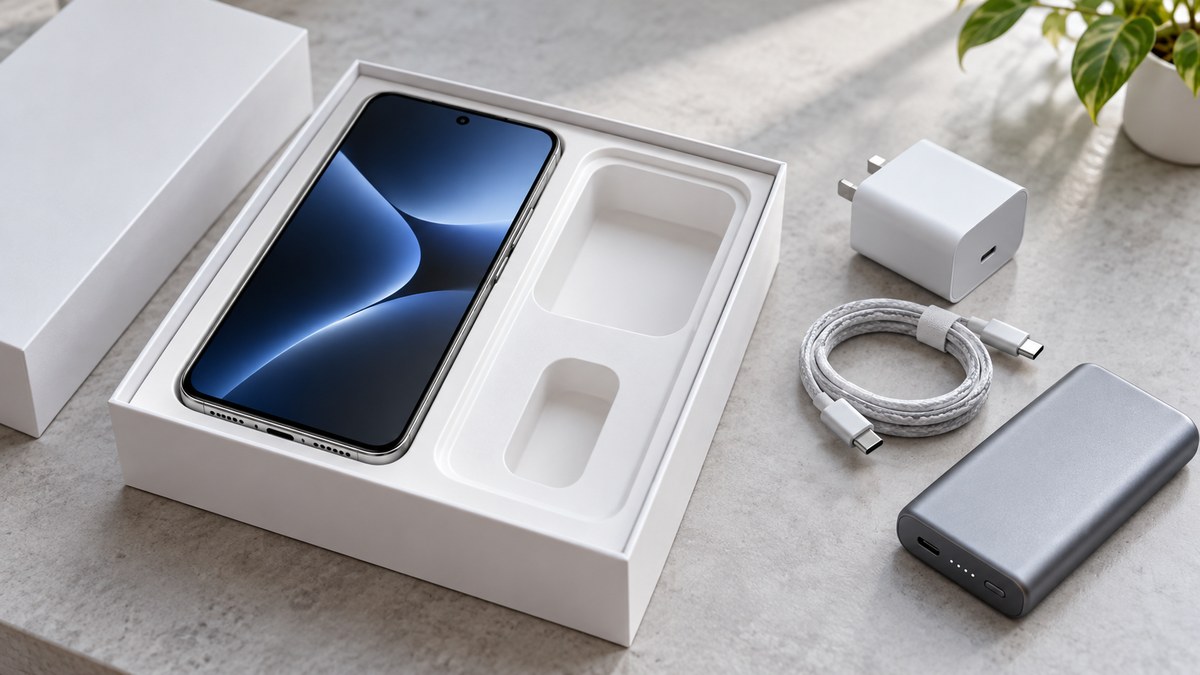
You unbox that shiny new phone. You peel off the plastic. You reach for the charger. And then you find nothing. Just a cable, maybe, or nothing at all. That familiar brick is gone. It feels like the universe is testing your patience. But this isn’t a mistake. It’s the new normal. And once you understand why, you can stop being annoyed and start being prepared.
Phone makers stopped including chargers to cut costs, reduce e-waste, and push the industry toward a universal standard (USB-C). While it feels like a cash grab, it can actually save you money and clutter. The trick is to buy one high-quality GaN charger that works for all your devices instead of hoarding old bricks.
The Real Reason Your Box Feels Lighter
The first time Apple removed the charger from the iPhone box, people lost their minds. It felt like a money grab. And honestly? It partly was. But the story is bigger than that. There are three main forces at work here.
1. The Push for Universal Standards
For years, every gadget had its own charger. You needed a drawer full of bricks just to keep your devices alive. The European Union finally said enough is enough. They mandated that by 2024, all small electronics must use USB-C. Apple, Samsung, and everyone else saw the writing on the wall. Why keep shipping a charger when every device you own will soon use the same port? The transition is messy, but it’s happening. Your next laptop, tablet, earbuds, and phone will all charge from the same cable.
2. Environmental Spin (and Real Impact)
The official line from most manufacturers is about saving the planet. There is some truth to it. Every charger that gets manufactured and shipped contributes to e-waste. Most people already have a drawer full of old USB-A bricks. Shipping another one with every phone is wasteful. By removing it, companies reduce packaging size, lower shipping weight, and cut down on plastic. It’s a genuine environmental benefit. But it also saves them millions in production and logistics costs.
3. The Push Toward Faster Charging
Older chargers are slow. They might output 5W or 10W. Modern phones can handle 25W, 45W, or even 65W charging. If a phone maker includes a charger, they have to decide which wattage to ship. Too low, and customers complain about slow charging. Too high, and it costs more. By leaving the charger out, they let you pick the speed you need. This is especially true for flagships that support super-fast charging protocols. You can buy a 65W GaN charger that charges your phone, laptop, and tablet at their maximum speeds. That’s a better experience than getting a mediocre brick in the box.
What This Means for Your Wallet
Let’s talk about the cost. It feels like you’re paying the same price for less product. But the math is more interesting than that.
- The upfront cost: You now have to spend $20 to $40 on a decent charger. That stings.
- The long-term savings: Instead of owning five different chargers, you buy one good one. Over two years, you spend less on charging gear than you did before.
- The hidden cost: If you use an old, slow charger with a new phone, you damage your battery over time. Cheap chargers don’t regulate power well. They heat up your battery, which degrades it faster.
“The best charger is the one you already own, as long as it supports USB Power Delivery. If it’s older than three years, replace it. The cost of a new charger is less than the cost of a dead battery.” — Battery University research notes
So yes, you have to spend money upfront. But if you choose wisely, you come out ahead.
How to Pick the Right Charger (Without Overthinking It)
You don’t need to become a charging expert. You just need to avoid a few common mistakes. Here is a simple table to guide you.
| Charger Type | What It’s Good For | What to Avoid |
|---|---|---|
| Old USB-A brick (5W to 12W) | Charging older devices, overnight charging | Do not use for fast charging modern phones. It’s too slow. |
| Standard USB-C PD charger (18W to 30W) | Charging one phone or a pair of earbuds | Fine for daily use. Not enough for a laptop. |
| GaN charger (45W to 65W) | Charging a phone, tablet, and laptop simultaneously | The sweet spot for most people. Compact and powerful. |
| Multi-port GaN charger (65W to 100W) | Charging multiple devices at full speed | Overkill unless you travel with a laptop, tablet, and phone. |
The golden rule: Buy a GaN charger with at least 45W total output and two ports. It will handle your phone, your tablet, and your friend’s phone. It will last for years.
A Step-by-Step Plan to Prepare for Your Next Phone
You don’t have to wait until you buy a new phone. You can get ready right now.
-
Audit your current charging gear. Open that drawer. Pull out every charger and cable. Throw away anything that is frayed, bent, or older than 2018. Keep only the ones that support USB-C Power Delivery.
-
Buy one high-quality charger. Do not buy a cheap $10 brick from a gas station. Invest in a reputable GaN charger from Anker, Ugreen, or Belkin. It will cost around $30. It will last for five years.
-
Buy a good cable. The cable matters as much as the charger. Look for a USB-C to USB-C cable rated for 100W. It should be braided, not rubber. A good cable costs $10 to $15. It will not fray.
-
Test your setup. Before you buy your next phone, plug your current phone into your new charger. Make sure it fast charges. If it doesn’t, you might need a different cable or charger.
-
Prepare for the unboxing. When your new phone arrives, you will not panic. You will already have your charger ready. You will plug it in and smile.
What About Wireless Charging?
Wireless charging pads are a great backup, but they are not a replacement for a wired charger. They are slower and less efficient. If you rely on a wireless pad, you will be frustrated when you need a fast top-up. Use wireless for overnight charging or at your desk. Use wired for travel and emergencies.
The One Mistake Most People Make
They buy a cheap charger to save money. Then they wonder why their phone charges slowly or gets hot. A cheap charger lacks proper thermal management. It can damage your battery over time. Spending $30 on a charger is cheaper than replacing a battery or a phone. Do not skimp.
Why This Trend Is Actually Good for You
It forces you to be intentional. Instead of accumulating junk, you buy one good tool. That is a healthier relationship with technology. It also means you can charge your laptop, tablet, and phone from the same brick. That is genuinely convenient. The hidden environmental cost of streaming your favorite shows is real, but at least this one change reduces physical waste.
The same logic applies to other tech habits. Why your favorite apps keep adding features nobody asked for is a similar story of companies prioritizing their bottom line over your convenience. Once you see the pattern, you stop being surprised.
What to Do If You Already Bought a Phone Without a Charger
Don’t panic. You have options.
- Use your old charger. If it supports USB-C Power Delivery, it will work. It just might be slower.
- Borrow a friend’s charger. Most people have a USB-C charger lying around. Use it temporarily.
- Buy a charger from the phone maker. It will work perfectly, but it will cost more. Only do this if you want the brand match.
- Buy a third-party charger. This is usually the best option. You get better specs for less money.
Preparing for the Future
The trend is not going away. More devices will ship without chargers. Laptops are next. Some already ship without a brick. By 2027, it will be rare to get a charger with any new gadget. The sooner you adapt, the less it will bother you.
You can also apply this mindset to other areas of your digital life. How to reclaim your digital attention in a distracted age offers a similar framework. Stop accumulating. Start choosing.
The Simple Truth
Phones don’t come with chargers anymore because it saves companies money and reduces waste. It also pushes you toward a better standard. It feels annoying at first. But once you own a single good charger that works for everything, you will wonder why we ever did it any other way.
So take a few minutes this weekend. Audit your drawer. Buy one good charger. And when your next phone arrives, enjoy the unboxing without the frustration. You have already solved the problem.