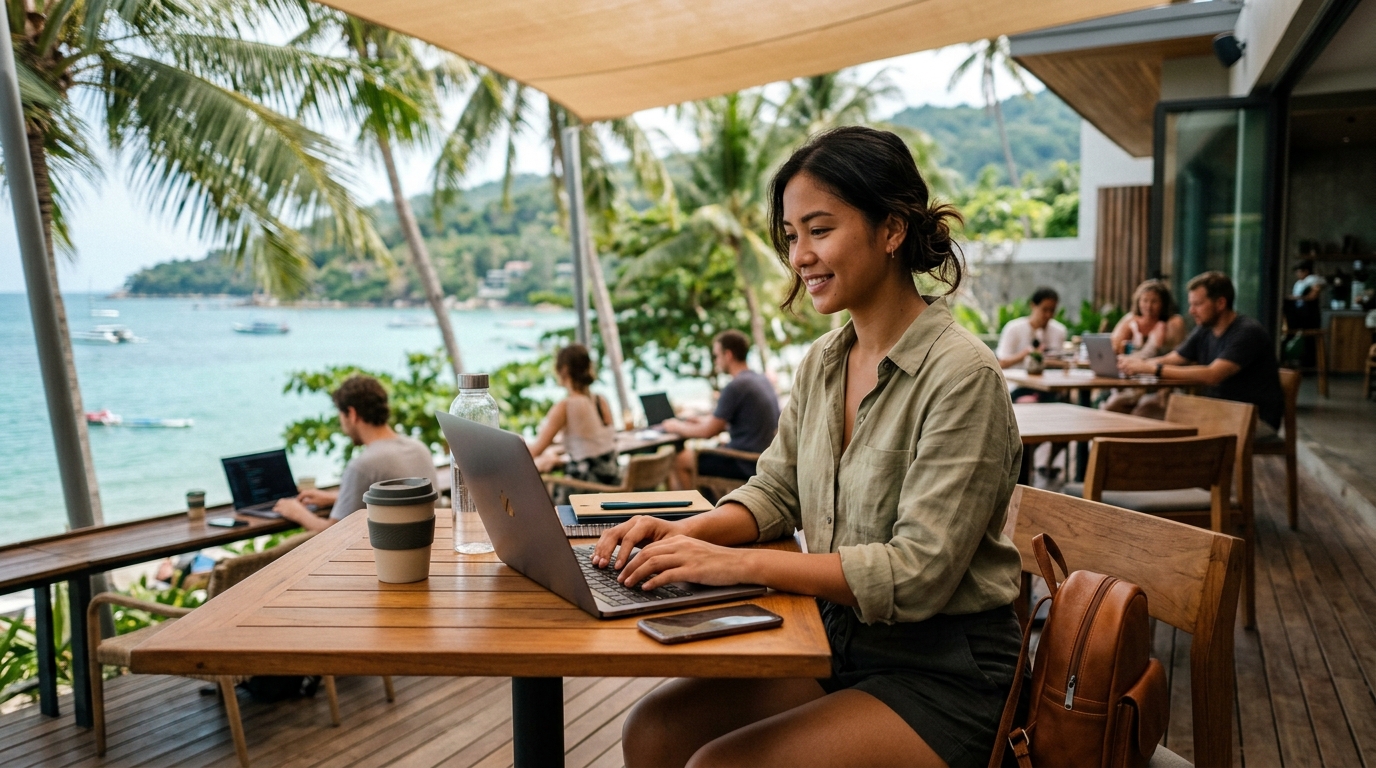
Southeast Asia has become the default destination for remote workers seeking affordable living, reliable internet, and a vibrant community of like-minded professionals. Cities like Bangkok, Bali, and Ho Chi Minh City now host thousands of location-independent workers who’ve traded their home offices for beachside cafes and modern coworking spaces.
Southeast Asia offers digital nomads an unbeatable combination of low living costs, strong internet infrastructure, and welcoming visa policies. Popular hubs like Thailand, Indonesia, and Vietnam provide thriving communities, modern coworking spaces, and monthly expenses ranging from $800 to $2,000. New visa programs specifically targeting remote workers make staying long-term easier than ever before.
Why remote workers are choosing Southeast Asia
The region’s appeal goes far beyond cheap street food and tropical beaches. Remote workers find a practical ecosystem that supports their lifestyle without breaking the bank.
Living costs in most Southeast Asian cities run 50 to 70 percent lower than major Western cities. A comfortable one-bedroom apartment in Chiang Mai costs around $400 monthly. The same money barely covers utilities in San Francisco or London.
Internet speeds have caught up with global standards. Most major cities offer fiber connections reaching 100 Mbps or faster. Coworking spaces provide backup generators and multiple internet providers to ensure you never miss a client call.
Time zones work in your favor too. Southeast Asia sits conveniently between European and American business hours. You can easily schedule morning calls with New York and afternoon meetings with London from the same location.
The weather stays warm year-round. No need to pack winter clothes or deal with seasonal depression. Most countries experience two seasons: hot and rainy. Even the rainy season brings short afternoon showers rather than all-day downpours.
Top destinations for digital nomads in Southeast Asia
Each country offers distinct advantages depending on your priorities and work style.
Thailand leads the pack with established infrastructure and a massive nomad community. Bangkok provides big-city amenities and endless coworking options. Chiang Mai attracts those seeking lower costs and a tight-knit community. The islands offer beach life without sacrificing connectivity.
Indonesia centers around Bali, where Canggu and Ubud host thousands of remote workers. The island combines surf culture with spiritual retreats and professional networking. Jakarta appeals to those wanting a major metropolitan experience.
Vietnam delivers the best value for budget-conscious nomads. Ho Chi Minh City and Hanoi offer excellent food scenes, French colonial architecture, and monthly costs under $1,000. Da Nang provides a coastal alternative with fewer crowds.
Malaysia brings political stability and modern infrastructure. Kuala Lumpur offers gleaming skyscrapers and diverse cuisine. Penang attracts food lovers and history buffs. Both cities provide reliable services and English-speaking locals.
Philippines works well for native English speakers. Manila handles business needs while islands like Siargao cater to surfers and beach lovers. The country’s widespread English usage simplifies daily tasks.
Visa options that actually work
Gone are the days when digital nomads survived on endless tourist visa runs. Several Southeast Asian countries now offer legitimate pathways for remote workers.
Thailand’s new Long-Term Resident visa targets remote workers earning at least $80,000 annually. The program grants five-year stays with minimal reporting requirements. Traditional options include education visas through language schools or the Elite visa for those with larger budgets.
Indonesia recently launched a second home visa allowing five-year stays. Bali specifically created infrastructure to support this program. The B211A visa provides a more affordable option with 60-day stays extendable up to six months.
Malaysia’s DE Rantau program specifically targets digital nomads. The visa requires proof of $24,000 annual income and costs around $1,000 for a one-year stay. The MM2H program offers longer terms but demands higher financial thresholds.
Vietnam typically requires visa runs every 90 days. Some nomads obtain business visas through local agencies. The country continues discussing a dedicated digital nomad visa but hasn’t implemented one yet.
Philippines offers the Special Resident Retiree’s Visa for those over 35. Younger workers often use tourist visas with periodic exits. The SRRV requires a deposit but allows indefinite stays.
The visa landscape changes constantly. Always verify current requirements through official embassy websites before making plans. What worked last year might not apply today.
Real costs of living as a digital nomad
Budget breakdowns help set realistic expectations. These figures reflect comfortable middle-range lifestyles, not backpacker minimalism or luxury excess.
| City | Rent | Food | Coworking | Transport | Total Monthly |
|---|---|---|---|---|---|
| Chiang Mai | $400 | $300 | $100 | $50 | $850 |
| Bali (Canggu) | $600 | $400 | $150 | $100 | $1,250 |
| Ho Chi Minh City | $500 | $250 | $80 | $40 | $870 |
| Bangkok | $700 | $350 | $120 | $80 | $1,250 |
| Kuala Lumpur | $550 | $300 | $100 | $60 | $1,010 |
Accommodation takes the biggest chunk. Modern apartments with air conditioning, reliable water, and decent internet cost more than basic local housing. Location matters significantly. Living in tourist areas or expat neighborhoods doubles rental costs compared to local neighborhoods.
Food expenses vary based on eating habits. Street food and local restaurants keep costs low. Western food and imported groceries quickly inflate budgets. Cooking at home saves money but many apartments lack proper kitchens.
Coworking memberships provide professional environments and networking opportunities. Day passes run $5 to $15. Monthly unlimited plans cost $50 to $200 depending on location and amenities. Some nomads skip coworking entirely, working from cafes or home.
Transportation costs stay minimal. Motorbike rentals run $50 to $100 monthly. Grab and Gojek rides cost pennies compared to Western rideshares. Many nomads walk or bike in smaller cities.
Healthcare remains affordable. Quality private hospitals charge reasonable rates. A doctor visit costs $20 to $50. Comprehensive health insurance runs $50 to $150 monthly depending on age and coverage.
Finding your community
The digital nomad lifestyle can feel isolating without intentional community building. Southeast Asia makes connection easier than most regions.
Coworking spaces serve as social hubs beyond just desks and wifi. Regular events, workshops, and happy hours facilitate natural networking. Spaces like Hubba in Bangkok or Dojo in Bali specifically cater to remote workers.
Facebook groups remain surprisingly active for nomad communities. City-specific groups share apartment leads, answer visa questions, and organize meetups. Groups like “Digital Nomads Around the World” connect people across the region.
Meetup.com hosts regular gatherings in major cities. Language exchanges, hiking groups, and professional networking events happen weekly. These provide structured ways to meet people outside work contexts.
Coworking and coliving combinations solve housing and community simultaneously. Places like Outpost and Selina offer packages including accommodation, workspace, and organized activities. You’ll instantly connect with other remote workers.
Skills-based communities gather around specific interests. Muay Thai gyms, yoga studios, and rock climbing centers attract nomads with shared hobbies. These provide conversation topics beyond work and travel.
Setting up your remote work infrastructure
Reliable technology makes or breaks the nomad experience. Preparation prevents last-minute scrambles when client deadlines loom.
Internet redundancy matters most. Never rely on a single connection. Get a local SIM card with generous data immediately upon arrival. Major providers include:
- AIS or True in Thailand
- Telkomsel in Indonesia
- Viettel or Mobifone in Vietnam
- Maxis or Digi in Malaysia
- Globe or Smart in Philippines
Portable wifi devices provide backup options. Rent pocket wifi or buy local dongles. Test your accommodation’s internet before committing to long-term leases. Run speed tests at different times of day.
Power management requires attention in tropical climates. Bring a quality surge protector. Power outages happen occasionally even in major cities. Coworking spaces usually have generators but your apartment might not.
Banking across borders needs planning. Wise (formerly TransferWise) offers multi-currency accounts with local bank details. Revolut provides similar services with good exchange rates. Notify your home bank about international locations to avoid frozen cards.
VPN services protect your data on public networks and access geo-restricted content. NordVPN and ExpressVPN work reliably across Southeast Asia. Some countries restrict certain websites, making VPNs essential tools.
Backup systems save your work and sanity. Use cloud storage like Google Drive or Dropbox. Keep external hard drives for important files. Set up automatic backups so you don’t lose everything if your laptop gets stolen or damaged.
Common mistakes to avoid
New nomads often stumble over predictable obstacles. Learning from others’ experiences saves money and stress.
Underestimating visa complexity tops the list. Tourist visas work short-term but create problems for longer stays. Research requirements thoroughly before arriving. Budget for visa costs, border runs, and potential agency fees.
Choosing locations based solely on Instagram leads to disappointment. That perfect beach photo doesn’t show the unreliable internet or lack of coworking spaces. Research infrastructure before committing to remote islands or small towns.
Neglecting health insurance creates massive risk. Medical emergencies happen. Quality international insurance costs less than one hospital stay. SafetyWing and World Nomads offer plans designed for location-independent workers.
Burning out from constant movement affects many nomads. Staying somewhere 3 to 6 months builds deeper connections than monthly location hopping. Slow travel reduces stress and expenses.
Ignoring tax obligations causes future headaches. Remote work doesn’t eliminate tax responsibilities. Consult with international tax professionals about your specific situation. Rules vary significantly based on citizenship and income sources.
Failing to maintain work-life boundaries becomes easy when your office is everywhere. Set specific work hours. Create dedicated workspace even in small apartments. Separate work and leisure to avoid burnout.
Skipping travel insurance beyond health coverage protects expensive gear. Laptops, cameras, and electronics represent significant investments. Comprehensive policies cover theft, damage, and loss.
Healthcare and staying healthy
Access to quality medical care ranks high among nomad concerns. Southeast Asia offers excellent healthcare at fraction of Western costs.
Private international hospitals in major cities match Western standards. Bumrungrad in Bangkok, Raffles in Singapore, and Columbia Asia facilities across the region provide English-speaking doctors and modern equipment.
Pharmacies stock most medications over the counter. Antibiotics, allergy medicine, and common prescriptions require no prescription. Bring copies of your prescriptions for reference. Generic versions cost significantly less than branded equivalents.
Dental work becomes affordable enough for major procedures. Many nomads schedule cleanings, fillings, or cosmetic work while in the region. Thailand particularly attracts dental tourism with qualified practitioners and low prices.
Mental health support exists but varies by location. Larger cities offer English-speaking therapists and counselors. Online therapy through platforms like BetterHelp provides consistent care across locations.
Fitness options abound in nomad hubs. Gyms offer monthly memberships for $20 to $50. Muay Thai, yoga, CrossFit, and climbing gyms provide structured workouts and social opportunities. Many nomads stay healthier abroad than at home.
Food safety requires attention initially. Your stomach needs time adjusting to new bacteria. Start slowly with street food. Choose busy stalls with high turnover. Avoid raw vegetables washed in local water until you’ve acclimated.
Making the transition from home to nomad life
The shift to location independence requires both practical preparation and mental adjustment.
Start by testing the lifestyle before burning bridges. Take a one-month trial in a popular hub like Chiang Mai or Bali. Experience the reality before quitting your job or subletting your apartment.
Build your remote income streams before leaving. Freelancing, consulting, or remote employment should feel stable. Most experts recommend six months of expenses saved before making the leap.
Downsize possessions gradually. Sell, donate, or store items you won’t carry. Most nomads travel with a 40-liter backpack or small suitcase. You need less than you think.
Handle administrative tasks before departure. Scan important documents. Set up mail forwarding. Arrange online banking and paperless billing. Cancel subscriptions and memberships you won’t use abroad.
Prepare your family and friends for the change. Regular video calls maintain relationships. Share your experiences through blogs or social media. Some relationships will fade but real connections strengthen despite distance.
Accept that challenges will arise. Homesickness, loneliness, and frustration happen to everyone. The nomad lifestyle isn’t permanent vacation. You’ll still work, deal with bureaucracy, and face bad days.
Your next steps toward location independence
Southeast Asia welcomes remote workers with open arms and practical infrastructure. The region offers everything needed to test or fully commit to the digital nomad lifestyle.
Start planning your first destination based on your priorities. Budget-conscious workers should consider Vietnam or Thailand. Beach lovers will thrive in Bali or Philippines. City enthusiasts can choose Bangkok or Kuala Lumpur.
Research visa requirements for your citizenship and intended length of stay. Join online communities for your target city. Read recent experiences from other nomads about current conditions.
Book accommodation for your first month only. This gives flexibility to change neighborhoods or cities if the initial choice doesn’t fit. Use platforms like Airbnb or local Facebook groups to find housing.
The infrastructure exists. The communities are welcoming. The costs make it accessible. The only remaining question is whether you’re ready to make the move.